
By Mike Odeh James and Segun Onibiyo
The humid corridors of Abuja’s power centers echo with a desperate new refrain: If Colombia could claw its way back from hell, why can’t we?
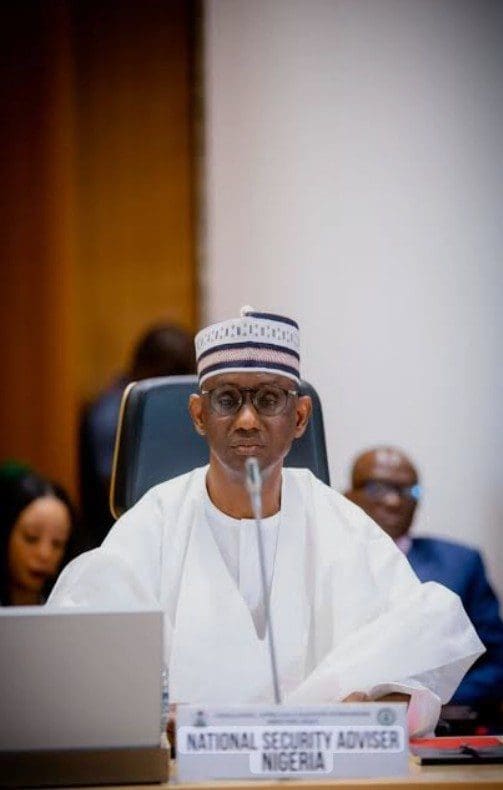
This summer, Nigeria’s National Security Adviser, Nuhu Ribadu, signed a pact with Bogotá that would have been unthinkable a decade ago – a formal alliance with a nation once synonymous with narco-anarchy. The move exposes Nigeria’s raw nerve: a military buckling under insurgencies, banditry, and its own corroded integrity.
The Mercenary Mirage and Colombia’s Real Weapon
Headlines screamed “Nigerian Mercenary Deal!” after the February 2024 MoU. Security analysts like Scott Morgan stoked fears of Colombian “boots on the ground” in Sudan and the DRC being rerouted to the Sahel. Yet, verified sources reveal a different truth. Colombia isn’t exporting trigger-pullers; it’s selling survival blueprints.
“This isn’t about hired guns,” insists Dr. Alejandra Barrios of Colombia’s Observatorio de la Democracia. “It’s about transferring institutional knowledge from a nation that reduced homicides by 50 percent and demobilized 17,000 FARC rebels.”
The real commodity is Plan Colombia’s brutal lessons: satellite tracking of weapon caches, forensic intelligence fusion, and community policing models that pried villages from guerrilla claws.
Nigeria’s Army: The Unraveling Shield
Why outsource wisdom? The numbers paint a crisis.
223,000 troops stretched thin across 923,768 sq km – one soldier per 1,000 citizens.
Over 30,000 bandits hold sway in the Northwest, killing more than 7,000 civilians since 2021 (ACLED).
In Zamfara and Katsina, locals now cut protection deals with bandit warlords, viewing the army as “worse than the threat” (ICG Report, 2023).
The military’s credibility bled out with incidents like the December 2023 Tudun Biri bombing, when 120 civilians were killed by an “accidental” airstrike.
Equipment isn’t the flaw; Nigeria spent $15 billion on defense since 2015. The rot is systemic: promotions sold to the highest bidder, weapons diverted to bandits, and soldiers paid in promises.
“When a general’s son drives a gold-plated Lexus while frontline troops beg for rations,” a retired colonel told BusinessDay, “you lose wars in the barracks.”
Failed State Parallels: A Dance with Devils
The LSE paper cited by Nigerian critics hits a nerve: both nations mastered the art of performing democracy while feeding criminal hydras. In Colombia, politicians and cartels waltzed in Medellín’s discos; in Nigeria, governors funnel assault rifles to “loyal” militias.
The drug-jihad pipeline: ISWAP now moves Colombian cocaine through Lagos ports to fund attacks, mimicking FARC’s narcoterrorism (UNODC).
Ethnic cleansing economics: Fulani militias in Nigeria’s Middle Belt mirror Colombia’s right-wing paramilitaries – dispossessing farmers for mining elites. Over 6,000 people have died in these clashes since 2021 (Amnesty).
The Tinubu question: Critics whisper of a calculated stalemate – balancing violence to survive a term before a “golden exile” in London. Yet no paper trail confirms exit plans; the greater risk is implosion before 2027.
Colombia’s Toolkit: Can It Transplant?
Bogotá’s playbook offers potent but painful medicine.
1. Weapons tagging – Colombia embedded GPS trackers in military arms, slashing diversion to gangs by 80 percent. Nigeria’s porous armories need this yesterday.
2. Village guardian units – Recruiting 70 percent locally in conflict zones rebuilt trust in Colombia. Nigeria’s alien troops from the south breed suspicion in the north.
3. Elite hunting – Colombia’s Unidad de Información Financiera froze $12 billion in narco-politician assets. Nigeria’s EFCC lacks teeth for such surgery.
But Colombia had advantages Nigeria lacks: relentless U.S. funding (13 billion dollars for Plan Colombia), geographic containment, and a unified enemy (FARC). Nigeria faces four hydras at once: Boko Haram, bandits, separatists, and herder militias.
The Mercenary Temptation – And Why It Fails
Private military companies circle Abuja like vultures. Russian Wagner, South African Dyck Advisory, and Colombian veterans-for-hire pitch “quick fixes.” Yet history screams caution.
In Mozambique, Wagner’s 2021 counter-insurgency ended in mass civilian deaths and retreat.
In Libya, hired guns now fuel the civil war.
Mercenaries owe loyalty to cash, not constitutions. If Abuja’s checks bounce, guns pivot toward the highest bidder – potentially bandits or jihadists.
“This isn’t Call of Duty,” warns former U.S. Africa Command advisor Dr. Paul Nantulya. “Mercenaries excel at raids, not holding territory or winning trust. Nigeria’s war needs nation-building.”
The Nigerian Solution: Fix the Foundation
Colombian tactics can’t save Nigeria without radical internal reform.
Purge the rot: Audit defense contracts, court-martial corrupt officers, and publish budgets. No Colombian tactic works with leaky arsenals.
State police now: Lagos’ SWAT cut kidnappings by 40 percent after decentralization. National troops can’t patrol 774 local governments.
Jobs over bullets: Bandits pay recruits 300 dollars a month – triple a soldier’s wage. Launch agro-projects in hotspots. Five hundred thousand jobs could disarm 30,000 bandits.
Amnesty with teeth: Colombia demobilized 17,000 FARC fighters with vocational training and land grants. Nigeria’s half-hearted deals fail without jobs or justice oversight.
The Stakes: Africa’s Domino
Failure turns Nigeria into a black hole of instability. Success could recalibrate African security. As Ribadu studies Bogotá’s playbook, the world watches: can a nation borrow light from a former inferno without burning itself?
Colombia’s Ambassador to Nigeria, Daniel Carvajal, offers cautious hope: “We don’t sell magic. We sell proof that even the darkest night ends. But dawn requires courage Nigeria must find within.”
The mercenary whispers are a distraction. Nigeria’s real battle isn’t for terrain; it’s for its soul. And no foreign gun can fight that war.