

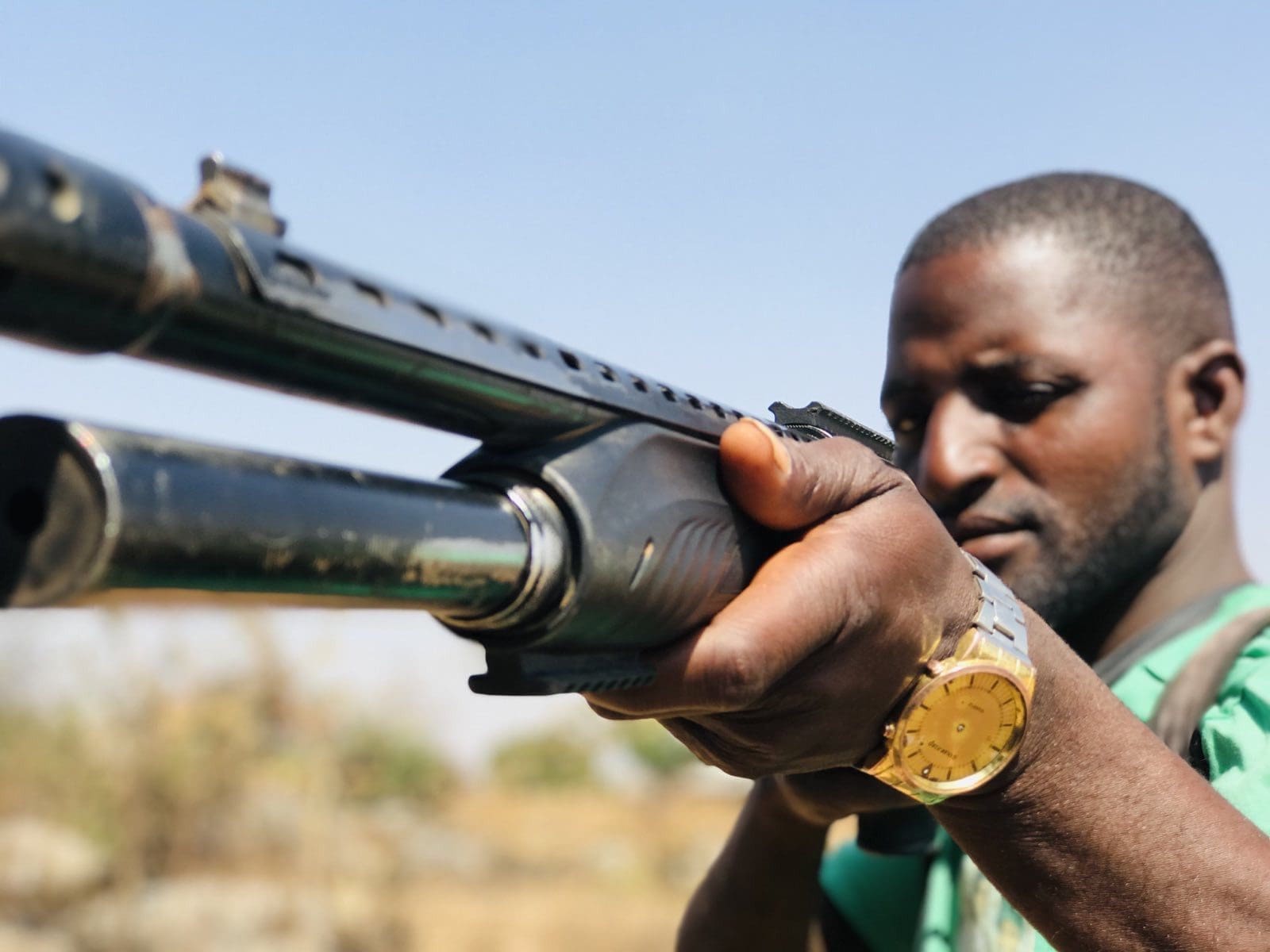
Yoruba leaders warn of genocide as civilian guards are disarmed and communities massacred.
Yoruba coalition petitions UN, citing pattern of ethnic violence and targeted attacks on churches.
By Onibiyo Segun
Lagos, Nigeria – “Bandits killed my husband after the DSS – Department of State Security collected guns from our community guards”, said a woman.
On September 17, 2025, terrorists stormed the Yoruba farming town of Oke-Ode in Ifelodun county, Kwara State, Nigeria opening fire on homes, churches, and a market. Fifteen people were killed. Witnesses in a report captured by national media described how the attackers shot indiscriminately, leaving corpses scattered in yam fields and children screaming through the night.
A Petition to the United Nations

Days after the killings, the Alliance for Yoruba Democratic Movements (AYDM), a coalition of more than 130 Yoruba groups, filed a petition to UN Secretary-General António Guterres. The petition warns of a looming genocide against the Yoruba, citing repeated massacres, killings of traditional rulers, and church bombings across the Southwest of Nigeria.
“The Oke-Ode killings were not an isolated case,” said AYDM (Alliance for Yoruba Democratic Movements)
Secretary-General Popoola Ajayi in an interview. “It is part of a long pattern. Our people are being targeted, our rulers eliminated, our land occupied. Nigeria’s government has failed to protect us, and in some cases, looks the other way.”
The petition calls on the UN to convene an emergency Security Council meeting, investigate alleged foreign support for extremist groups, and uphold the rights of indigenous Yoruba communities under international law.
Alliance for Yoruba Democratic Movements, accuses Nigeria’s government of either enabling the violence or failing to disrupt networks they believe are supported by extremist ideology and foreign money. The group warns that without radical security reforms and accountability, attacks will spread.
Defining Genocide
The word “genocide” is never used lightly. Under the 1948 UN Genocide Convention, it requires both a pattern of mass atrocities and intent to destroy, in whole or in part, a national, ethnic, racial, or religious group.
Does the Oke-Ode attack, and others like it, meet that threshold?
Human rights lawyer Tunde Oladipo based in Lagos told TruthNigeria that there are indicators worth investigating. “When you have systematic killings of Yoruba leaders, massacres at churches, and the forced displacement of thousands from their farmland, it raises the red flag of genocide. The missing piece is proving intent but waiting until intent is undeniable may mean waiting until it’s too late.”
Survivors Speak

The testimonies from Oke-Ode survivors collected by TruthNigeria paint a chilling picture.
A farmer Adegoke Biodun described how gunmen surrounded the community shortly after dusk. “They shouted orders in a language many here did not understand. Then they started shooting. They killed old men, women, even children hiding in their mother’s arms.”
A teacher Wunmi, who lost two relatives said she believes the goal is displacement. “They want to drive us out. If you cannot farm, cannot gather, cannot even bury your dead in peace, what is left of home?”
For many Yoruba, the killings in Oke-Ode echo earlier atrocities, such as the 2022 bombing of St. Francis Catholic Church in Owo, Ondo State, that left 40 dead, and the murders of at least four traditional rulers in recent years.
Security Failures and Accusations
Why do these massacres keep happening? In Oke-Ode, in Ifelodun county, Kwara state, residents say security forces arrived hours after the shooting stopped. Many survivors believe this was not incompetence but collusion.
“The military checkpoint is just a few kilometers away,” one survivor Abisan Bakare told TruthNigeria on telephone. “They heard the gunfire. They did nothing. They will fly helicopters at night, but refuse to go into the forest to confront the terrorists. Claiming they have superior firepower.”
Security risk consultant Kabiru Adamu, CEO of Beacon Consulting, told TruthNigeria that intelligence lapses are only part of the problem. “The challenge is not just operational – it’s structural. Communities like Oke-Ode in Ifelodun county Kwara state are unprotected because security is concentrated in Abuja and major cities. Terrorists exploit that gap.”
Retired Army Colonel Hassan Stan-Labo, also interviewed by TruthNigeria, agreed. “The government’s failure to respond decisively has emboldened these terrorist groups. When villagers see that killers walk away unpunished, it confirms the perception of collusion.”
Government Response
So far, official reactions have been muted. The Nigerian Police spokesperson in Kwara state DSP-Deputy Superintendent of Police, Ejire-Adeyemi Toun condemned the Oke-Ode killings and promised investigations, but provided no details about arrests. The Ministry of Information dismissed claims of state complicity as “false and inflammatory.”
Security experts caution that the government’s silence feeds distrust. Dr. Ona Ekhomu, Nigeria’s pioneer security risk management consultant, told TruthNigeria that communication failures are worsening the crisis. “When victims see no arrests, no prosecutions, and repeated massacres, they conclude the state is either compromised or indifferent.”
International Expert Voices
Amnesty International has documented a broader context of violence across Nigeria. In a report titled “Mounting death toll and looming humanitarian crisis,” the organization said over 10,200 people were killed in armed group attacks in states including Benue, Plateau, and Zamfara between May 2023 and May 2025. The report says that the government’s failure to protect civilians violates rights to life and physical security. Isa Sanusi, Director of Amnesty International Nigeria, said: “Today marks exactly two years since President Bola Tinubu assumed office with a promise to enhance security. Instead, things have only gotten worse…”
Human Rights Watch has also weighed in. In an earlier case in Nasarawa State, HRW documented a military airstrike in January 2023 that killed 39 civilians, including children. Anietie Ewang, Africa researcher at Human Rights Watch, criticized the government’s delay in acknowledging responsibility and called for a “transparent inquiry” and accountability. HRW said such attacks underscore the urgent need for civilian protection even in military operations.
These international voices reinforce what local survivors, activists, and Yoruba groups are saying that the scale and pattern of attacks demand urgent attention beyond national politics.
“If the world ignores Oke-Ode, it is ignoring a signal flare,” said Dr. Fola Ogundipe, a conflict scholar interviewed by TruthNigeria. “Every genocide begins with incidents dismissed as local disputes. That is how Rwanda began. That is how Bosnia began.”
Between Hope and Horror
Back in Oke-Ode, residents live in a fragile balance of fear and resilience. Some have fled to neighboring towns; others have armed themselves with homemade weapons. Local churches hold all-night vigils, praying for peace and protection.
A widow who lost her husband in the massacre Iya Mutiu told TruthNigeria she does not want revenge, only safety. “We are farmers, not fighters. We just want to live in our land without fear.”
For Yoruba leaders, that plea is the heart of their case to the world: urgent intervention before the killings become an irreversible tragedy. For the survivors, the question is more immediate: will they live to see tomorrow?
Onibiyo Segun reports on terrorism and conflicts for TruthNigeria


Do you have any social media because none of your links work.