


Babangida Kachalla Led Group Motivated by Profit More than Ideology
By Onibiyo Segun
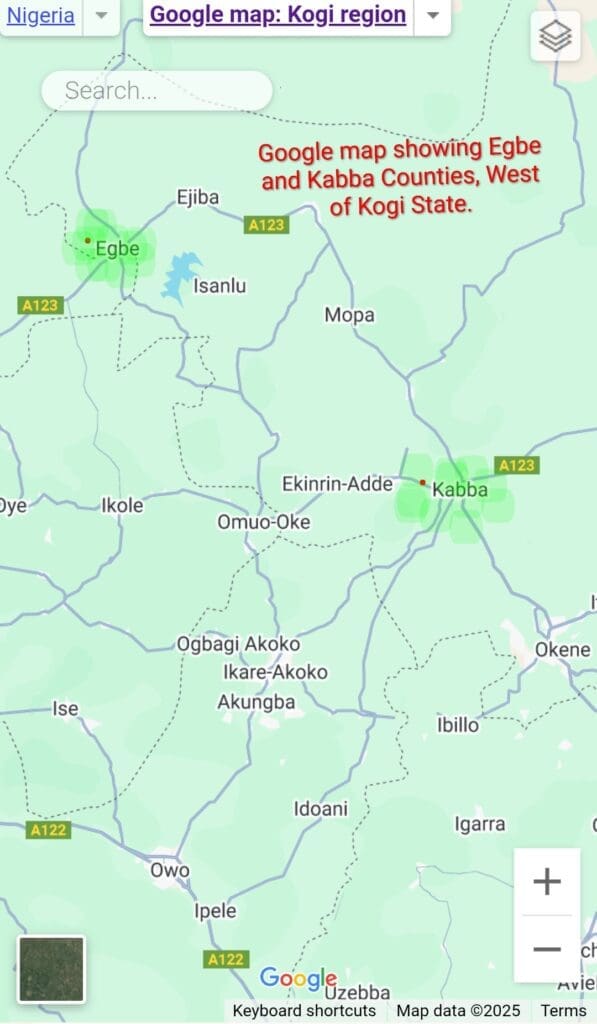
(Kabba-Bunu, Kogi State, Nigeria) – Ten villagers lay dead in Egbe, Yagba West County, their blood staining the red earth after yet another raid by terrorists. Relief only came days later, when the Nigerian Army hunted down and neutralized Babangida Kachalla, the man blamed for the terror.
The Army confirmed that Babangida Kachalla, a notorious second-in-command to the feared warlord Kachala Shuaibu, was killed on September 11, 2025, during an operation in Ofere-Bunu Forest in Kabba-Bunu county. Soldiers of the 12 Brigade, operating under Operation Accord III, confronted his gang in a fierce gun battle.
“Troops responded swiftly to the ambush and overpowered the bandits in the forest,” Army spokesperson Lieutenant Hassan Abdullahi said. “The operation was successful, leading to the elimination of Babangida Kachalla,” according to The Daily Post.
Military intelligence describes Babangida Kachalla’s group as a local bandit-terrorist network loyal to Kachala Shuaibu, notorious for raids, kidnappings, and killings in Masalaci Boka and Ofere-Bunu forests. Unlike Boko Haram or ISWAP cells, the gang operates mainly for criminal profit, not ideology, though analysts warn such groups can sometimes overlap with jihadist factions further north.
Troops Overwhelm Bandits
The battle was brief but intense. Soldiers recovered an alarming cache of items from the scene: 31 mobile phones, a loaded rifle magazine, charms, ₦16,000 in cash, multiple packs of tramadol tablets, and even a blood pressure machine.
Military experts say these items reveal the gang’s methods. Tramadol and other narcotics are commonly used by fighters to dull fear and keep them fighting longer. Charms, carried by almost every bandit, reflect a belief in ritual protection against bullets. The large number of phones suggested a link to ransom payments and field communications, while the cash was likely loot from earlier raids.
Weak Forward Base, Strengthened Patrols
“The military have the men and the weapons to respond in a timely manner and will continue to do like they did, going into the forests to take down Babangida Kachalla,” a military source told TruthNigeria.
The operation also exposed weaknesses in earlier responses. In Egbe, where ten villagers were killed before the military struck back, a Forward Operation Base had barely 10 soldiers. The troops were too few to stop the raiders when they first attacked.
Military sources say reinforcements are on the way. The number of troops at the base will be increased, though officials declined to mention figures. Armored vehicles and more military hardware will now patrol the volatile Kabba-Bunu and Yagba West corridor.
Community Guards Join the Fight
The Army was not alone in hunting down the gang. A joint group of Community Guards, made up of hunters and vigilante volunteers from Yagba and Bunu county joined soldiers in the forest offensive. Their knowledge of the terrain helped trap Kachalla’s men and flush them from hiding.
Kunle “Sewayie,” an indigene of Egbe now based in Canada, praised the cooperation. “This is proof that when communities and the military stand together, terror gangs can be defeated,” he said.
Mrs. Alabi Amulero, a community leader in Kabba-Bunu, agreed. “Our people have suffered too long. We welcome the Army’s success and urge them not to relent,” she told TruthNigeria.
For Egbe, the relief came late. Ten villagers were buried after Kachalla’s men stormed the town days earlier. Survivors said the bandits looted food and livestock before fleeing into the forest.
“Our people were slaughtered before help came,” one grieving relative told TruthNigeria. “We pray this victory means the end of their reign.”
TruthNigeria earlier reported the Egbe attack and the bloodshed that pushed villagers to flee into nearby hills.
Analysts Weigh In
Security experts say the Army’s aggressive follow-up was critical in preventing further bloodshed. Dr. Ahmed Musa, a terrorism analyst based in Borno, said the Army must sustain pressure. “Bandit leaders like Kachalla thrive in forests where they can regroup after raids. The key is denying them safe havens.”
Another security analyst stressed the importance of community intelligence. “The success here shows how vital local collaboration is. Without hunters and vigilantes, the Army would be blind in such terrain,” according to Bamidele Ẹkun.
Kogi State, once considered safer than northern strongholds of banditry, has in recent years become a hunting ground for gangs. Odo Ape in Kabba-Bunu county and Egbe in the Yagba West of Kogi state, have witnessed deadly raids.
Experts warn that unchecked, these gangs could link up with extremist groups pushing southward. Already, Boko Haram, Lakurawa, Ansaru and Islamic State of West Africa (ISWAP) cells have been reported in Niger, Kaduna, Kogi and Nasarawa states.
Army’s Pledge
Lieutenant Abdullahi said the Army is determined to keep patrolling Kabba-Bunu-Yagba West County forests. “We call on citizens to provide timely intelligence. Together we will secure our communities,” he said.
Mrs. Bimbola Alabi, a businesswoman in Kabba town added a plea of her own. “We thank the soldiers. But they must not relax. If they do, the bandits will return.”
For the people of Egbe and Kabba-Bunu, the killing of Babangida Kachalla offers hope that their nightmare might finally end. Yet their relief is tempered by grief for lives already lost and by the knowledge that new threats may yet rise from the forests.
Onibiyo Segun reports on conflicts for TruthNigeria.