
By Ezinwanne Onwuka
(ABUJA) On a bleak, hard-scrabble lot hosting women and children with no future, Elizabeth Duile ran toward the misery.
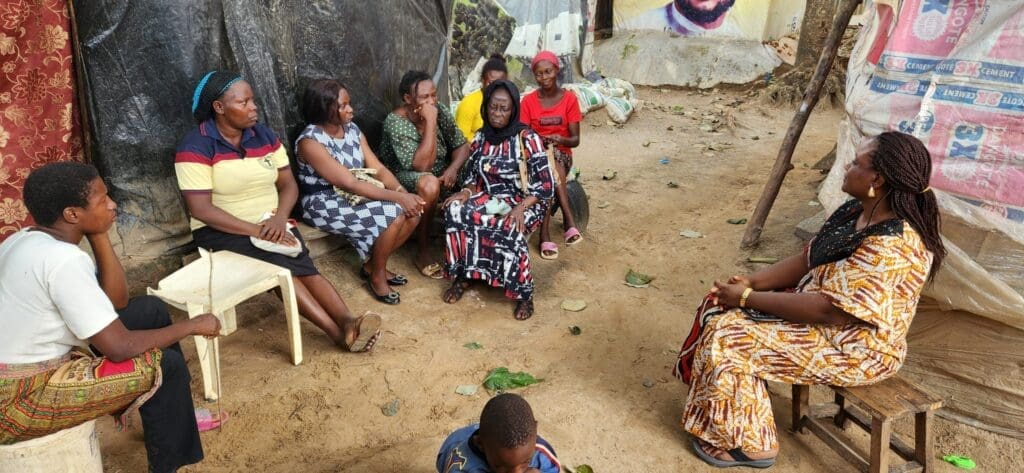
She had grown up in a Christian family but in a Muslim neighborhood in Northern Kaduna State, where deadly religious riots were common in 2000. She knew the pain of displacement herself. And in November 2023 she walked into one of Abuja’s overcrowded displacement camps with a vision for helping women who had lost everything. The masses of women with children there were far from the villages they once called home. They had lost husbands, children, and livelihoods to violence and were piecing together new beginnings.
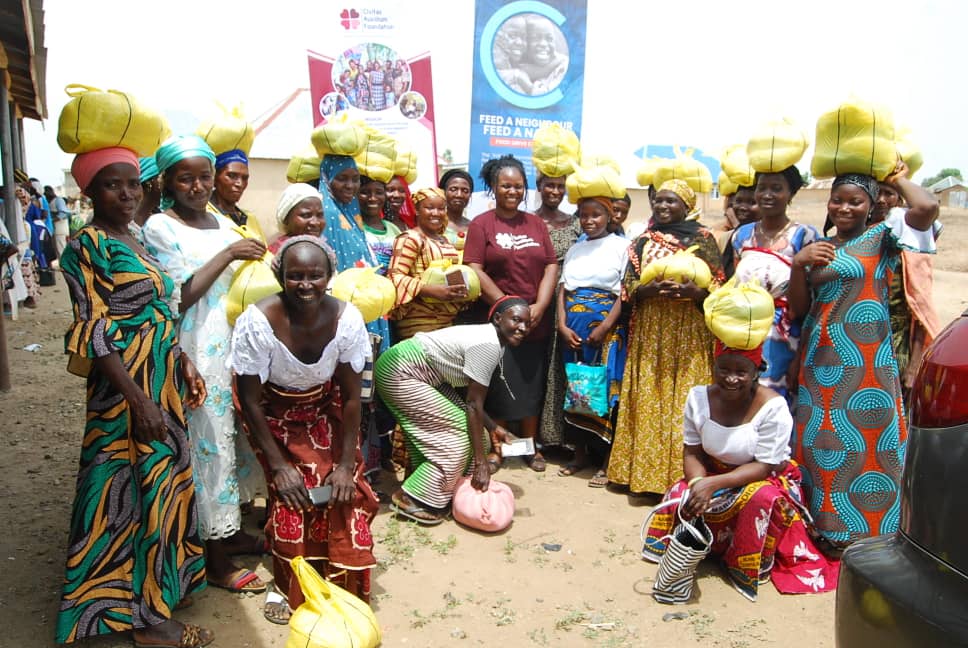
But due to her efforts, a group of 100 women battling scarce food and unsafe shelters today are learning to read, starting small businesses, and slowly reclaiming a sense of dignity.
The Weight of Displacement
For nearly a decade, conflict driven by the Boko Haram (Western Learning Forbidden) insurgency and Fulani ethnic militia/banditry have forced millions of Nigerians from their homes.
Nigeria now hosts an estimated 8.18 million internally displaced persons (IDPs) as of mid-2025, the largest population in West Africa. The country alone surpasses the combined displaced populations of Burkina Faso (3.58 million), Niger (2.06 million), Mali (931,000) and Cameroon (1.42 million).
The crisis reflects overlapping emergencies: Islamist insurgency in the North-East, banditry in the North-West, and Fulani- ethnic-militia attacks in the Middle Belt.
Daily life in IDP camps is grim, as the camp staffs and informal host communities are stretched thin. Families squeeze into tents or abandoned classrooms, surviving on substandard food rations. Clean water is scarce, and healthcare is minimal.
Women and children make up nearly 80 percent of the displaced. Many still bear the trauma of witnessing murder or abduction of husbands and children. Even in supposed places of refuge, they face sexual violence, exploitation, or forced marriages.
Her newly founded Civitas Auxillium Foundation (CAF), is restoring dignity and independence to women by bringing them literacy and a hand up to small-scale enterprises.
A Survivor’s Burden Becomes a Mission
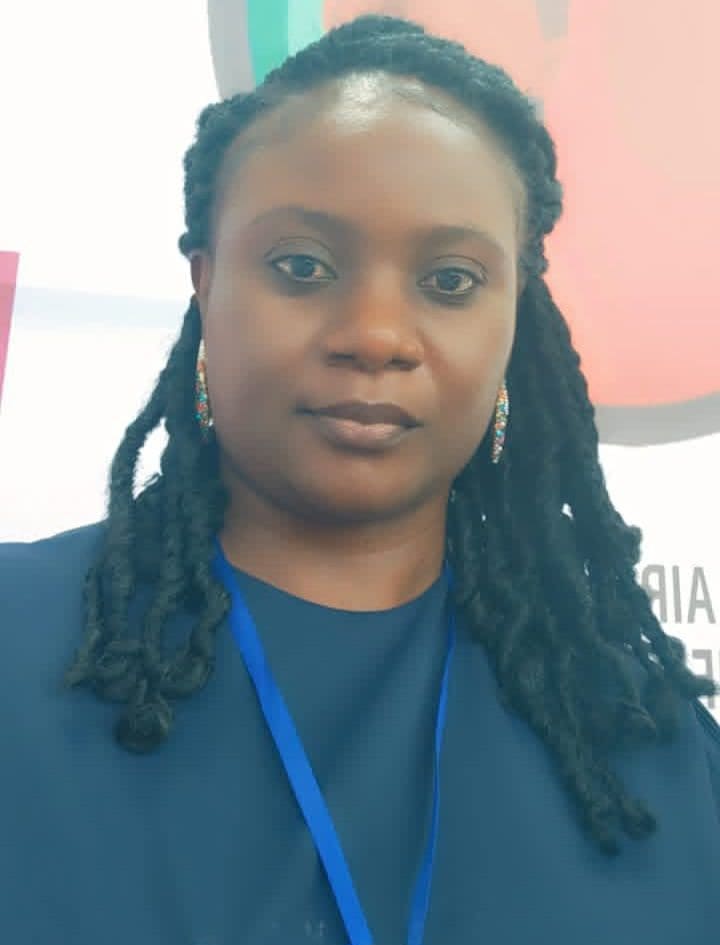
“CAF was born out of both a burden and a conviction,” Duile told TruthNigeria exclusively. “Over the years, I had worked in communities across Nigeria and encountered women and children who were victims of violence, displacement, and conflict. I realized that while emergency aid was often provided, very little was being done to rebuild lives and restore hope in a sustainable way.”
Her own scars from violence and life in refugee camps made her vow to become the help she once needed.
“I have been a victim of violence and had stayed for days in a refugee camp multiple times. I was traumatized and lived with the trauma for a long time. This made me realize that people in such situations need help,” she said.
“Our mission is anchored on economic empowerment, literacy, and dignity restoration, because we believe that true recovery begins when people are equipped to stand on their own feet again.”
Restoring Dignity Through Literacy
CAF runs adult literacy classes in IDP camps in Abuja. Women who once signed forms with thumbprints are writing their names. Some are learning English well enough to help their children with homework.
Duile said the program began after she observed that many displaced women could neither read nor write, a limitation that blocked them from opportunities and even everyday decision-making.
“We started small, with basic literacy and numeracy classes at the Wassa IDP camp in Abuja in November 2023,” she explained, “but we are planning to scale into a structured program where women learn reading, writing, arithmetic, and practical skills like health education and financial literacy.”
“The transformation we have seen has been incredible. Women who once felt invisible now confidently write their names, read simple text, and engage in conversations with a renewed sense of dignity.”
Duile believes literacy is more than learning letters of the alphabet. “The program is not just about reading and writing,” she said. “It is about self-discovery, self-worth, and unlocking possibilities.”
Small Loans, Big Impact
Yet education alone cannot meet the urgent needs of women struggling to provide for themselves and their families.
CAF, operating on a shoe-string annual budget of N15 million (approximately $10,000) has been largely self-funded by Elizabeth herself; she works part-time as a contractor with Nigerian NGO’s and enjoys support from The International Committee on Nigeria.
The foundation provides interest-free loans to displaced women to start small businesses, giving them a chance to earn an income and regain independence.
“The interest-free loan scheme was designed to address the financial barriers that keep women stuck in dependency,” Duile said. “Most displaced women are skilled but lack capital to start even the smallest businesses.
“By providing these loans through a Grameen-style model, where they hold themselves accountable and make repayments easy, we recorded over 97 percent repayment without fail. We have seen women start petty trading, food vending, and other micro-enterprises.”
She shared the story of a woman who used her first loan to set up a small food stall.
“She fries bean cakes and sells them to school children. Within months, she was able to repay her loan,” Duile narrated. “Stories like this remind us that when women are trusted with resources, they don’t just survive, they thrive, take care of themselves and their families.”
Seeds of Change
For Duile, the true measure of success lies not only in the numbers of women who can now read or run a business, but in their resilience.
“What gives me the greatest hope is the resilience and determination I see in these women. Despite all they have lost, they carry an unbreakable spirit,” she said. “When they learn to read for the first time, when they boldly request another loan to grow their business, or when they tell us, ‘I can take care of my children now.’ it proves that transformation is possible even in the toughest circumstances.”
Duile believes that every woman who finds her footing in literacy and enterprise is more than a survivor.
In her words, “The future is brighter because these women are not just beneficiaries. They are becoming leaders, role models in their communities. Every empowered woman is a seed of change, and collectively, they represent the possibility of rebuilding families, restoring communities, and even influencing the peace and stability of our nation. That is the vision that keeps us going.”
Donations may be sent to Iconhelp.org
Ezinwanne Onwuka is a special features writer for TruthNigeria.