
Soldiers at Burial Site Stop Photos
By Lawrence Zongo
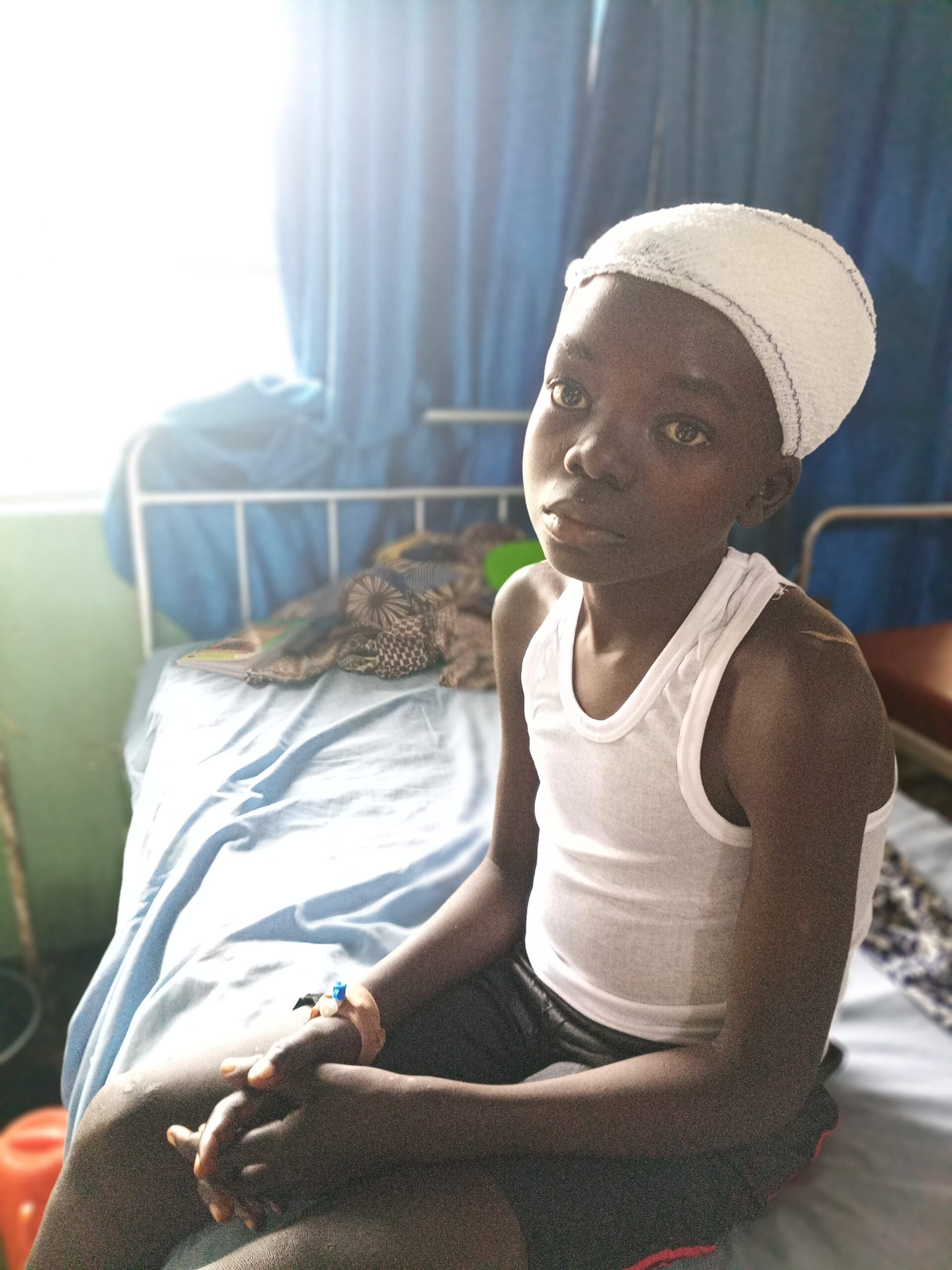
At least seven Christians were buried on Saturday, August 30, in the Irigwe farming hamlet of Nti Roku—known locally as Angwan Rimi an ethnic enclave of Christian Irigwe people in Kaduna State’s Kauru County. Armed killers stormed the village the previous night. Twelve others were injured in the raid, most of them children, and survivors remain stranded in Kaduna’s Barau Dikko Teaching Hospital with mounting medical bills after local authorities stopped paying for medication.
‘Our Leaders are Liars’
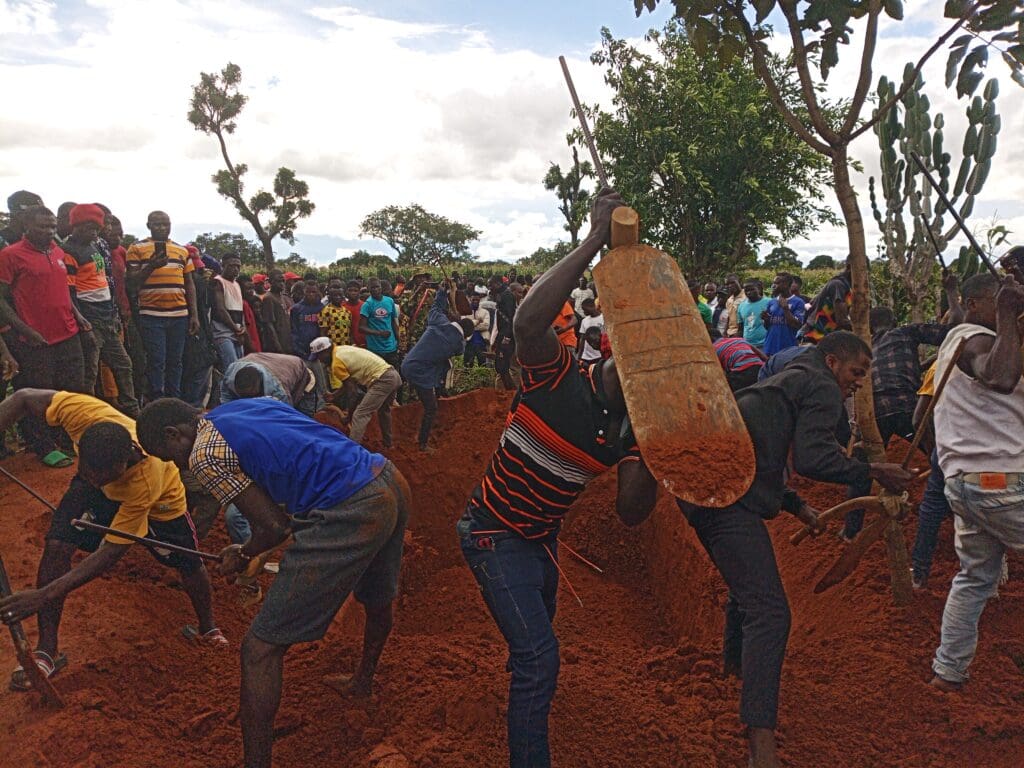
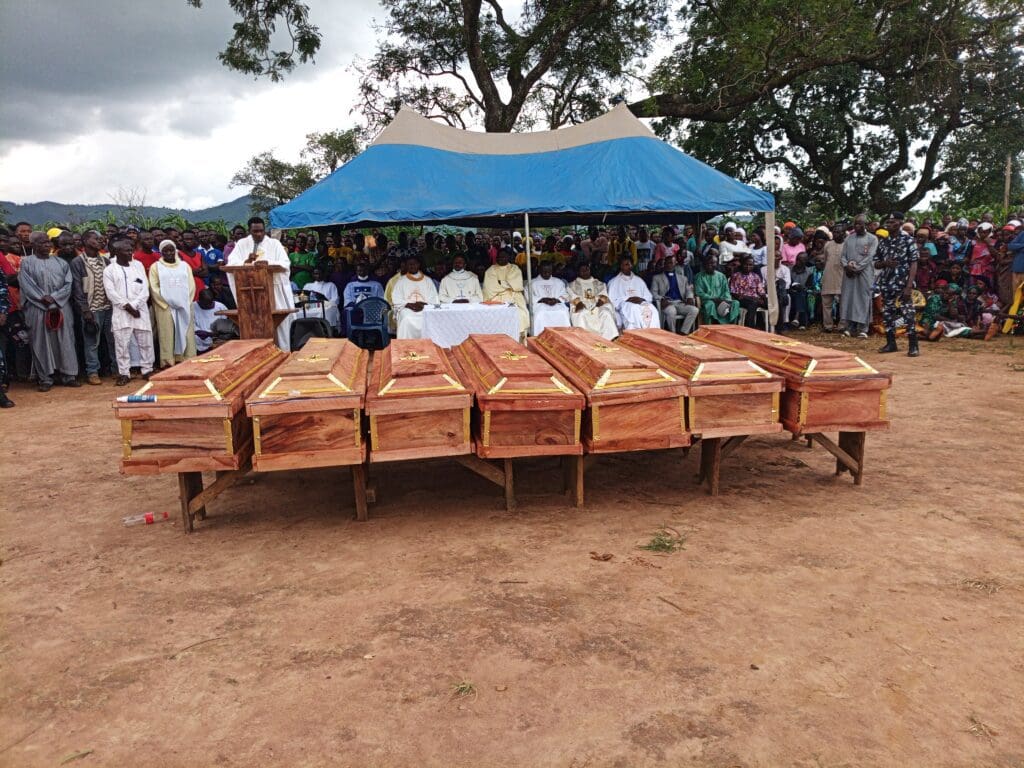
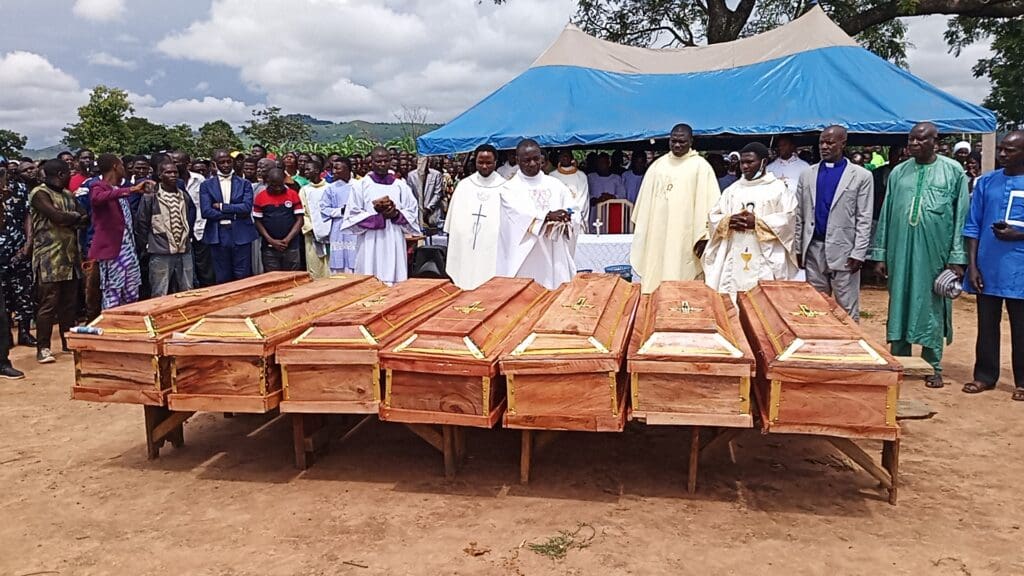
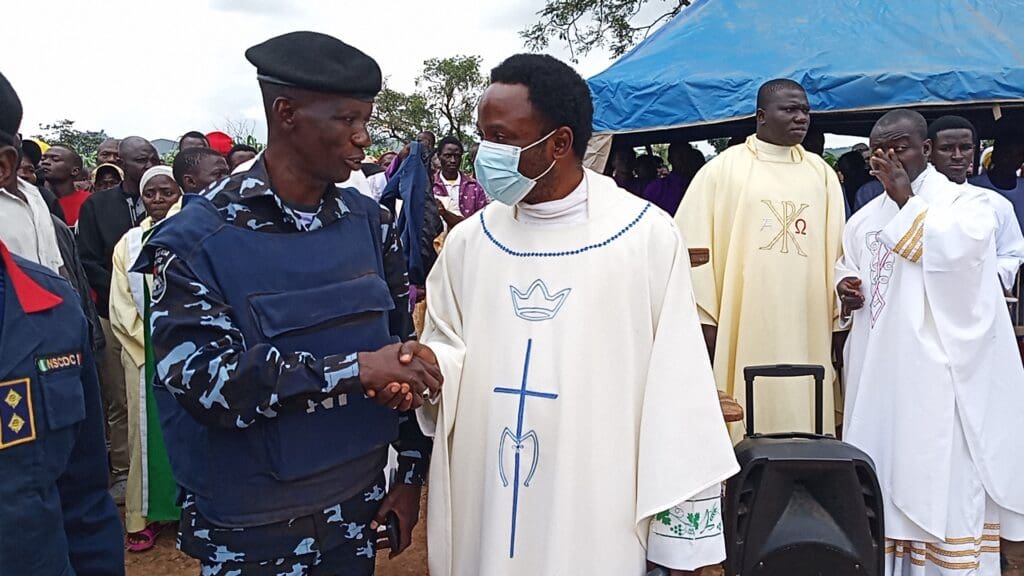
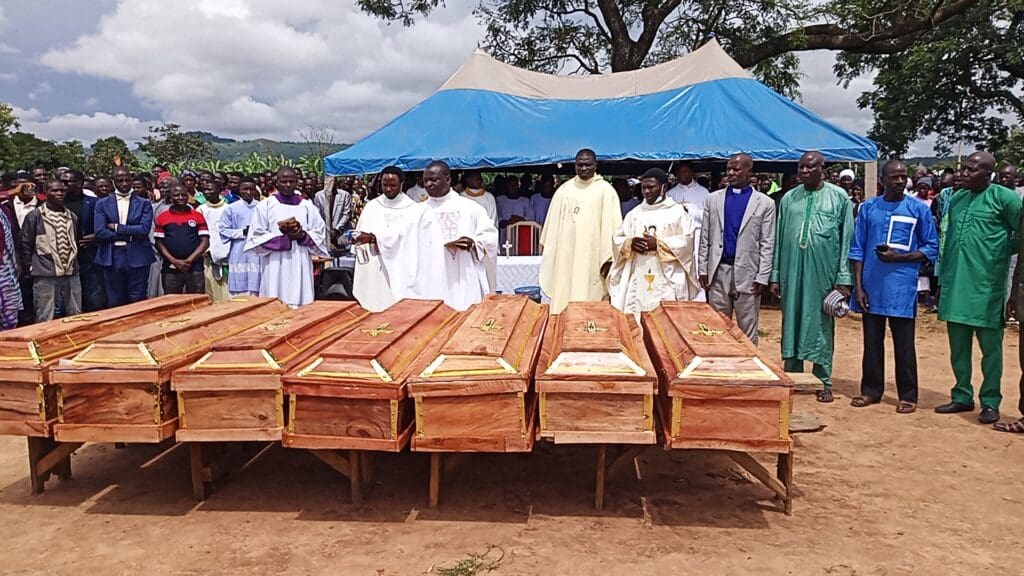
The victims were laid to rest in a mass burial at Ungwa Rimi LEA Primary School under the Sunday midday sun. The service was conducted by Rev. Father Mike Bisan, parish priest of St. Monica’s Catholic Church in Ikulu Pari. Standing before grieving families, he lamented what he described as the hollow promises of politicians.
“We are not asking for roads, hospitals, or schools,” Fr. Mike said. “We are asking that our lives be safe. Without safety, there is no way to enjoy social amenities. Our leaders are liars. If they were doing the right thing, these killings would stop.”
The priest urged the mourners not to reward with votes leaders who have failed to protect them. “Do not vote for political leaders who cannot secure your lives,” he said.
No state or federal officials attended to offer condolences, but security forces came in force. More than 50 soldiers and police were deployed—not to comfort the community, but to suppress press coverage, according to media professionals interviewed by TruthNigeria.
“The army stopped us from taking photos but could not stop the killers,” said Usman Mathew, a Nigerian Film Institute student in Jos who has been documenting violence against the Irigwe. He accused authorities of shielding perpetrators and silencing survivors. A soldier ordered a TruthNigeria reporter to stop taking photos and videos.
Children Abandoned in Hospital
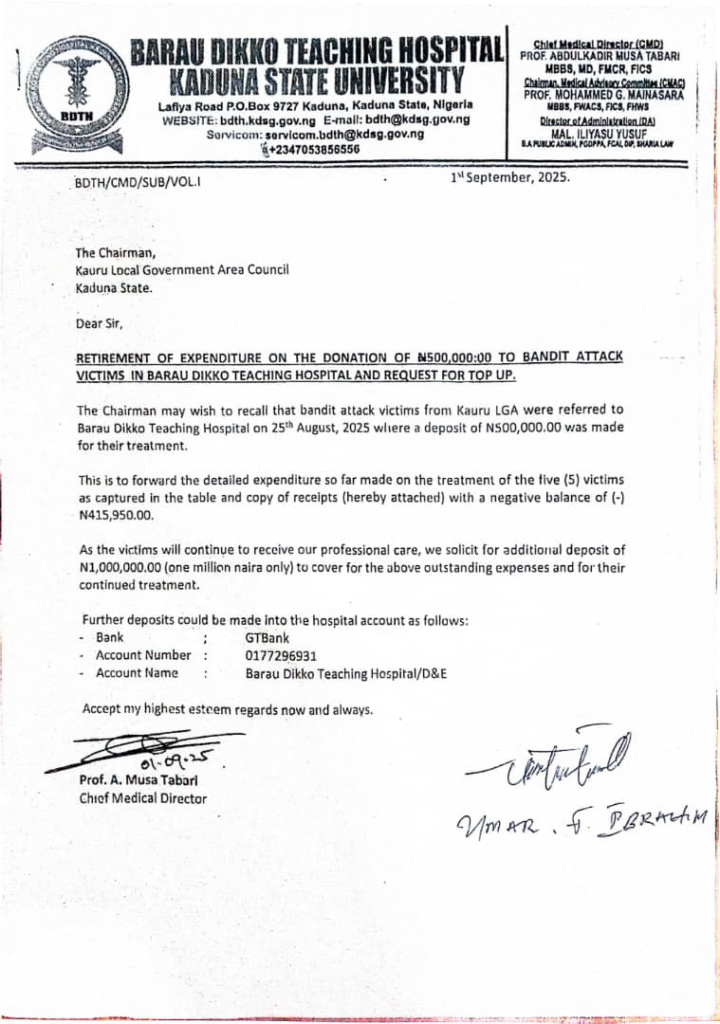
As the dead lay buried, survivors remained in Kaduna’s Barau Dikko Teaching Hospital with no clear path to recovery. Most of the 12 wounded are minors who suffered gunshot wounds and machete cuts.
Joshua Raphael, a 36-year-old resident of Angwan Rimi, has been caring for the children in hospital since the attack. He described a desperate situation where the hospital has refused to release medication without payment.
“Whenever we take a prescription, they send it to the Chief Medical Director (CMF) for approval. But today the CMD said he called the local Government (County) chairman and there was no response. They returned the prescription to me and told us to buy the drugs ourselves,” Raphael explained.
He said the victims’ hospital bill has reached nearly two million naira, after an initial deposit of five hundred thousand naira by Hon. Bashir Dawaki Tanko, chairman of Kauru Local Government Area (County). The deposit has long been exhausted, and since then, no further government assistance has been provided.
“The chairman visited once, but since then, nothing. We are on our own,” Raphael said. “These are children. They are still here in pain. If we cannot pay, they will not continue treatment.” The children who survived bullet gunshots and machetes cuts could not speak to TruthNigeria reporter due to pains and trauma.
A Cycle of Attacks
The killings in Angwan Rimi are part of a long-running wave of violence in Irigwe land that stretches from eastern Kaduna State to the western reaches of neighboring Plateau State. Community leaders say more than 300 people have been killed in and around Kamaru Ward since December 31, 2000, when the shadowy Fulani Ethnic Militia launched their first major raid.
No organizers of the Fulani Ethnic Militia have been arrested since 2020, and think tanks studying Nigerian terrorism haven’t named a single criminal kingpin, even though the FEM have killed more citizens than Boko Haram and Islamic State in West Africa (ISWAP) combined.
Locals say attackers often arrive at night on motorcycles, armed with assault rifles and machetes. Security forces do not respond for hours, blaming poor road access, and leave shortly after attacks without arresting suspects. Villagers describe a pattern of impunity.
So-called Peace Meetings Scorned by Locals
For many months the traditional ruler of the Irigwe ethnic association has organized a peace committee of 16 persons — with equal Irigwe and Fulani representation. The group recommended curbing night grazing, punishing farm destruction, and preventing children from herding cattle through farmlands.
Community elders say the agreements were a joke. “The agreements were thrown into the trash, and the killings continued,” one leader said.
Meetings organized by the local government and the traditional council also failed. Residents say they are usually told to “love one another” and to avoid reprisals, but when they report destroyed farms or stolen cattle, no criminals are arrested and punished. Instead, reporting sometimes triggers more violence.
The violence has left deep scars. Families are displaced, farmland abandoned, and widows and orphans left without support. Once-thriving agricultural communities that produced maize, sorghum, potatoes, and vegetables are now ghost settlements.
“Every harvest season, we farm with fear,” one displaced farmer said during the burial. “Sometimes you return to find your entire field grazed overnight.”
Authorities Accused of Cover-Ups
Community leaders accuse authorities of staging “peace meetings” with so-called unknown gunmen to give the impression of reconciliation. They allege these sessions are designed to mislead international observers, including the U.S. Mission in Abuja and foreign journalists, into thinking the crisis is merely communal misunderstanding rather than systematic violence.
“The narratives are twisted,” said the National Publicity Secretary of the Irigwe Youth Movement. “For 25 years we have faced constant attacks. Over 2,000 of our people have been killed. Thousands displaced. Farms destroyed. Billions in property lost. Yet some media still call this a farmer-herder clash or banditry. That is false.”
Nuhu Nga, the National Publicity Secretary of Miango Youth Development Association called for permanent military posts in Irigwe flashpoints, round-the-clock patrols, drone surveillance, and stronger enforcement of bans on night grazing and motorcycle movement. Nga told TruthNigeria “the government needs to establish fast-track courts for rural killings, publish quarterly updates on prosecutions, and provide witness protection so survivors can testify.
Other demands include compensation for destroyed crops, rebuilding of villages, early-warning systems, and expanded community radio to counter misinformation in both Irigwe and Fulfulde.
Appeal to the International Community
At Barau Dikko Teaching Hospital, where the injured children remain under treatment, Raphael appealed for outside help.
“We are citizens of this country, and we elected our leaders. But the government has abandoned us,” he said. “We need permanent security, we need our roads repaired, and we need medical help now. The hospital is asking for two million naira [$1,500]. Without support, these children cannot continue their treatment.”
He also called on NGOs and the international community to provide medical relief, strengthen local health services, and support victims with food, shelter, and education.
A Region in Peril
The burial at Angwan Rimi is not an isolated event. It marks another episode in an unbroken cycle of raids, funerals, and unfulfilled appeals for justice in Nigeria’s Middle Belt. Survivors say they no longer expect much from official channels. “This is not the first time. Since 2000, it has not stopped,” Raphael said. “If nothing changes, more burials will follow.”
Lawrence Zongo is a Human Rights Defender and Campaigner, and a conflict reporter for TruthNigeria.