
By Mike Odeh James
(Abuja) What began as isolated ambushes in Benin’s national parks has morphed into a regional crisis with global implications. Jihadist groups once confined to the Sahel are now advancing toward West Africa’s coastal states—Benin, Togo, Ghana, and Côte d’Ivoire—threatening the economic arteries of a continent and the strategic interests of the West. For Nigeria, the violence is no longer a distant echo but a domestic siege. For the United States, the stakes include disrupted trade routes, endangered mineral supply chains, and the risk of terror reaching beyond Africa’s shores.
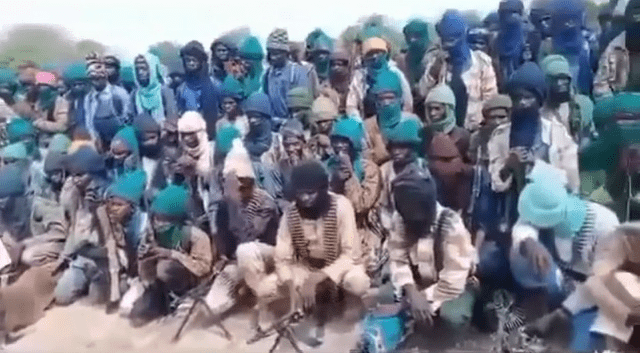
In February 2022, militants detonated a roadside mine inside W National Park in Benin, killing 54 rangers and soldiers. Attributed to an al-Qaeda-linked group – Jama’at Nusrat al-Islam wal Muslimeen, (Jnim), the massacre was the deadliest attack by this jihadist insurgency since it surfaced in 2020. It was a grim prelude to escalating violence.
The same group claimed to have achieved simultaneous attacks July 1, 2025 on seven military locations in western Mali, including near the borders with Senegal and Mauritania, according to the BBC.
These attacks signal a dangerous trend: jihadist groups, once confined to the Sahel, are entrenching themselves in the littoral states of West Africa. Exploiting instability in Burkina Faso, they are pushing toward the Gulf of Guinea, threatening a region long seen as a buffer against extremism.
A Spreading Threat
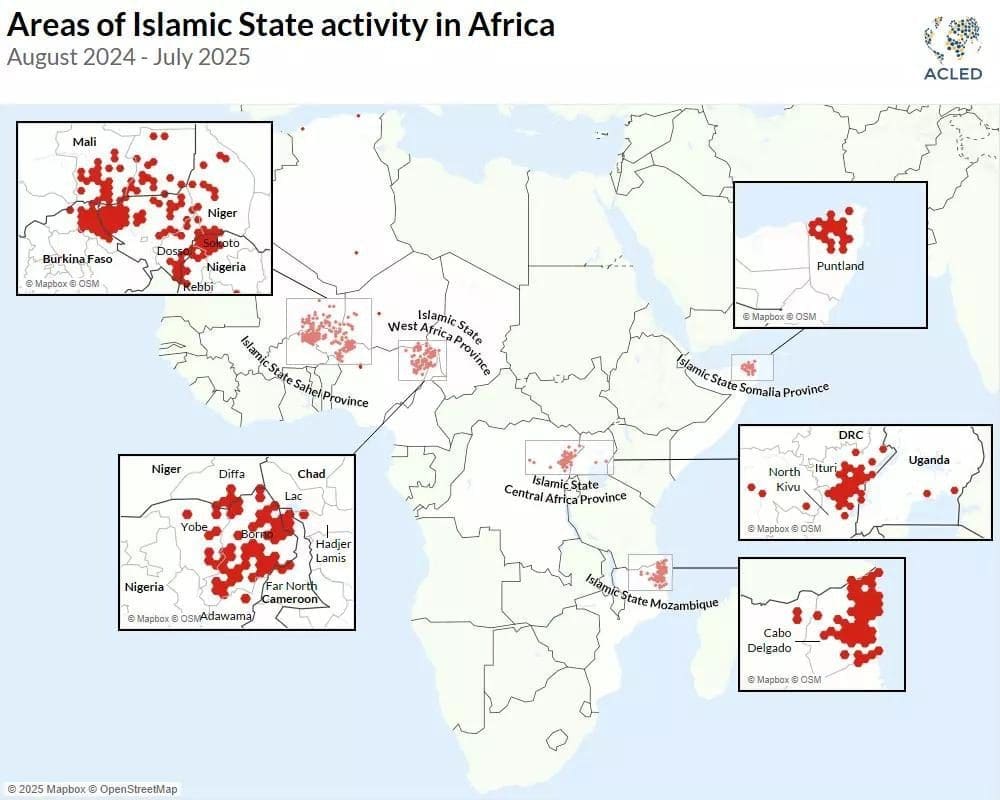
The violence is no longer limited to Benin. Security analyst Friday Agbo, Managing Director of Alterconsult, warns that Gulf of Guinea states—Benin, Côte d’Ivoire, Togo, and Ghana—are under growing threat.
“Al-Qaeda’s Jama’at Nasr al-Islam wal Muslimin (JNIM) and the Islamic State in the Greater Sahara (ISGS) are extending operations from Mali, Burkina Faso, and Niger into coastal West Africa, exploiting porous borders and fragile state defenses,” Agbo told TruthNigeria.
Côte d’Ivoire has suffered multiple strikes. In March 2016, al-Qaeda gunmen stormed the Grand-Bassam resort, killing 19. Four years later, a military outpost at Kafolo was hit, leaving 14 soldiers dead.
Four men affiliated a civilian volunteer defense force were killed on Aug. 26 near the Burkina Faso border, allegedly as retribution for resisting the jihadists.
Togo had its wake-up call in May 2022, when an ambush killed eight soldiers in the north. Ghana has so far avoided a major attack, but intelligence points to infiltration and recruitment in its northern borderlands.
In a night attack by JNIM on Oct 1, 2024, 9 civilian workers and 10 Togolese soldiers were killed by an attacking force that included many women and children, according to Fides.org.
Why the Littoral States Matter
These coastal nations are West Africa’s economic backbone.
With a “blue economy” utilizing abundant marine and life, generating nearly US$300 billion annually, more than 90 percent of regional imports and exports move through their ports.
Their economies depend on fisheries, offshore oil and gas, tourism, and minerals including gold, bauxite, cobalt, and diamonds. For jihadists, they represent both symbolic and financial targets.
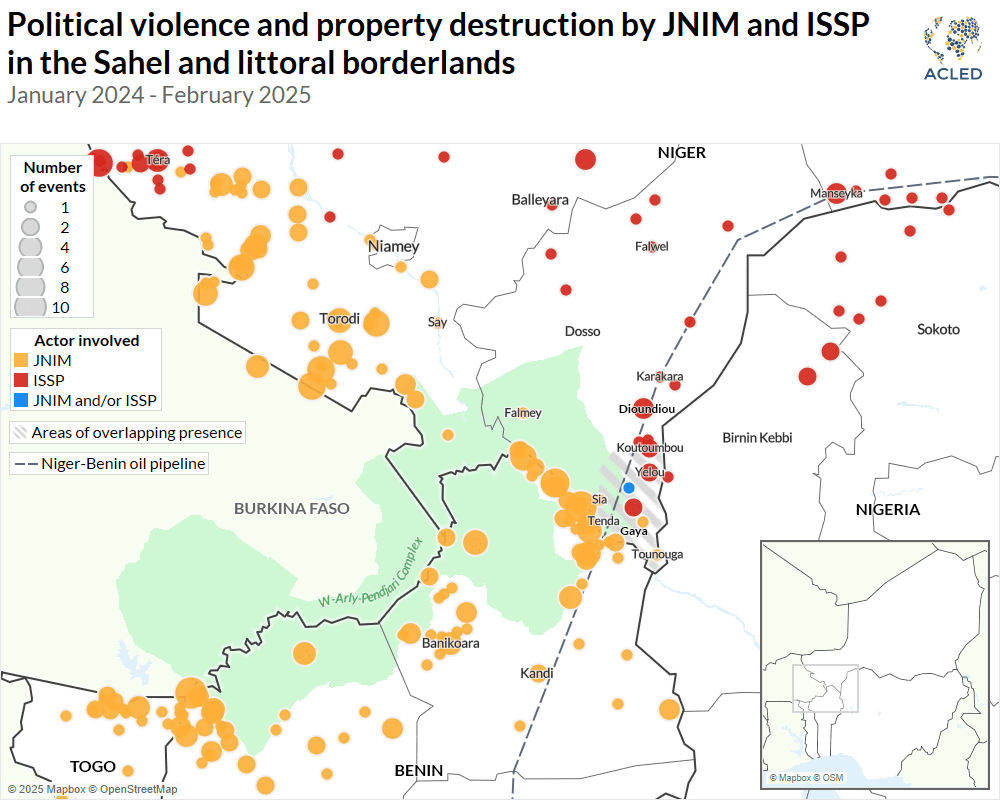
Data from the Armed Conflict Location & Event Data Project (ACLED) shows that since 2022 jihadists’ southward push has destabilized fragile economies and endangered civilians.
Benin has suffered repeated disruptions. Militants have struck the Benin–Niger oil pipeline, threatening vital revenues. Attacks on transport routes have raised food and fuel prices in the north.
In Togo’s Savanes region, incursions have displaced hundreds, closing schools and markets.
In Ghana, militants from Burkina Faso have sourced supplies and medical care in the Upper East region. Authorities foiled a bombing attempt in February 2023. The threat has forced Accra to divert resources from development to security.
In Nigeria’s northwest, fighters linked to Sahel groups have infiltrated Sokoto, Kebbi, and Kainji Lake National Park. Villages report killings, mass displacement, and looted harvests. Communities already battered by banditry now face worsening poverty.
Agbo points to porous borders, corrupt officials, and Western troop withdrawals as drivers of the crisis.
“The borders between Nigeria and Niger Republic, and between Niger and Benin Republic, are long and poorly manned,” he said. “Furthermore, border officials are either receptive to infiltration or outrightly corrupt, aiding and abetting jihadists.”
Similar lapses exist along the Benin–Burkina Faso frontier, giving militants free movement.
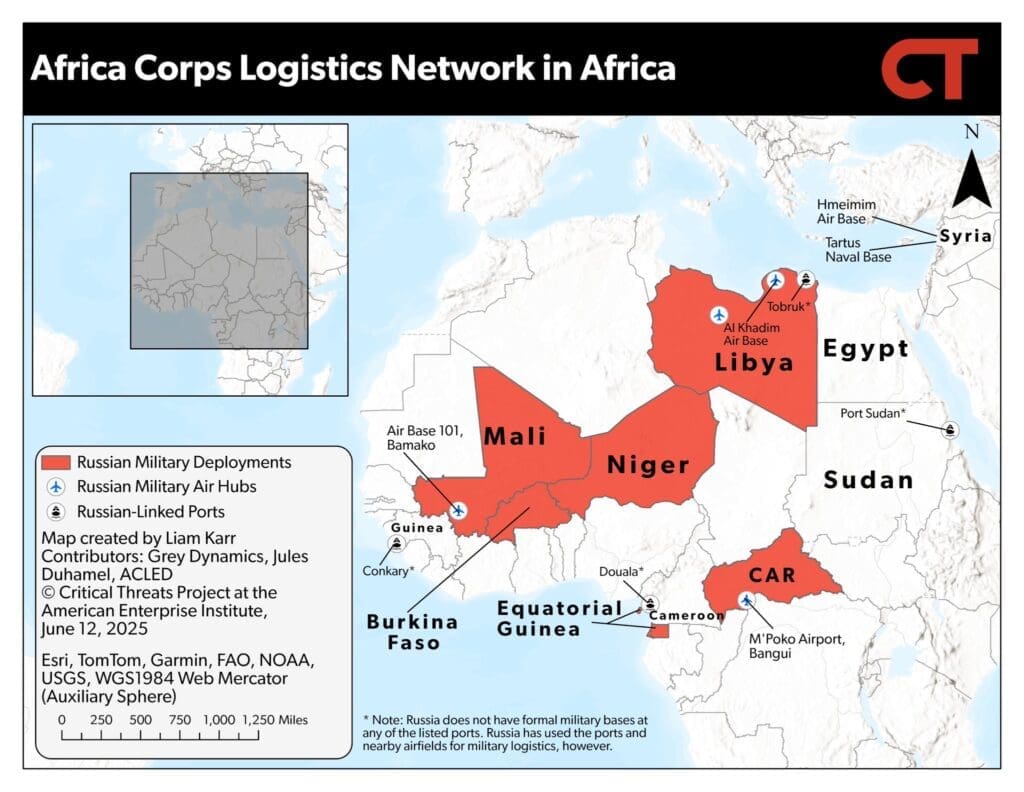
Agbo also traced jihadists’ growing confidence to recent coups in Mali, Burkina Faso, and Niger, which forced out French and American forces. Russian-linked Wagner mercenaries replaced them, but, he argued, “lack Western-level technology and hardware. This has allowed jihadist groups to flourish.”
The result is a vacuum where militants act as alternative rulers—collecting taxes, enforcing justice, and recruiting disaffected youths.
Political Risks
Scott Morgan, a Washington-based international security analyst, warned of rising militancy and political risks in Côte d’lvoire, Ghana and Nigeria.
- On Côte d’Ivoire: “Regarding the upcoming elections next month, which haven’t drawn the attention they should, President Alassane Ouattara is seeking a fourth term, and some opposition voices have already been silenced. This is another potential flashpoint.”
- On Ghana: “Militants have long focused on the northern crossroads of Bawku. The fact that trails used by JNIM and other groups intersect there should be a glaring red flag to terrorism analysts—not just in Africa, but also in the West.”
- On Nigeria: “It is disturbing to see Sokoto and Kebbi morph into replicas of the crises currently seen in Borno and Benue. The critical question is: where is the Nigerian government? Why are they not addressing the situation? Or is this a ploy to attract intervention from major world powers?”
“The replacement of Western forces by Russian private military contractors and Turkish subcontractors has not solved the problem. In fact, in some cases, it has only exacerbated the situation.”
Why America and the West Should Care
For Agbo, the crisis is not just regional but global. Jihadist control of coastal states would threaten shipping routes in the Gulf of Guinea, one of the world’s busiest corridors.
It would also disrupt oil, gas, and mineral markets essential to global supply chains. Unchecked expansion could give extremists a launchpad for international terror operations.
“If jihadists are allowed to disrupt the littoral states, they could seize land, kidnap American citizens, and even target U.S. installations. Weak governments might then be forced into strategic partnerships with America’s rivals, particularly China,” Agbo said.
Rare earth minerals found in Nigeria, Ghana, and Côte d’Ivoire—critical for modern technology—could also fall into the hands of terrorists or rogue Chinese entities.
“So, it is absolutely necessary for America and the West to be concerned,” Agbo said.
Mike Odeh James is a conflict reporter for TruthNigeria.