
By Mike Odeh James and Olikita Ekani
(Makurdi) Despite the deployment of Nigerian soldiers to Yelewata, killings by Fulani terrorists continue unabated.
The Tribal Chief of Yelewata, Mr. Julius Kumaga Joor, tells TruthNigeria that only the town center is relatively safe.
“You can’t walk two miles or go to the bush safely without being attacked,” he says. “Yes, soldiers patrol the main road, but that’s the limit of our safety. Outside the center, villages like Tse-Ikyogen, Orshio, Tse-Anjev, Tse-Ihoo, and Tse-Tor Branch Udei have all fallen. Their people are gone.”
A Village Turned Refugee Enclave
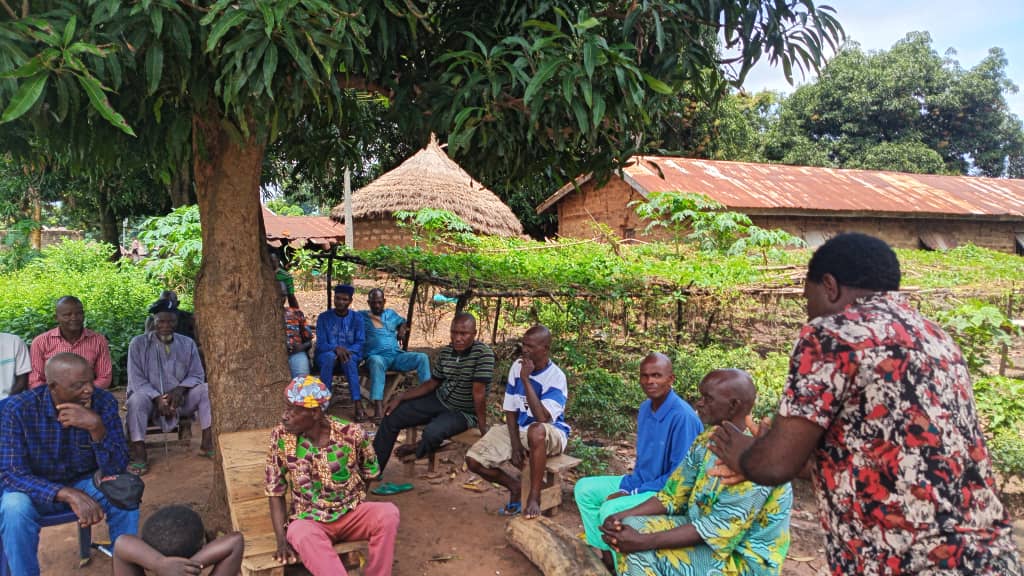
Yelewata, a once-thriving Christian farming settlement on the Benue–Nasarawa border, now lies under siege. Known for its fertile farmlands and vibrant Tiv community, the town has become a desperate refuge—its people trapped, its fields burned, and dozens of surrounding communities overrun by Fulani militias.
“Yelewata itself is now a refugee village,” says Franc Utoo, an attorney based in the United States and an indigene of Yelewata.
“Neighboring communities like Tse-Anundu, Tse-Aga, Tse-Ugbir, Tse-Ayua, Tse-Nyamor, and Tse-Bino are completely deserted,” he explains. “The Fulani have taken them over. Only the center of Yelewata is still safe, and that’s just because it lies along the highway to Makurdi. Everywhere else has fallen.”
Once surrounded by green fields and the hum of farm life, Yelewata’s outskirts now tell a story of ruin—fields scorched, homes emptied, and families displaced.
Scorched Earth and Starvation
According to Utoo, Fulani militants have destroyed surrounding farms in what he calls a deliberate strategy of starvation.
“They’ve scorched the earth—burning crops, poisoning the soil—so that the few Tiv people left can’t grow food,” he says. “It’s a systematic attempt to make life impossible for the remaining Christians.”
Villagers say farmlands in places such as Tse-Iortyer, Tse-Achin, Tse-Abuul, Tse-Ate, and Tse-Kumaiin were destroyed within weeks of one another. Residents can no longer venture even a mile into the bush without risking their lives.
“Anyone who tries to farm beyond the main village,” Utoo warns, “is either ambushed or killed.”
‘They Burned Our Farms and Poured Chemicals on the Soil’
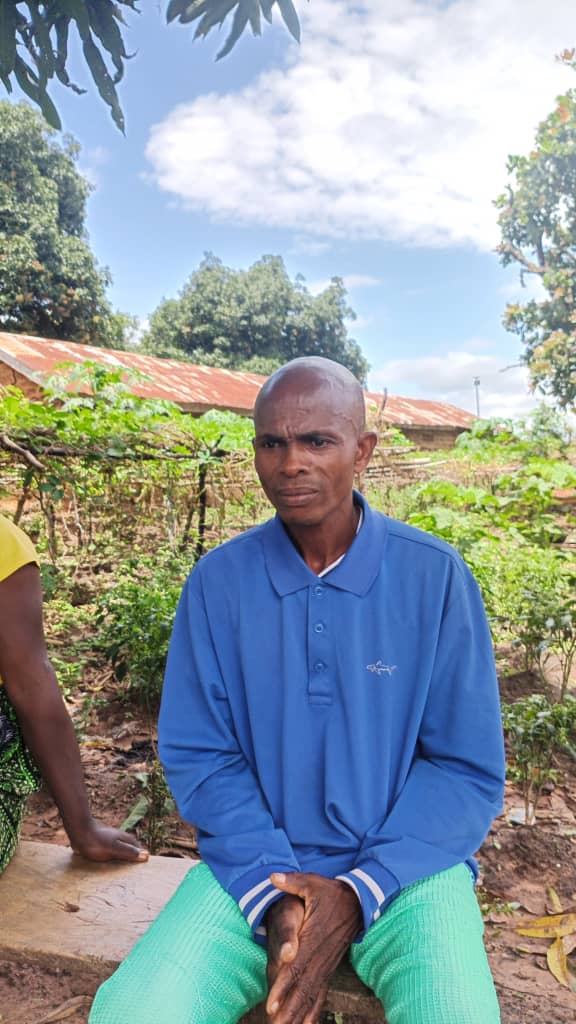
Terwase Julius, a 51-year-old farmer and lifelong resident, confirms Utoo’s account.
> “Our farming communities—Ucha, Mbagbange, Tse-Shior, Tse-Aji, Tse-Jebu, and Tse-Kpeikyaa—have all been taken over,” he laments. “The Fulani terrorists expelled our people, seized our land, and settled there with their families and cattle.”
He describes the destruction in heartbreaking detail.
“The farms close to Yelewata were burned and doused with chemicals so that crops won’t grow again,” he says. “They want us to starve.”
Fulani Expansion and the Rise of Mosques in Occupied Villages
Residents report that after displacing Christian families, Fulani settlers have begun building homes—and mosques—on the same land once occupied by Tiv farmers.
“We’ve seen them move in their wives, children, and cattle,” Utoo says. “They’re living normal lives in villages like Tse-Anhwer, Tse-Gbande, Tse-Ikyoon, Tse-Vianbe, and Tse-Zayol—places that once echoed with church bells.”
He adds:
“In at least ten of these villages—Tse-Anundu, Tse-Aga, Tse-Ugbir, Tse-Ayua, Tse-Nyamor, Tse-Bino, Tse-Shior, Tse-Aji, Tse-Kpeikyaa, and Tse-Anhwer—the Fulani have built mosques where our churches once stood.”
Julius, who risked his life to revisit one of them, corroborates the claim.
“When I sneaked back into Mbanawu,” he recalls, “I saw a mosque standing where we used to worship. It broke my heart. This is happening across Tiv land—our land.”
The Gidan Sule Stronghold: A Terror Base Rebuilt
According to Utoo, a major Fulani base operates out of Gidan Sule in neighboring Nasarawa State.
Utoo, who once served under former Benue Governor Samuel Ortom, says the camp was bombed years ago by state security forces.
“Governor Ortom’s administration deployed drones to bomb that terrorist camp,” he recalls. “But the Fulani regrouped and rebuilt it, stronger than before.”
Villagers believe the Gidan Sule base now supplies fighters and weapons for attacks across Benue’s borderlands.
‘We’re Trapped on the Highway’
For the few hundred Tiv Christians who remain, survival has become an act of endurance.
“We can’t go to the farms. We can’t return to our homes,” says Julius. “We’re trapped on the highway—our last line of defense is the road itself.”
Every night, families huddle in fear as gunfire echoes from nearby villages already occupied by the invaders. With farms destroyed and food scarce, they now depend on charity from churches and traders from Makurdi.
Echoes of Bosnia and Herzegovina
David Onyilokwu Idah Director International Human Rights Commission Abuja, draws chilling parallels between Yelewata’s ordeal and the ethnic-cleansing campaigns in Bosnia and Herzegovina during the 1990s. Just as Bosnian Serb militias used terror, starvation, and religious persecution to drive out Muslim communities, Fulani militias are employing similar tactics against Christian farmers in Nigeria’s Middle Belt—razing villages, replacing churches with mosques, and uprooting entire populations.
A Plea for Help
From his office in the U.S., Franc Utoo issues a painful plea:
“What’s happening in Yelewata is not just communal violence—it’s a campaign of ethnic and religious cleansing. These are people who have lost everything—homes, churches, farms, and family members. They are surviving only because they are too close to a highway to be completely wiped out.”
He calls on the U.S. government, human-rights organizations, and faith-based groups to recognize the crisis and pressure Nigerian authorities to act.
“America must stand with these people,” Utoo insists. “Because silence will mean extinction.”