
U.S. Senators Request Secretary of State Call Out Nigeria
By Onibiyo Segun
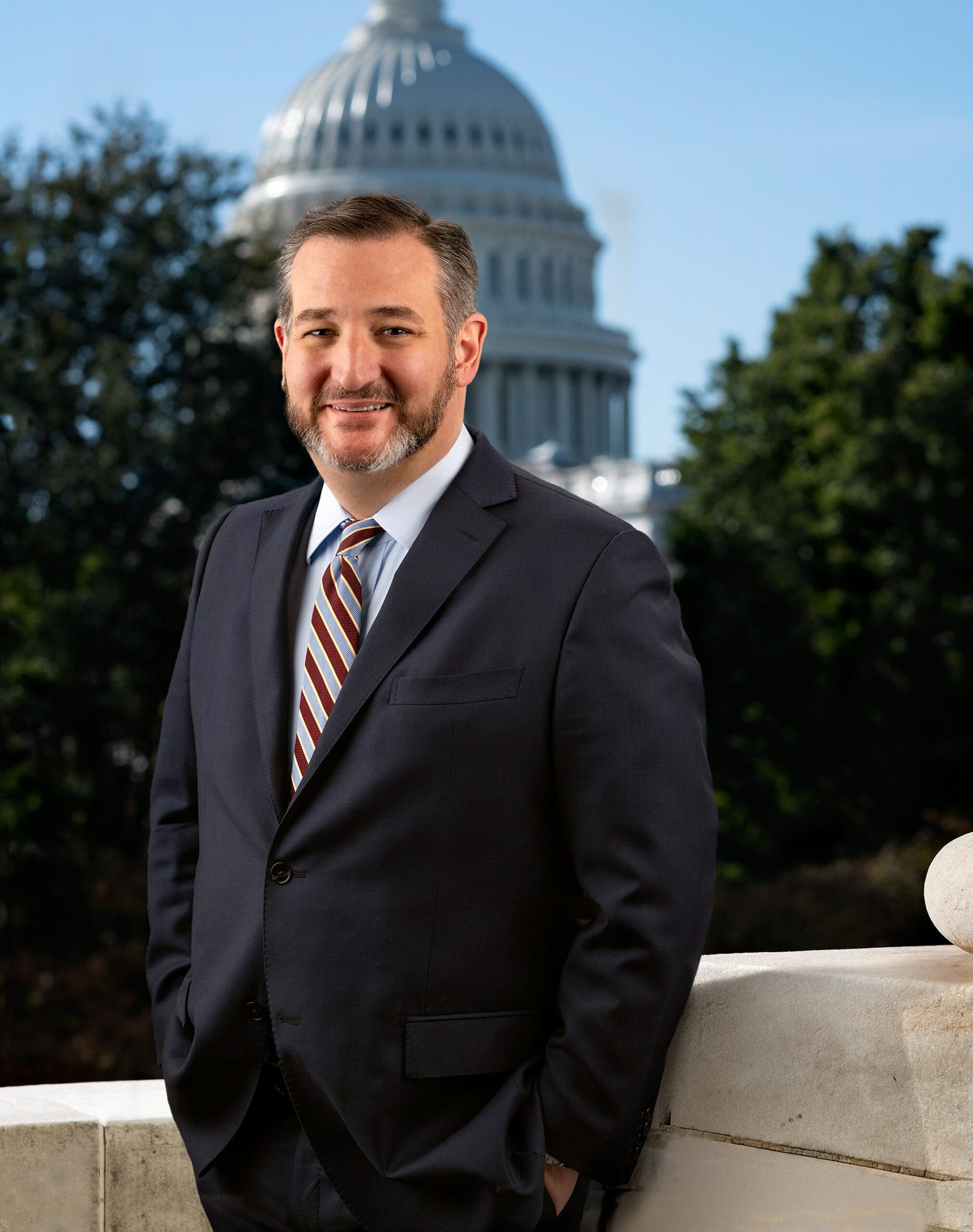
FCT, Abuja, Nigeria – When U.S. Senator Ted Cruz raised the alarm, describing the ongoing violence in Nigeria as “genocide against Christians”, his words landed like a bombshell in Abuja.
Cruz’s remarks came as part of a renewed push in the U.S. Congress to re-designate Nigeria a Country of Particular Concern for religious persecution.
In March 2025, U.S. Congressman Chris Smith had also called for Nigeria’s return to the U.S. religious freedom blacklist. He accused the Tinubu administration of turning a blind eye to the “systematic slaughter of Christians,” citing years of mass killings in Plateau, Benue, and Southern Kaduna.
Also, Congressman Riley Moore wrote a letter dated October 6, 2025, on the persecution of Christians in Nigeria addressed to the honorable Marco Rubio, U.S. Secretary of State.
The Nigerian government quickly pushed back, dismissing the claim as “foreign propaganda designed to destabilize national unity.”
For many Nigerians, Senators Ted Cruz, Chris Smith and others warning wasn’t new. The violence has endured for over a decade – villages razed, pastors murdered, and churchgoers abducted in their pews. What shocked many was that a U.S. lawmaker was finally echoing what local communities have screamed for years: “We are being hunted because of our faith.”
A Nation Under Fire and a Government Under Scrutiny
Smith’s statement has reignited global concern over the persecution of Christians in Nigeria, forcing renewed international scrutiny of President Bola Tinubu’s administration. The Tinubu-led APC government faces mounting pressure to explain its approach to the crisis. Critics accuse it of using clerical alliances and church visits to mute outrage instead of pursuing justice.
In September, photos of northern pastors meeting with the president at Aso Rock drew sharp reactions online, a meeting many dismissed as “public relations, not policy.”
At the center of the controversy is the Christian Association of Nigeria (CAN), the umbrella body representing millions of Christians nationwide. In a recent statement, CAN’s national leadership condemned ongoing attacks in Plateau and Benue, warning that Nigeria risked becoming “a killing field for believers.” The group urged the government to stop politicizing faith and take decisive action against what it called “ethno-religious cleansing.”
However, not all within CAN share that sense of urgency. In a contrasting position published by The Guardian, CAN’s Director of National Issues and Social Welfare, Abimbola Ayuba, dismissed claims of an orchestrated Christian genocide. He argued that while killings are real and tragic, they “lack a religious pattern,” affecting both Christians and Muslims depending on location.
Ayuba’s statement deepened the divide within the Christian community. While some saw his caution as an attempt to maintain unity, others accused him of downplaying a humanitarian crisis for political safety.
“You cannot say it’s patternless when entire Christian villages vanish overnight,” said Rev. Samson Oninla, a reverend in ECWA (Evangelical Church Winning All) in Kwara State, whose fellow pastor Auta Issah was abducted in August and later killed in October by Fulani Ethnic Militia terrorists in Ekati, Patigi county, Kwara State, North-Central Nigeria.
Beyond politics, CAN’s credibility is also strained by scandals within Christian-run institutions. The Nigeria Christian Pilgrim Commission (NCPC) – a government-backed agency headed by Christian appointees, was investigated for alleged embezzlement and financial misconduct.
A Crisis of Silence and Spin
Human rights organizations have repeatedly warned that such semantics are dangerous. Amnesty International and Human Rights Watch have both accused Nigerian authorities of selective reporting and failure to prosecute perpetrators.
“When the government refuses to call a massacre by its name, it signals impunity,” said Amnesty’s Nigeria researcher, Isa Sanusi.
Yet Nigeria’s federal government insists the killings stem from clashes over land, not religious persecution. Information Minister Mohammed Idris told journalists that “banditry and terrorism have no faith identity.” He accused Western media of “weaponizing religion” to tarnish Nigeria’s image ahead of investment talks.
Analysts Link the Violence to Systemic Failure
Security analysts, however, say the truth lies deeper. “While not every attack is religiously motivated, targeting patterns show a disproportionate toll on Christian communities,” said Kabiru Adamu, a defense consultant in Abuja, told TruthNigeria. He noted that many attackers self-identify as Fulani Ethnic Militias with ideological ties to ISWAP and other jihadist groups.
A senior retired intelligence officer added that the consistency of attacks – mostly in Christian-dominated villages – suggests coordination, not coincidence. “These are not random crimes. They follow clear timelines and geography,” he said.
From Plateau to Benue, Taraba to Kaduna, the violence has forced hundreds of thousands from their homes. Displacement camps are overcrowded, with aid workers warning of food shortages and trauma among children.
“Every time I hear gunshots, I hide under the bed,” said 10-year-old Foluke Obanure, whose father was killed in Egbe, Yagba West County, Kogi State.
The Moral Reckoning
The Christian genocide debate now polarizes both the church and the state. Some bishops warn that the government’s alliance with select clergy is an attempt to sanitize its global image. “They call it interfaith dialogue, but it’s political choreography,” said a Catholic priest in Abuja who requested anonymity.
Meanwhile, CAN’s public stance continues to oscillate between diplomacy and defense. Insiders admit that open confrontation with the government could jeopardize access and influence, yet silence, many say, is deadlier.
As the U.S. and Nigeria trade words, the victims’ graves tell the real story. Whether one calls it genocide, ethnic cleansing, or lawlessness, the result is the same: entire communities erased.
“If the church and the state keep arguing over definitions,” said Rev. Auta, “we may run out of Christians to defend.”
Onibiyo Segun reports on terrorism and conflicts for TruthNigeria