
By Ezinwanne Onwuka
When President Bola Ahmed Tinubu granted pardon and clemency to 175 convicts on October 10, 2025, the government hailed it as a milestone in justice reform. But advocates say the gesture falls short of addressing deeper structural injustices, especially for people like Sunday Jackson, a young Christian farmer still on death row for defending himself against an armed Fulani herdsman.
A Broad Sweep of Mercy
The Nigerian President pardoned 15 former convicts (11 posthumously) and two inmates, granted clemency to 82 inmates, and commuted the sentences of 65 inmates. Seven inmates on death row had their sentences commuted to life imprisonment.
The presidential pardon covered a wide range of offenders from drug traffickers and illegal miners to white-collar criminals and posthumous colonial-era figures.
The presidency called the move a “significant step toward promoting justice, rehabilitation, and human rights in Nigeria.”
The action followed the recommendations of the Presidential Advisory Committee on the Prerogative of Mercy, chaired by Attorney-General and Justice Minister Lateef Fagbemi. The committee, established in January, reviewed hundreds of petitions before submitting its report to President Tinubu and the Council of State.
A statement from the presidency said the 175 beneficiaries included elderly inmates, the terminally ill, juveniles, and long-term prisoners who showed good conduct or acquired vocational skills while in custody.
The Forgotten Christian Farmer on Death Row
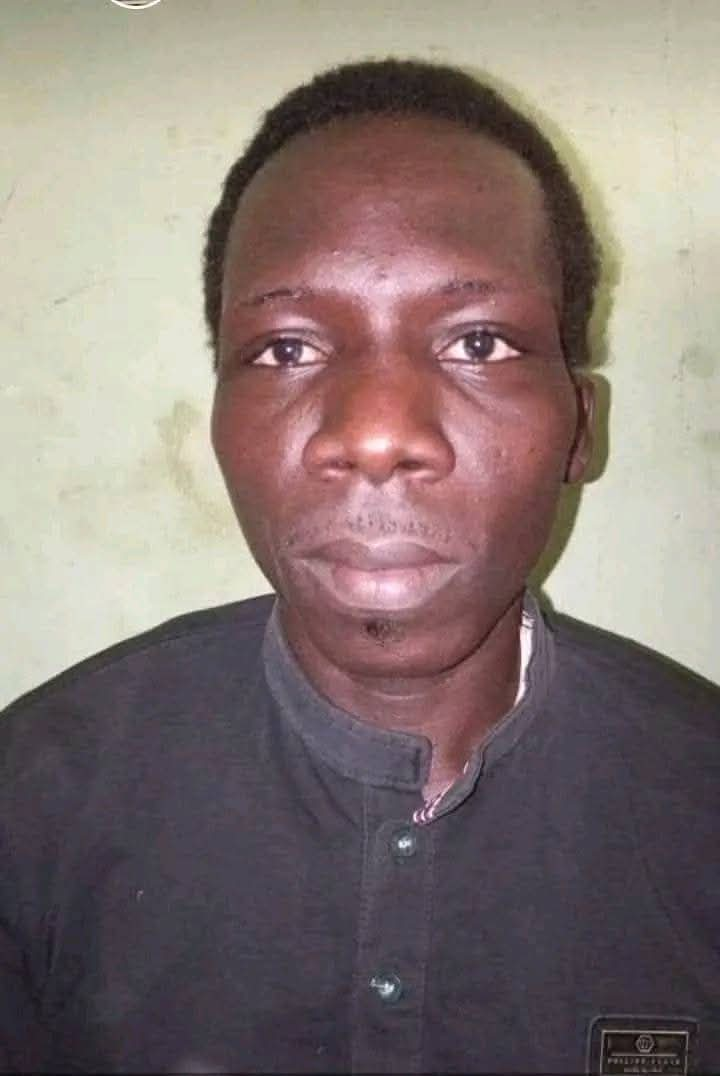
Many expected Sunday Jackson, 30, to be among those freed. He was not.
Jackson, a Christian student and farmer from Adamawa State, has spent nearly a decade behind bars for killing a Fulani herdsman in self-defense.
In 2015, when Jackson was 20, a herdsman named Buba Ardo Bawuro trespassed on his farm with cattle. When Jackson confronted him, Bawuro attacked with a knife, stabbing Jackson in the leg. Bleeding and desperate, Jackson wrestled the weapon away and, in the ensuing struggle, Bawuro lost his life.
Police arrested Jackson days later. He was charged with culpable homicide punishable by death and held for seven years before his conviction. In 2021, a high court in Yola, the Adamawa State capital, sentenced him to death by hanging. The Court of Appeal and the Supreme Court upheld the ruling (the latter in March 2025), sealing his fate—unless the Governor of Adamawa State grants him clemency.
The courts held that Jackson should have fled after disarming his attacker rather than retaliating.
The Christian Association of Nigeria (CAN) denounced the verdict as “a grave travesty of justice.” Civil society organizations, like ActionAid Nigeria, called it a “miscarriage of justice.”
Today, with all legal avenues exhausted, Jackson’s life hangs in the balance. His only hope lies in the hands of Adamawa State Governor Ahmadu Umaru Fintiri, who holds the power to grant him clemency.
The Imbalance of Nigeria’s Justice
Human rights advocates and legal experts told TruthNigeria that Jackson’s ordeal reflects the wider persecution of Christians in northern Nigeria. There is rising violence targeting Christian communities in parts of Nigeria. Yet, few perpetrators have faced prosecution.
Data from advocacy groups show that Fulani herdsmen have been responsible for thousands of deaths in Nigeria’s Middle Belt region, where Christian farmers are frequent targets of attack.
“There are more Nigerians on death row for defending themselves against Fulani attackers than there are Fulani herdsmen facing justice for massacres,” Emmanuel Ogebe, a U.S.-based human rights lawyer who has been deeply involved in Jackson’s defense, told TruthNigeria. “That is simply unacceptable.”
Human rights activists point to a double standard in Nigeria’s courts. While violent herdsmen are often released without charge, victims who survive attacks risk prosecution for fighting back.
“How can a farmer defending his life be treated the same as a murderer and be condemned to death?” asked Nnamani Chijioke, a student human rights activist. “If justice only protects aggressors, then the law has failed its purpose.”
Chijioke told TruthNigeria that Jackson’s conviction reflects the systemic failure of authorities to protect its Christian citizens from violence. He said the government often looks the other way when extremists attack Christians but are quick to punish those who defend themselves.
“Christian communities are left unprotected, allowing the Fulani jihadists attackers to kill and destroy freely,” Chijioke said. “Yet, when a Christian fights back to stay alive, it suddenly becomes a crime.”
While the pardoned convicts will walk free soon following the completion of administrative procedures, Jackson waits in his cell for news that could save his life.
On 1 October 2025, Nigeria’s 65th Independence Day, Governor Finitri granted clemency to six inmates. Advocates remain prayerful that mercy will find Jackson someday.