

By Onibiyo Segun
Ekati, Kwara state – It was a humid evening in late August 28th, 2025, when a group of gunmen crept into Ekati, a remote village in Patigi County of Kwara State, North-Central Nigeria, near the banks of the Niger River.
Villagers heard gunshots echo through the bush and saw masked men swarm their pastor’s compound. By morning, their worst fear had come true: Pastor James Audu Issa of the Evangelical Church Winning All (ECWA) was gone, taken into the forest.
Witnesses Speak of the Kidnap
“They came in on motorcycles, six of them, blocking the road to the church,” recalled Rose Musa, who lives next to the pastor’s house. “I heard screams, I peeped through the window as they dragged him toward the bush,” she told TruthNigeria.
Another villager, Bade Umar, said, “We were holding a meeting at his place when they forced open the door, threatened to shoot us all, then tied him and made us kneel. He cried out but they pulled him away quickly.”
Life & Ministry of Rev. Issa

For nearly 20 years, Rev. Issa shepherded the ECWA congregation in Ekati, also working as a teacher and peacemaker in local land disputes. He was beloved for quietly helping widows, distributing small loans, and mediating quarrels among farmers while preaching peace. His children- two in university, one in secondary school, and the youngest just ten, depended on him, and the village relied on his guidance.
Demand, Payment & Deadly Betrayal
His captors first demanded ₦100 million, about $62,500 USD – a sum no farming community could possibly muster. After intense prayers, local fundraising, and church contributions, the kidnappers agreed to accept ₦5 million (about $3,125 USD). But days later, they demanded another ₦45 million ,- $28,125 USD, and before any further payment could be arranged, by October 2nd, 2025, the church elders received a phone call that Rev. Issa was executed.
The Shock in Ekati
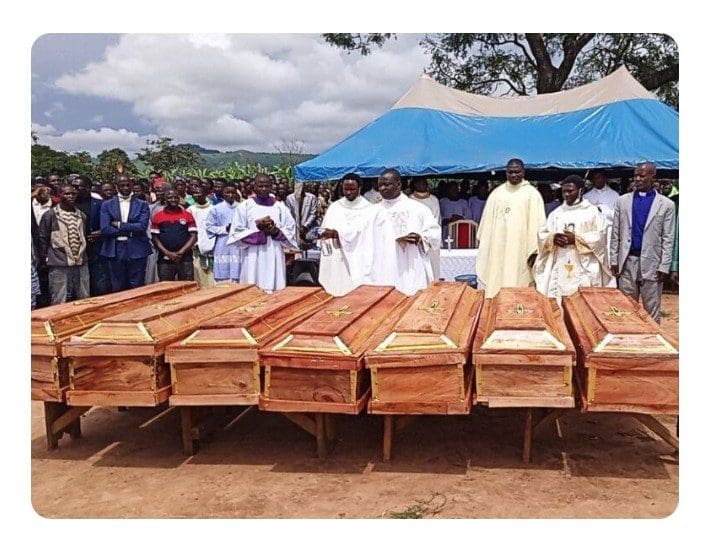
The news spread by dawn. Congregants wept openly in the church yard; women and children clung to elders while others called for prayers. His widow, Mary Issa, broke down, asking why evil had triumphed despite the community’s sacrifice. In hushed tones, villagers asked: “If ₦5 million couldn’t save him, what price does a life hold now?”
A Chilling Pattern Emerging
What happened to Rev. Issa echoes a growing trend: kidnappers killing even after ransom is paid. In earlier cases, payment secured release — now it can mean death. The shift shows these groups no longer view ransom as leverage, but as the first step in spreading terror.
Context of Kidnap Crisis
The trend is not isolated. In the first half of 2025, 5,402 abductions were recorded across Nigeria, with the North-Central, including Kwara, among the hardest hit. In just one year (July 2024 to June 2025), 140 persons were abducted in Kwara State, a sharp rise in rural kidnappings.
Voices of Leadership & Protest
Security analyst Dr. Kabir Adamu told TruthNigeria the killing marks a turning point. “They’re discarding old rules. Ransom no longer buys life. What we see now is a method of terror, not commerce,” he warned.
Rev. Victor Dada, chairman of the Christian Association of Nigeria (CAN) in Kwara, condemned the attack as “a war on faith itself, an assault targeting the body of Christ,” demanding swift arrest and protection for rural churches.
Across the Atlantic, the pattern of anti-Christian violence in Nigeria is now drawing global concern. In September 2025, U.S. Senator Ted Cruz introduced the Nigeria Religious Freedom Accountability Act, a bill proposing targeted sanctions on officials and entities complicit in religious persecution. The measure seeks to pressure Nigeria’s government to act decisively against terrorist networks targeting Christian leaders and villages like Ekati, ensuring attacks such as Rev. Issa’s killing do not go unpunished.
Ekati’s community life is forever altered. Rev. Issa’s death after ransom not only shatters a family and flock but also signals a grim new reality in Nigeria’s kidnapping war. His blood, spilled despite payment, stands as a stark testimony: in today’s terror economy, even compliance may not spare a life.
Onibiyo Segun reports on terrorism and conflicts for TruthNigeria.