
Fulani Terrorists’ Rampage Exposes Nigeria’s Fragile Security
By Onibiyo Segun
Kogi State, Nigeria – On Monday, November 10, 2025, six senior directors of the Federal Ministry of Defense were abducted and three young men from Keana in Nasarawa State were murdered in a coordinated ambush along the Kabba–Lokoja highway. The attack exposes widening cracks in Nigeria’s security structure. It also underscores a frightening reality: even senior federal officials are no longer immune from the country’s deepening insecurity.
Their abductors, believed to be Fulani Ethnic Militia terrorists operating in the Kabba–Yagba axis, have demanded N150 million (about $180,000) to free the six female senior officials, a ransom sum signaling that kidnappers now target high-value government personnel with strategic intention.
This happened weeks after President Donald Trump designated Nigeria a Country of Particular Concern (CPC) over escalating Christian genocide, a classification analysts say may have indirectly intensified attacks by armed groups seeking to pressure or embarrass the Nigerian government.
Vital Terrain: The Kabba–Lokoja Highway
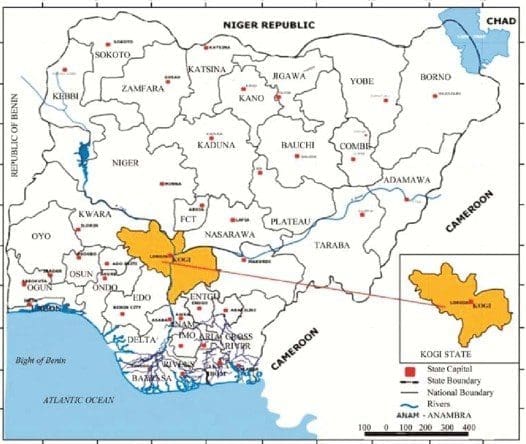
The Kabba–Lokoja highway runs through forested bends, broken asphalt zones, and lightly monitored security posts. It passes through Kabba, Yagba East and into the quieter outskirts before descending toward Lokoja. Long stretches have no surveillance, no emergency call centers, and provide ideal ambush points for armed groups. Survivors say attackers often fire to disable vehicles, then march captives deep into the surrounding bush.
This chilling incident opens a window into the growing audacity of armed militias, the perilous highway conditions even for government officials, and the erosion of state authority in the country’s central corridor.
There has been a marked rise in kidnappings and Fulani Ethnic Militia terrorist attacks across North‐Central states since the CPC designation, with security agencies appearing overwhelmed or out-maneuvered in both urban and rural terrains.
Hijacked At the Corridors of Power
The victims, Mrs. Ngozi Ibeziakor, Mrs. C.A. Emeribe, Mrs. Helen Ezeakor, Mrs. C.A. Ladoye, Mrs. J.A. Onwuzurike and Mrs. Catherine O. Essien, all female staff, were travelling from Lagos to Abuja for a directorate-level promotion examination when their convoy was intercepted on the forested Kabba–Lokoja route.
A federal worker at the ministry of defense also attending the promotion examination, Mr. Luke Bawa told TruthNigeria, “this kidnap shows how institutional weakness, long-haul vulnerability of federal workers, and the expanding reach of armed groups combine into a deeper national crisis of governance and security.” He concluded.
Farm-step to Funeral Pyre
In a separate tragedy that same week, three young men from Duduguru in Jenkwe Development Area of Keana County in Nassarawa state, North Central Nigeria were ambushed and killed while conveying news of the death of an elder, a stark reminder that even the most routine rural movements now carry lethal risk.
Why This Matters
According to Dr. Isaac Okoye, a security-studies lecturer at the University of Abuja, Sa’id in an interview with TruthNigeria, “The abduction of senior Defense Ministry directors demonstrates a severe institutional vulnerability in Nigeria’s security architecture.”
He added that “the attack shows that when federal officials cannot move safely on official duty, the state itself becomes a target and that weakens national governance from the inside.” He concluded.
In Lagos, Lt Col. (ret’d) Mariam Abubakar, a former army intelligence officer, told TruthNigeria via telephone, “The killings in Keana expose how deeply rural communities have been abandoned.” She added that the spread of Fulani Ethnic Militia attacks from farm roads to federal corridors means “rural insecurity and national insecurity are no longer separate issues they are now one crisis.”
From Jos, Security Risk Analyst Danladi Gambo, who has studied Middle Belt conflict patterns extensively, said “the timing coming shortly after the U.S. CPC designation carries political weight. When a country is under global scrutiny for failing to protect its citizens, armed groups intensify violence to embarrass the government,” he said.
“This creates election-season instability that can alter voter confidence, state legitimacy, and national cohesion.” He added.
Community and Security Agency Voices
Residents along Kabba–Lokoja say kidnappings have surged dramatically this year.
Samuel Ogunmola, a commercial driver in Kabba, told TruthNigeria, “We drive in fear every day. There are places nobody touches after 5 p.m. again. The government knows this road is gone. We only pray and hope to God for safety.”
The Association of Senior Civil Servants of Nigeria (ASCSN) in Kogi state condemned the attack, with Comrade Shehu Mohammed urging federal reforms on staff mobility and security escorts for official travel.
Nasarawa’s police command also appealed for calm over the killing of the 3 young men killed by suspected Fulani Ethnic Militia terrorists while confirming ongoing manhunts in affected areas.
Media Coverage and Government Management
Major national media outlets reported the abduction with urgency. However, the federal government has released minimal operational updates, prompting speculation that authorities may be suppressing details to avoid public backlash.
The Bigger Picture
“This episode fits into a widening insurgency spectrum where banditry, rural terrorism, and militia activity increasingly overlap. The ability of gunmen to ambush senior officials and kill rural youths in the same week shows a state losing control of mobility and territorial authority. With elections approaching, this security vacuum risks reshaping Nigeria’s political landscape in destabilizing ways”, says Abuja-based security analyst Dr. Tunde Salami
Dr. Tunde Salami also added, “the Kabba-Lokoja abduction is more than a headline, it is a warning flare for a nation losing its grip on internal security.
“The attack reveals a Nigeria where state authority is shrinking faster than the government is willing to admit.”
Dr. Salami further stressed that “when senior Defense officials can be taken with ease, ordinary citizens are left to navigate rural roads where violence has become routine, invisible, and unpunished.”
Dr. Salami warned that unless the government confronts this crisis with honesty and urgency, “the center will not just weaken, it will fracture.”
Onibiyo Segun reports on terrorism and conflicts for TruthNigeria.