

A mother recounts how her daughter escaped gunmen in a northern boarding school raid, exposing deep failures in Nigeria’s Safe Schools Initiative
By M. Kiará
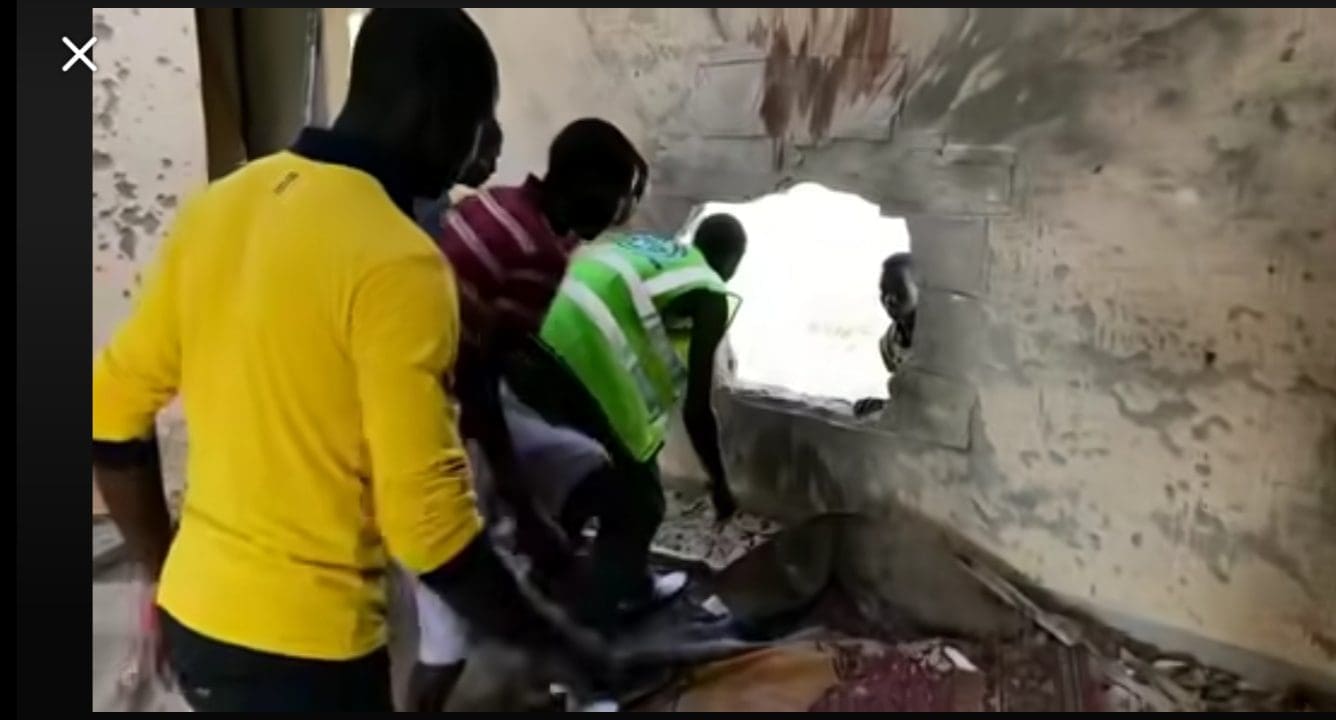
Kebbi State, in Nigeria’s far northwest, about 340 km (211 miles) from Abuja was asleep when armed men smashed into the Hassan family’s home shortly after 3:30 a.m. The vice principal, Malam Hassan Makuku, had only seconds to rise from bed before the intruders forced the door open.
“I thought it was animals outside,” said his wife, Amina Hassan, who briefed newsmen after the attack. “Then I heard the bang. By the time we got up, they were already inside with guns.”
Their daughter wandered into the hallway as the gunmen barked orders. The men seized her, dragging her toward the girls’ dormitory.
“They told her to lie down so they could shoot her,” Amina said. “She begged to go and ease herself, and when they opened the door they saw other girls and left her.”
That moment of distraction saved the child. “She ran into the bush and hid until morning,” Amina said. Her husband did not survive.
The abduction of 25 Schoolgirls from Government Girls Comprehensive Senior Secondary School, Maga, is now forcing uncomfortable national questions, chief among them: How did such an attack occur just months after federal officials publicly declared that Nigeria had ended school kidnappings?
A Crisis Exposing Government Claims
In May 2025, Nigeria’s Minister of Education, Dr. Tunji Alausa, declared on national television that the country had gone “12 months without a single school abduction.”
He attributed the success to President Bola Tinubu’s “focused policies” and to a federally coordinated Safe School Initiative.
“This is not coincidence,” Alausa said on Arise TV. “No abduction has occurred in the last 12 months. The president has spent much on security like no government has done in the last 20 years. We are using both kinetic and non-kinetic strategies. But what we have done to make our schools safer…we have a safe school initiative that is in place,” he said.
The attack in Kebbi obliterated that claim.
Civil rights advocacy group; Human Rights Writers Association of Nigeria HURIWA said the minister’s boast now appears “propaganda and empty rhetoric,” calling the Kebbi attack evidence of a spectacular collapse of security.
“We call on the armed forces, the Department of State Services, and the police to chase these terrorists, rescue the hostages, and bring them to swift justice,” said HURIWA’s coordinator, Emmanuel Onwubiko in a statement to the press.
The group also questioned the fate of the N595 billion reportedly allocated to Nigeria’s intelligence community. “Government must realize that its primary duty is to protect citizens,” Onwubiko said.
A Pattern Western Policymakers Are Watching
The Kebbi abduction comes amid a surge of attacks across Nigeria’s Middle Belt that disproportionately affects Christian communities, highlighting the broader collapse of security. Pope Leo recently issued a strong warning about this violence, calling it ‘systematic’ and increasingly deadly.
“Let us pray that all violence may cease and that believers may work together for the common good,” he said, urging governments and religious leaders to coordinate protection and reconciliation efforts.
The incident also drew criticism from U.S. Congressman Riley Moore, who condemned the attack and urged Abuja to “end the rampant violence against Christian communities.”
Analysts say the attack underscores how repeated school kidnappings reflect a fractured security architecture unable to protect civilians, an urgent concern for U.S. and European officials investing in Nigeria’s Safe Schools Initiative and monitoring Christian-targeted violence.
Billions for Defense, But Schools Still Exposed
Nigeria spends billions on defense.
The country’s 2025 security and defense budget is proposed at $4.38 billion with the Defense Ministry alone receiving $2.07 billion.
The Nigerian Army is allocated $987 million, the Navy $295 million, and the Air Force $251 million.
Yet, despite this massive expenditure, schools remain some of the easiest targets. The Pope’s warning that attacks are “systematic” resonates here: billions are spent, but preventive measures fail, leaving children exposed to kidnappings, killings, and trauma.
In Kebbi alone, similar attacks have occurred repeatedly; from the 2021 abduction of 80 students at Federal Government College Birnin Yauri, to earlier kidnappings linked to multiple terror factions in the northwest. Many victims have returned home with trauma and in some cases, with babies fathered by their captors.
Political Reactions Highlight National Alarm
Former Vice President Atiku Abubakar called the attack “a reminder of worsening insecurity in our nation,” condemning the killing of the vice principal and the kidnapping of schoolchildren. “Nigeria cannot continue on this path,” Atiku said on X.
The opposition People’s Democratic Party (PDP) described the attack as “tragic,” accusing the federal government of leaving citizens “at the mercy of bandits.” PDP spokesperson Ini Ememobong said, “This is not the hope promised Nigerians.”
Minister of State for Defense Bello Matawalle called the attack “unacceptable” and said security agencies had been directed to work together to rescue the girls. The Kebbi State Governor, Nasir Idris, visited the community on Monday, telling parents the state would do “everything possible” to bring their children home.
But none of the officials addressed the central question haunting residents: Why were the attackers able to walk into the school without resistance, even as billions are allocated to defense and security?
The Reality Behind the Numbers
Since Boko Haram kidnapped the Chibok girls in 2014, mass abductions have metastasized across the northwest and north-central regions. Examples include:
- 317 girls kidnapped in Zamfara (2021)
- 300 boys kidnapped in Katsina (2020)
- Nearly 200 students from Niger State (2021)
- 100+ elementary school children in Kaduna (2024)
The pattern is predictable.
The failures are consistent.
The grief is recurring.