
While National Security Advisor Leads Charm Offensive in Washington, D.C.
By Steven Kefas
(Abuja, Nigeria), As Nigeria reels from a resurgence of mass abductions, whistle blowers charging Christian genocide report they are targets of orchestrated suppression.
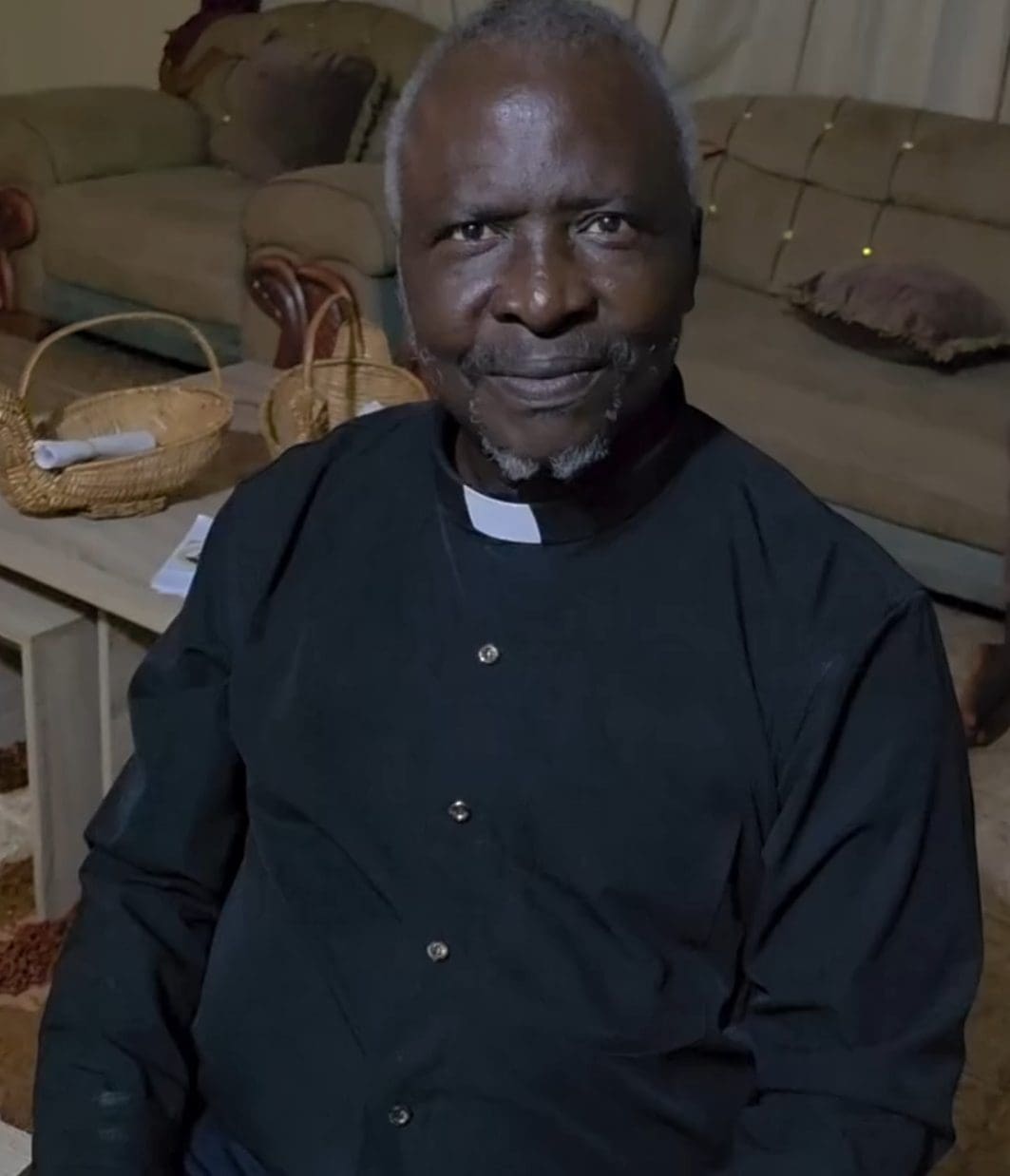
The Reverend Ezekiel Dachomo in Jos is at the epicenter of backlash by opponents close to the federal government’s thorough-going denial there is targeted violence against Christians.
Dachomo’s voice was abruptly silenced last week when his Facebook page vanished. The platform cited his posts as threats to “national security,” a vague charge that echoes the grievances of authorities that he has exposed. In fact, for years Dachomo has stood in the open graves of bodies of murdered farmers and made tearful prayers asking God to stop the complicity of authorities standing behind scores of massacres.
Dachomo has told journalists he’s been receiving death threats, allegedly from government sources, and claims he’s under surveillance. “Somebody told me to stop exposing the government,” he confided in a recent interview, painting a picture of a regime more intent on concealing atrocities than confronting them.
For years the aging cleric for Church of Christ in All Nations (COCIN) has traversed massacre sites, presiding over more than 70 mass burials.
He documents the horrors: burned villages, orphaned children, and families torn apart by attacks that official narratives often dismiss as mere “farmer-herder clashes.” These attacks have claimed thousands of lives, displacing entire communities in states like Plateau, Benue, Southern Kaduna, Taraba and others. International observers, including Genocide Watch, have warned that Nigeria’s security forces struggle to contain militants who operate with impunity in Christian-majority areas.
Judd Saul, founder of Equipping the Persecuted and TruthNigeria.com has denounced the effort to silence dissent. “My good friend Pastor Ezekiel Dachomo just had his Facebook page deleted by Mark Zuckerberg and the Nigerian government. They are accusing him of being a threat to national security,” Saul said in a video.
“It’s a funny thing. Pastor Ezekiel Dachomo hasn’t killed anybody,” Saul continued. “He has only gone to the massacre sites and presided over 70 burials of mass graves in five years. He hasn’t hurt anybody. All he’s been doing is raising attention about the genocide against Christians in Nigeria.”
Saul’s organization has been at the forefront of relief efforts, distributing aid to displaced survivors and producing documentaries that challenge official narratives. His work underscores a sobering reality: Nigeria consistently ranks among the world’s worst countries for Christian persecution, with over 5,000 believers killed in 2024 alone, according to Open Doors International.
Dachomo isn’t the only critic being targeted. Regime critic Zariyi Yusuf has been threatened by trolls on X warning that he is being surveilled and watched.
“Terrorism is aggressively being mainstreamed,” Yusuf told TruthNigeria in a stark assessment. “A lot of terrorist sympathizers have come out of the closet, actively on a propaganda campaign to portray the Islamist fighters as victims themselves who need to be appeased, while behind the scenes threatening the lives of those who call for justice on behalf of the victims of the genocidal massacres.”
Yusuf tells TruthNigeria that even calls to eliminate terrorists are twisted by pro-government supporters into provocations that will trigger terrorist reprisals.
Resilience in the Face of Erasure
Yet in the face of these coordinated efforts at suppression, resilience persists. Communities continue to rally in prayer for Dachomo, and organizations such as Equipping the Persecuted press on, distributing aid and amplifying survivor stories that official channels ignore or downplay.
Zariyi Yusuf’s bold stance serves as a reminder that while sympathizers may thrive in enforced silence, truth, once unleashed, becomes increasingly difficult to bury completely. As Nigeria grapples with this duality, projecting cooperation abroad while suppressing documentation at home, the victims’ cries demand more than diplomatic platitudes. They demand accountability and action, before another generation is lost to violence and erasure.
A History of Digital Suppression
These events unfold against the backdrop of Nigeria’s persistent efforts to control social media, a tool that has empowered activists such as Dachomo to bypass state-controlled narratives. The government’s attempts to regulate online spaces date back to 2019, when the Nigerian Senate introduced the Anti-Social Media Bill, aiming to criminalize “abusive” posts with penalties of up to three years in prison.
That same year, the Protection from Internet Falsehood and Manipulation Bill, dubbed the “social media bill”, sought to curb “fake news,” but critics, including Amnesty International, decried it as “a dangerous attack on freedom of expression.”
The crackdown escalated dramatically. In 2021, Twitter (now X) was banned for seven months after deleting a presidential tweet. By 2022, the National Information Technology Development Agency (NITDA) rolled out a Code of Practice for interactive platforms, mandating content moderation under threat of significant fines.
This year, the government blocked 13.5 million social media accounts for “offensive content”, a move that critics say amounts to selective enforcement against critics of government security policies. Information Minister Mohammed Idris has insisted regulation is essential to combat misinformation, but analysts argue it’s more about silencing voices that challenge official narratives on terrorism and corruption.
Washington Weighs In
All this parallels a high-stakes diplomatic offensive in Washington earlier this week, led by National Security Adviser (NSA) Nuhu Ribadu. Heading a delegation of top security officials including the Inspector General of Police and Army Chief, Ribadu met with U.S. Congressman Riley Moore and Secretary of Defense Pete Hegseth at the Pentagon.
The closed-door talks focused on Christian persecution and terror threats, coming on the heels of President Donald Trump’s pointed warnings about Nigeria’s handling of the crisis. Moore, who hosted the delegation, emphasized that “Trump doesn’t make idle threats,” signalling potential U.S. intervention if the violence continues unchecked.
Ribadu’s visit, officially framed as collaborative, underscores Nigeria’s attempt to manage international pressure even as domestic censorship tightens, a contradiction not lost on observers who note the timing of Dachomo’s page deletion amid this diplomatic charm offensive.
Yet, in Nigeria’s heartland, where faith meets fire daily, the fight isn’t merely for physical survival; it’s for the soul of a nation and the right to bear witness to its suffering. The question remains: will the international community truly listen, or will these voices be silenced forever?
Steven Kefas is a conflict reporter for TruthNigeria and publisher of Middle Belt Times Newspaper.