
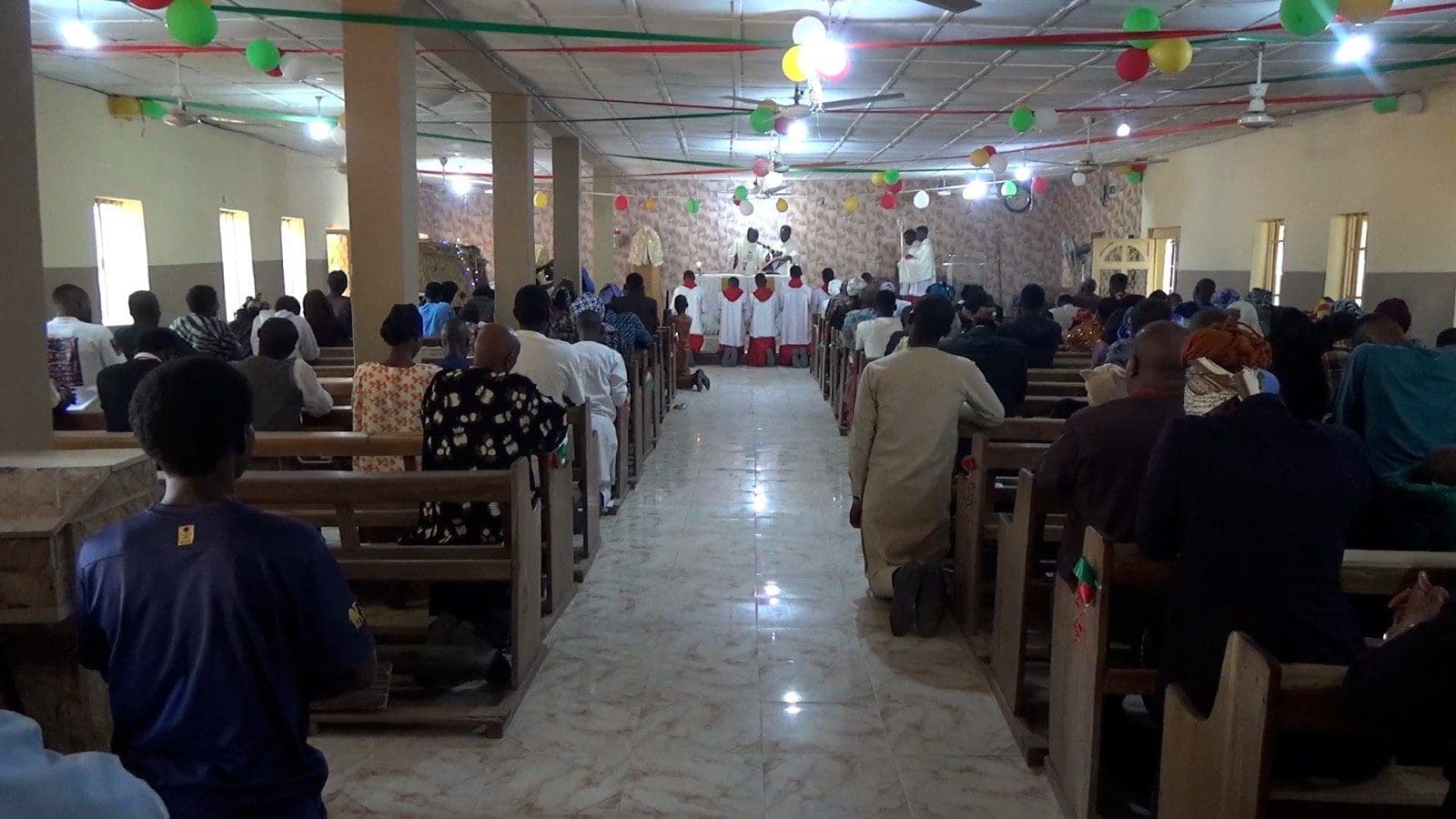
Christians gathered for worship on Christmas Day in Borno — making a radical statement.
By M. Kiara
(Maiduguri, Borno State) – On Christmas morning in Maiduguri, Church bells rang in a city where Islamist terror was born, and where it has spent more than a decade trying to erase Christian life.
Borno State, located roughly 430 miles northeast of Nigeria’s capital, Abuja, is the epicenter of Nigeria’s jihadist insurgency. It was here, in this dusty northeastern city, that Boko Haram emerged in 2002 before launching a campaign of bombings, massacres, abductions, and church burnings that would kill tens of thousands and displace millions.
For many Christians in Borno, gathering openly for Christmas worship is not routine. It is resistance.
Despite recent security incidents across Maiduguri and surrounding communities, churches were filled on Christmas Day. Congregants sang, prayed, and gave thanks, not because terror has ended, but because faith has survived it.
Christmas in the Birthplace of Boko Haram
Since 2009, Boko Haram and its ISIS-aligned offshoot, Islamic State West Africa Province (ISWAP), have killed tens of thousands across Nigeria’s northeast and displaced more than three million people, according to Nigerian displacement data and international conflict monitors.
Christian communities were among the hardest hit. Churches were burned. Pastors were assassinated. Farming villages, many of them Christian were attacked, emptied, or erased entirely.
Maiduguri itself became synonymous with suicide bombings and mass graves.
Yet this Christmas, Christians worshiped openly in the city Boko Haram once claimed as its ideological home.
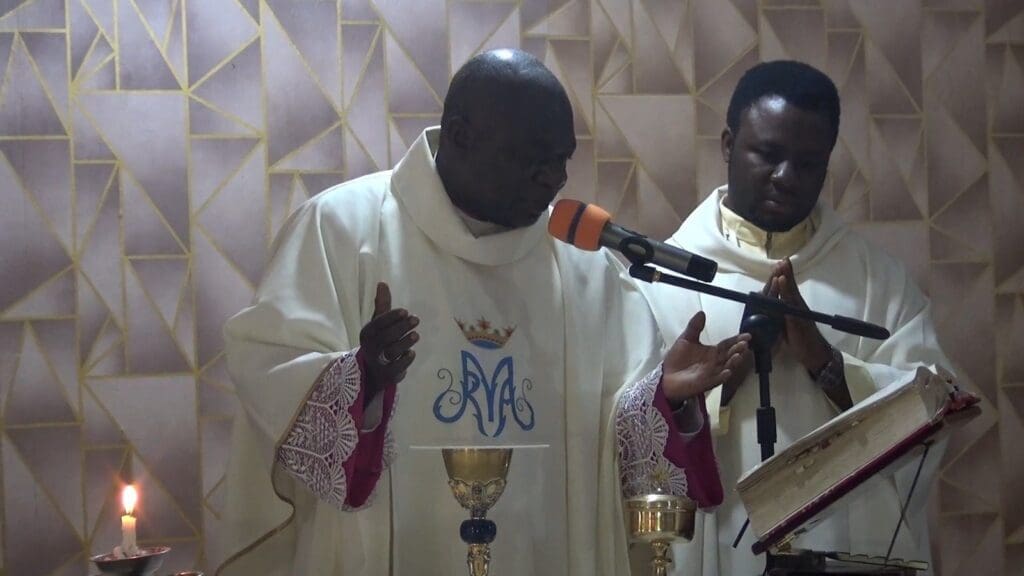
“Christmas is not restricted or reserved for any nation or country,” Bishop John Bogna Bakrni, Auxiliary Bishop of Maiduguri and Chairman of the Association of Nigeria (CAN) told TruthNigeria. “All over the world, Christians mark this day to celebrate God’s love and goodness. We celebrate the birth of our Savior, Jesus Christ.”
In a state where Christians have repeatedly been told by terrorists and sometimes by official neglect that they do not belong, the message carried particular weight.
Worship Under Watch
Security was visible across Maiduguri during Christmas services. Soldiers were deployed, and worshippers remained alert.
At St. Patrick’s Cathedral, one of the city’s prominent churches, congregants gathered knowing full well that terror attacks have not disappeared.
“It is very unfortunate that such attacks still take place,” said Bishop Joseph Uchena, the cathedral’s administrator. “We call on the government to expedite action and strengthen security so that lives and property will be protected.”
The concern is grounded in reality. In 2025 alone, Boko Haram and ISWAP carried out multiple deadly attacks across Borno State, including massacres of farmers, roadside bombings, and assaults on military bases.
Conflict monitoring data shows Borno remains one of Nigeria’s most violent states, even as national and international attention shifts elsewhere.
Faith After the Grave
For some worshippers, Christmas is inseparable from loss.
Precious Sunday, a young Christian woman in Maiduguri, lost her mother in a Boko Haram attack in 2024. Her mother was killed while working on her farm, a frequent target for jihadist groups that have systematically attacked Christian livelihoods.
“The day my mother was killed was very painful,” Precious told TruthNigeria. “I questioned a lot. My faith shook.”
Still, she returned to church this Christmas.
“I have hope in the resurrection,” she said. “I know she is watching over me and the rest of my family.”
Her presence in church was not sentimental. It was testimony.
A Persecuted Minority Still Standing
Many Christians in Borno are internally displaced persons who either stayed behind during the worst years of violence or returned to communities that remain fragile and poorly protected.
According to the Observatory for Religious Freedom in Africa (ORFA) and the U.S. Commission on International Religious Freedom (USCIRF), Nigeria has accounted for a significant share of global Christian killings in recent years. Much of that violence has been concentrated in the northeast and the Middle Belt.
SBM Intelligence has documented how insurgent tactics in Borno, including targeting civilians, farmers, and religious minorities have remained consistent even as the conflict evolves.
Yet Christians remain.
“This Christmas is very unique,” said Josepine Ateye, a Maiduguri resident. “Despite the insecurity, Christians are out celebrating, and we wouldn’t have it any other way.”
Another worshipper, Matthias Lazarus, said it was his first time spending Christmas in Borno. “I hope for a peaceful celebration,” he said, a hope that carries different meanings in this place.
Christmas in Maiduguri is not a feel-good story. It is evidence.
It shows that despite years of mass killings, displacement, and government failure to decisively end the insurgency, Boko Haram and ISWAP have not achieved their ultimate goal: the disappearance of Christian life from northern Nigeria.
Borno State remains dangerous. Attacks continue. Entire communities remain traumatized.
But terror did not erase faith.
In the birthplace of Boko Haram, Christians gathered openly to worship, give thanks, and testify to survival.
This Christmas was not about comfort. It was about endurance.
And in a war designed to make Christians vanish, that endurance stands as quiet proof that terror failed.
M. Kiara is a Conflict Reporter for TruthNigeria.