

By Onibiyo Segun
(Kaiama County, Kwara State) The arrest of two notorious bandit kingpins in Kwara State, coming days after U.S.-ordered airstrikes struck ISIS-linked camps in northwest Nigeria, signals a widening and increasingly coordinated campaign against terror networks pushing deeper into the Middle Belt.
The arrests were carried out on December 19, 2025, following an intelligence-led operation along the Kaiama-Baruten axis, a porous border corridor linking Kwara State with Niger State and Benin Republic.
Nigerian police identified the suspects as Abubakar Usman, alias Siddi, and Shehu Mohammadu, alias Gide, men described as senior figures in a violent interstate syndicate responsible for kidnappings, armed attacks, and ransom operations across Kwara, Katsina, Zamfara, and Niger states.
Operatives from the Force Intelligence Department–Intelligence Response Team (FID-IRT) intercepted the suspects along the Komen-Masallaci corridor, recovering an AK-47 rifle with 20 rounds of live ammunition, ₦500,000 in ransom cash, and a [new%20Honda%20Ace%20125%20motorcycle]new Honda Ace 125 motorcycle allegedly purchased with kidnapping proceeds. Investigators said the suspects were attempting to relocate logistics assets when they were captured.
According to police spokesman CSP Benjamin Hundeyin, intelligence extracted from the arrests confirms a coordinated cross-state network exploiting forest routes, weak border surveillance, and informal financial channels. He said both suspects are cooperating with investigators and that follow-up operations are underway to identify additional gang members, arms suppliers, and weapons caches.
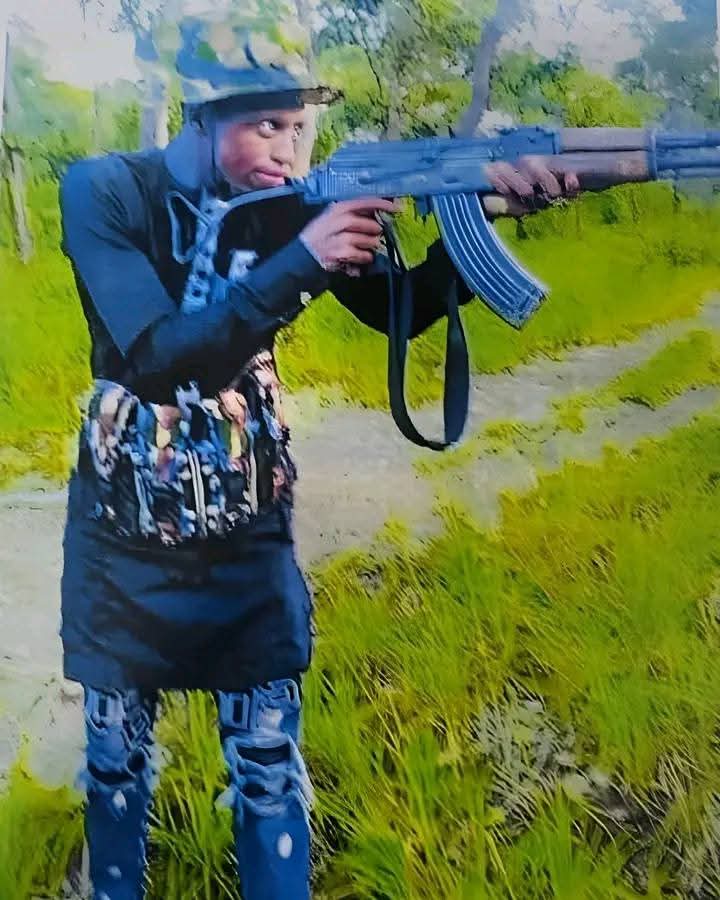
The arrest of Usman drew particular attention because he had previously appeared in a viral video flaunting firearms and large sums of cash, a display authorities say emboldened criminal cells and normalized bandit violence across parts of North-Central Nigeria.
US Airstrikes Raise the Stakes
The Kwara arrests came amid renewed international pressure on extremist groups operating inside Nigeria. On December 25, 2025, U.S.-ordered airstrikes, carried out with Nigerian cooperation, struck ISIS-linked camps in Sokoto State, targeting fighters accused of coordinating attacks, moving personnel across borders, and sustaining jihadist infrastructure.
“This is what layered pressure looks like,” said Dr. Aisha Yahaya, a defense and security analyst based in Abuja.
“When local law enforcement disrupts leadership and financing while international partners hit training camps and logistics hubs, terror networks lose room to maneuver.” Dr. Aisha Yahaya said.
A Pattern of Arrests, Few Convictions
The Kaiama operation was not isolated. In September 2025, Nigerian Army units arrested five suspected bandits in Ifelodun Local Government Area, intercepting a vehicle carrying six AK-47 rifles allegedly destined for criminal camps operating within Kwara’s forest belt.
“Without visible prosecutions, the deterrent effect is weak,” said Godwin Okoro, a Lagos-based security consultant.
Communities Caught in the Middle
Public frustration spilled into the open in December, when women and relatives of abducted victims staged protests at the Kwara State Government House, demanding stronger action and faster rescues.
The demonstration turned chaotic when hoodlums attacked and flogged women protesters, further inflaming public anger.
Terror Financing and the Digital Battlefield
At an end-of-year briefing in Abuja, Major General Adamu Laka, Director-General of the National Counter Terrorism Centre (NCTC), disclosed that Nigerian security agencies are working with major social media companies to identify and take down terrorist-linked accounts.
He said ransom payments remain a major source of terror financing, with kidnappers exploiting POS operators to launder funds.
A Fragile Turning Point
Taken together, the Kwara arrests, U.S. airstrikes, and financial-tracking initiatives suggest a shift from reactive policing toward coordinated pressure on terror networks.
Onibiyo Segun reports on terrorism and conflicts for TruthNigeria.