
Washington cites jihadist violence and weak security systems
By M.Kiara
(Lagos) — Nigerian media outlets erupted this week after the United States placed the country under partial travel restrictions, denouncing the move as unfair, and exaggerated, while largely dismissing the security and religious freedom concerns cited by Washington.
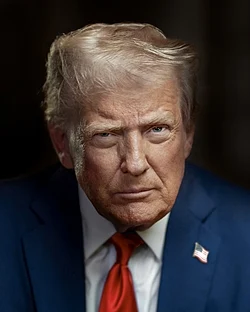
The backlash followed a presidential proclamation signed by President Donald Trump, placing Nigeria among 15 countries facing new entry limitations. The White House said the decision was driven by persistent terrorist activity, weak identity and vetting systems, poor information-sharing with U.S law enforcement and chronic visa overstay rates.
“The restrictions and limitations imposed by the Proclamation are necessary to prevent the entry of foreign nationals about whom the United States lacks sufficient information to assess the risks they pose… and advance other important foreign policy, national security, and counterterrorism objectives,” the proclamation stated.
But Nigeria’s media response focused less on those findings and more on rejecting them.
Across headlines and talk shows, outlets emphasized that the restrictions were “partial,” questioned U.S. motives, and argued Nigeria was being unfairly grouped with unstable or war-torn states.
Commentary framed the move as a diplomatic insult rather than a security warning.
What received far less attention was why Washington acted.
What the U.S. Cited
In its official justification, the White House pointed directly to:
• The continued operation of Boko Haram and Islamic State affiliates inside Nigeria
• Weak civil documentation and identity-verification systems
• Poor cooperation with U.S. security agencies
• High visa overstay rates, particularly among student and visitor categories
“Radical Islamic terrorist groups such as Boko Haram and the Islamic State operate freely in certain parts of Nigeria, which creates substantial screening and vetting difficulties,” the proclamation added.
The move followed Washington’s recent redesignation of Nigeria as a Country of Particular Concern (CPC) for religious freedom violations.
Denial Takes Center Stage
Rather than engage those findings, much of Nigeria’s media coverage echoed the government’s long-standing position that violence in the country is purely criminal, not religious.
President Bola Tinubu has repeatedly rejected claims that Christians are being targeted.
“There is no Christian genocide in Nigeria,” he has said.
That line constantly dominates domestic reporting on the U.S. decision.
Commentary stressed diplomatic embarrassment and potential economic harm, while disputing or downplaying the security rationale laid out by U.S. officials.
Former senator Shehu Sani described the move as “a clear signal that migrants from developing countries are no longer welcome.”
A Familiar Pattern
Human rights observers say the media backlash mirrors Nigeria’s response to years of international reporting on mass kidnappings, rural massacres, and religiously targeted attacks.
The pattern is consistent:
· International concern is raised
· Nigerian officials deny the problem
· Domestic media amplify the denial
· Violence continues without consequences
U.S. officials insist the travel restrictions are not permanent and could be reviewed if Nigeria addresses core concerns, including terrorist safe havens, documentation integrity, visa compliance, and protection of vulnerable religious communities.
But Nigerian media commentary has largely treated the move as an insult rather than leverage.
Alabi Lawrence wrote on X: “Trump has issued a travel ban on Nigeria; I also want Nigeria to issue a travel ban on the USA.”
“They must ban themselves from coming to Africa… Africa must raise the visa price for anyone from America,” another social media user wrote.
“The reflex is denial,” said Kedi Nnamdi, a human rights activist. “There is outrage, but no reckoning.”
When the Story becomes the Reaction
For Washington, the restrictions signal eroding confidence in Abuja’s assurances.
For Nigeria’s media, the backlash itself has become the story.
And for ordinary Nigerians; students, families, and professionals, the consequences are immediate, regardless of how loudly the denials are voiced.
Whether rejection can substitute for reform remains an open question.
But for now, the U.S. warning has landed even if much of Nigeria’s media refuses to hear it.
M.Kiara is a news analyst for TruthNigeria.