
General Lucky Irabor’s admission raises urgent questions about political complicity as Christian communities across Nigeria face unprecedented levels of violence and mass abductions
By M. Kiara
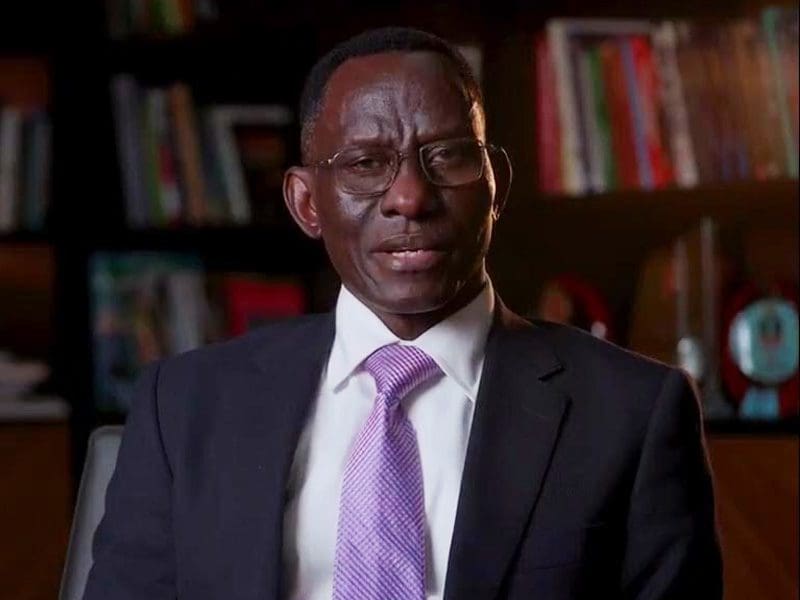
(Lagos) – Nigeria’s former Chief of Defense Staff, General Lucky Irabor (retired), has confirmed publicly that politicians are among the financiers of terrorism, but insisted their identities cannot be disclosed because their trials were conducted “away from public consumption.”
Irabor’s revelation, made during a televised interview, has reignited a national debate over why successive Nigerian governments have shielded high-level terror sponsors, even as extremist violence escalates across the country.
‘There are politicians involved’ – Irabor
Irabor, who led the military until 2023, described Nigeria’s conflict as a “multi-layered monster” driven by jihadist ideology, anti-Christian persecution, political manipulation, and organized crime.
“Just as you have terrorists with an ideology, you also have those bent on targeting Christians,” he said. “There are others targeting communities to displace them for leverage.”
But it was his admission about political sponsors that has drawn the most scrutiny.
When pressed to explain why these individuals were never publicly identified, Irabor defended the secrecy: “There were some trials that were made, especially for the financiers. It’s not for public consumption.”
Controversy: Secret Trials
Irabor’s remarks come at a time when Nigeria faces mounting international criticism for failing to curb terror financing.
In early 2024, the government quietly designated 19 individuals and business entities as terrorism financiers. Most were Bureau De Change operators or logistics businesses accused of facilitating payments to extremist networks across northern Nigeria.
But senior security officials told TruthNigeria the released list is only a fraction of the real picture.
“Most of the major financiers will never face open court,” said one senior intelligence officer who asked for anonymity. “The political implications are too explosive.”
Violence Worsens Across Nigeria’s Middle Belt
Despite promises of tighter controls, attacks on Christian farming communities and rural counties continue at historic levels.
In late 2025 alone:
- 303 students and 12 teachers were abducted from a Catholic school in Niger State
- 38 worshippers were abducted from a church in Kwara state
- Multiple Christian villages across Plateau, Kaduna, Benue, and Niger suffered coordinated raids
A community elder from Niger State, who spoke to TruthNigeria under anonymity for fear of reprisals, said rural residents no longer expect help from authorities.
“Every week we bury people. Children are taken, families disappear, and nobody comes,” he said. “It feels like the government has abandoned us.”
Amnesty International: “Only the graveyards are expanding”
Amnesty International warned this week that the Tinubu administration is “failing in its constitutional duty to protect Nigerians.”
“In many rural communities, only the graveyards are expanding daily,” the group said, accusing the government of allowing perpetrators to “invariably escape justice.”
A recent report by security consulting firm SBM Intelligence described large parts of Niger, Kebbi, Sokoto, Katsina, and Zamfara states as “open killing fields.”
Political Stakes: International Eyes on Nigeria’s Financial System
Irabor’s acknowledgment may also complicate Nigeria’s efforts to convince global partners it is serious about countering terror financing.
The country was under scrutiny after being placed on the Financial Action Task Force (FATF) ‘grey list’ in 2023 for weak controls on money flows linked to extremist groups. However, the country exited the grey list in October 2025.
A senior security analyst told TruthNigeria: “The nightmare scenario is political infiltration, terror financiers buying influence, manipulating elections, and turning violence into a political weapon.”
High-Profile Cases Still Unresolved
Irabor’s comments also revive several politically sensitive investigations, including:
· Tukur Mamu, alleged ransom negotiator tied to the 2022 Abuja–Kaduna train attack
· Sunday Igboho, linked by government investigators to suspicious transfers, though he denies wrongdoing
· Godwin Emefiele, the former Central Bank governor accused of indirectly funding armed groups. An ongoing case still unresolved as of December 2025
· Other political figures repeatedly linked to suspicious transfers but never publicly indicted
To date, no prominent Nigerian politician has been openly prosecuted for aiding terrorism.
What Happens Next?
Irabor urged Nigerians to “trust” those handling security matters, but his remarks have only intensified demands for transparency.
For many observers, the contradiction is glaring: Nigeria faces one of the world’s worst terrorism crises, yet the identities of political sponsors remain protected.
Amnesty International warns that this secrecy fuels a cycle in which armed groups expand, victims receive no justice, and state legitimacy erodes further.
M. Kiara is a TruthNigeria News Analyst in Lagos.