
By Onibiyo Segun
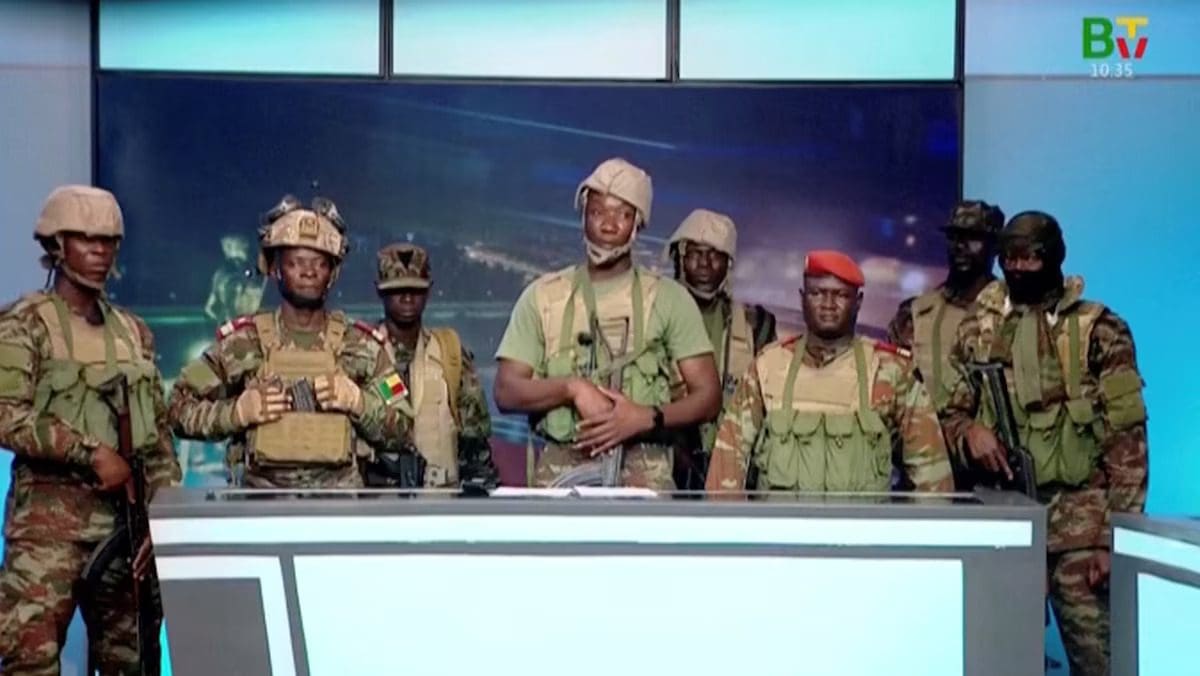
Abuja, Nigeria—West Africa awoke to fresh tremors on December 7, 2025, when a group of soldiers in Benin Republic briefly seized the national television station and declared the dissolution of the government. The mutineers, calling themselves the Military Committee for Re-foundation, named Lt. Col. Pascal Tigri as head of a new military authority.
Within hours, however, loyalist forces regained control and Interior Minister Alassane Seidou announced that the coup attempt had been foiled. What unfolded in Benin was not merely a domestic disruption, it was the latest sign of democratic slippage spreading from the Sahel into coastal West Africa.
The failed Benin Republic coup followed closely on the heels of the successful military takeover in Guinea-Bissau in late November 2025, where army officers shut borders, suspended electoral processes, and asserted full control amid contested presidential results.
The removal of President Umaro Sissoco Embaló created another power vacuum on the Gulf of Guinea, raising concerns about the fragility of coastal democracies long considered resistant to the coup waves sweeping Mali, Burkina Faso, and Niger.
ECOWAS Responds to Benin Coup Attempt
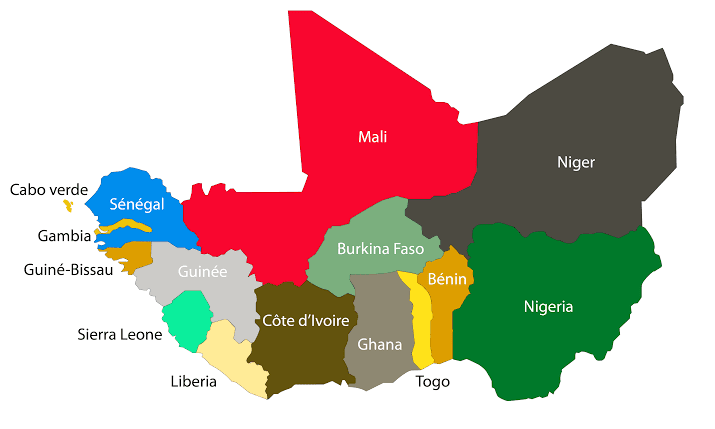
Within hours of the mutiny, the Economic Community of West African States (ECOWAS) issued a strongly worded condemnation from Abuja. In its December 7 statement, the bloc described the attempted takeover as an “unconstitutional subversion of democratic order” and reaffirmed its support for the legitimate government and people of Benin Republic. ECOWAS warned that it held the coup-plotters individually and collectively responsible for any violence or destruction and stated it was prepared to activate its regional standby force if the stability of Benin was endangered.
Analysts say both the foiled Benin mutiny and Guinea-Bissau’s full military takeover reflect a growing pattern.
Since 2020, West Africa has suffered one of the highest concentrations of coups since the 1970s. Mali, Burkina Faso, Niger, Chad, Sudan, Guinea, and now Guinea-Bissau form a belt of militarized governments. Benin’s aborted mutiny suggests coastal states are no longer insulated from the contagion.
For Nigeria, the region’s largest economy and traditional stabilizer, this matters profoundly. With 774 km of shared border with Benin Republic and an active ECOWAS leadership role, Abuja cannot afford to treat these shocks as distant tremors.
Expert Views
“Interesting that President Tinubu acted after a conversation with French President Macron,” Scott Morgan, an Independent Security analyst based in Washington told TruthNigeria.
“So why hasn’t there been such determination to act after the Niger Republic Coup along with the unwillingness to deal with the militants in the Northeast, Middle Belt and the Northwestern Parts of Nigeria?” Morgen went on to say. “One has to admire the irony of this response while Congressman Riley Moore was visiting Benue State regarding the attacks against Christians.”
“Nigeria granted asylum last week to one of the leaders of the opposition from Bissau, Ferdinand Diaz da Costa, but hasn’t really said much about those events,” Morgen added. “One thing that should have been condemned was the destruction of the ballots so that the voters will never know who actually won that poll,” Morgan said.
“The intervention in Benin was timely and could have been inspired by the French. Interesting to learn what will be the relations with Burkina Faso after reports of 8 Burkinabe citizens taken into custody along with the mutinous soldiers,” Morgan went on to say.
“Another point of interest will be what the Nigerian contingent to the ECOWAS Force that was recently ordered to Benin will look like,” Morgan concluded.
Colonel (rtd.) Emeka Okoye, former Nigerian Army Strategist, told TruthNigeria: “the fact that Benin, long viewed as a stable coastal democracy, almost fell to mutineers shows the entire region is now vulnerable. If neighbors collapse or drift under juntas, Nigeria cannot insulate itself. We will see spillovers: refugees, weapons trafficking, and even extremist infiltration.
“The coup map is expanding, and Nigeria is surrounded by states under pressure.”
Okoye added that “democratic slippage emboldens lower-ranking officers across the region to consider military takeovers as viable political options.” He concluded.
“Guinea-Bissau’s junta today and Benin’s coup attempt tomorrow send shockwaves through Gulf of Guinea security. Coastal trade routes, port operations, and migration patterns will all feel the disruption,” Dr. Aisha Bello, Gulf of Guinea Maritime Security Expert, told TruthNigeria.
“Nigeria relies heavily on cross-border commerce through Benin, and instability there poses economic and security risks that Abuja must urgently address.”
She noted that “trafficking networks quickly exploit unstable governments, creating new corridors for drugs, weapons, and illegal migration.”
“The credibility of ECOWAS is on the line. If the bloc fails to respond decisively to coups, deterrence erodes. Nigeria must push for coordinated defence mechanisms, joint intelligence, rapid-reaction deployments, and unified border surveillance. A fragmented West Africa is a dangerous West Africa,” said Major General Tari-Timiye Gagariga (rtd), former troop commander Nigerian Army.
“As the Sahel juntas strengthen their alliance under the AES, coastal democracies must reinforce their own collective security frameworks to avoid being overwhelmed,” Gagariga added.
Implications for Nigeria:
1. Security Spill-Over
Benin’s instability risks spilling into Nigeria through porous borders. Criminal groups and extremist elements often move freely across the frontier, posing new dangers to an already overstretched security apparatus.
2. Economic Disruption
Benin’s ports serve as Nigeria’s alternative commercial gateway. Instability threatens trade flows, markets, and customs revenue. Guinea-Bissau’s crisis further disrupts Gulf of Guinea trade architecture.
3. Migration and Humanitarian Pressure
Coups trigger displacement. Nigeria may face inflows of migrants and refugees at a time when humanitarian capacity is already strained.
4. Weakening of ECOWAS
With repeated coups weakening the bloc’s credibility, Nigeria risks losing diplomatic leverage and regional influence.
5. Expanding Extremist and Criminal Networks
Instability creates openings for transnational criminal activities and extremist movements seeking coastal access.
What Comes Next?
All eyes are now on ECOWAS, whether it will back up its condemnation with sanctions, monitoring missions, or activation of its standby force. Nigeria must weigh options regarding border reinforcements, intelligence-sharing, and diplomatic coordination.
Dr. Lilian Adeh, a security analyst based in Abuja, told TruthNigeria: “the December 7 Benin coup attempt and Guinea-Bissau’s military takeover are not random disruptions, they are the widening cracks of a regional political earthquake.
“With democratic norms eroding and military actors emboldened, West Africa’s stability hangs in the balance.”
“For Nigeria, inaction is not an option. The country must lead, reinforce democratic institutions, strengthen borders, and re-energize ECOWAS before the coup contagion spreads further,” she said.
Onibiyo Segun reports on terrorism and conflicts for TruthNigeria.