
Narratives Collide over How to Define the War Against Christians
By Mary Kiara
(Washington / Abuja) – Nigeria’s efforts to counter mounting U.S. accusations of Christian persecution are expanding beyond diplomatic channels into lobbying contracts, congressional outreach, and attempted media engagement, a strategy now drawing scrutiny on Capitol Hill.
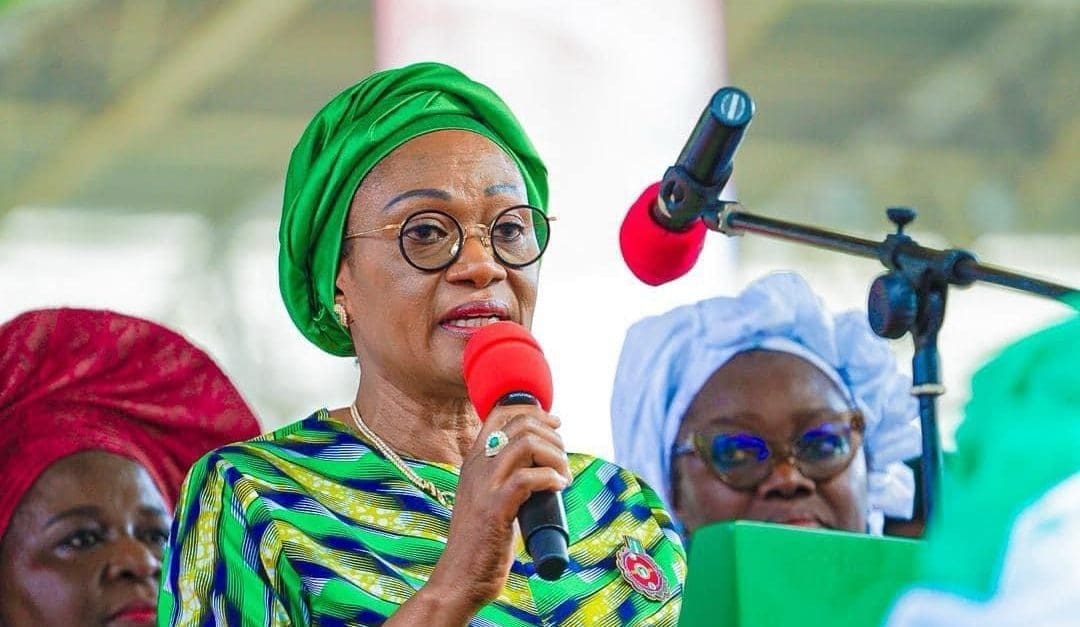
The latest flashpoint emerged when American Christian broadcaster Tony Perkins disclosed that Nigeria’s First Lady, Remi Tinubu, sought to appear on his Washington Watch program to discuss religious freedom concerns.
Perkins said he declined.
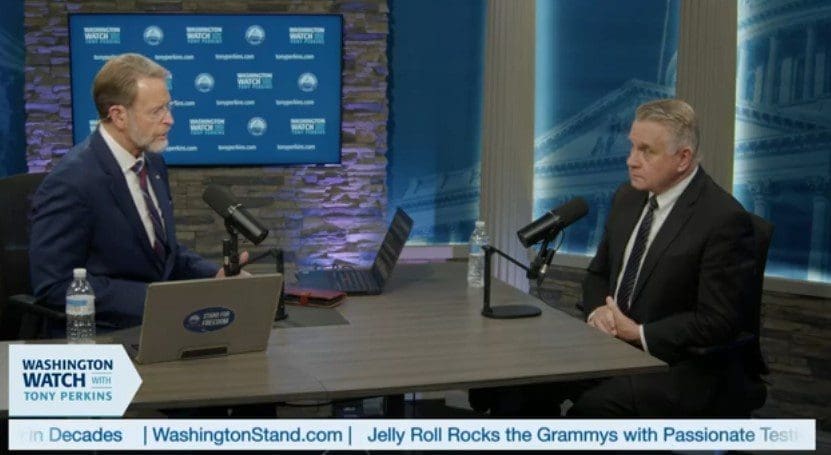
“The First Lady of Nigeria was here this week, and they wanted to come on the program to talk about religious freedom,” Perkins said during a February 4 broadcast. “I’m happy to meet with anybody, but not them. I’m not going to give them a platform to cover up what they’re doing in Nigeria.”
The exchange surfaced during a wider discussion with Rep. Chris Smith, chairman of the U.S. House subcommittee overseeing global religious freedom.
Congressional Pressure Intensifies
Rep. Smith used the broadcast to restate concerns he has raised in multiple congressional hearings.
“In Nigeria, more Christians are being killed than anywhere else in the world,” Smith said. “You have a government that practices denial, a culture of denial; while hiring lobbying firms to downplay the crisis.”
“They are doing a massive cover up in Nigeria, Churches are firebombed, and people are being killed in cold blood and abductions which are very big in Nigeria, most especially abduction of Christians. Boko Haram has flourished,” he said.
Smith described Nigeria as “a killing field of defenseless Christians” during a recent House Foreign Affairs subcommittee hearing examining global religious persecution.
The session titled ‘Defending Religious Freedom Around the World’ reviewed militant violence across Nigeria’s Middle Belt and northern regions, including attacks attributed to Boko Haram, Islamic State West Africa Province, and armed Fulani militants.
Lobbying Campaign in Washington
Disclosure filings under the U.S. Foreign Agents Registration Act show Nigeria has significantly expanded its advocacy footprint in Washington.
In December 2025, Nigeria contracted DCI Group, a Republican-linked lobbying firm with a contract value of $9 million.
The agreement authorizes strategic communications outreach to policymakers and media regarding Nigeria’s counterterrorism record and religious-freedom protections.
A separate contract with Valcour Consulting, valued at $120,000 per month, pursues parallel engagement to improve U.S.-Nigeria relations
Critics argue the spending reflects misplaced priorities.
David Otto, a Security & Intelligence Consultant said, “Western governments rely on ground-truth, and intelligence from their own embassies, thereby making expensive D.C. lobbying largely ineffective if the killings continue.”
Government Pushback
Nigeria’s Information Minister Mohammed Idris has rejected allegations that violence is faith-targeted.
“When a church is attacked, it is a Nigerian tragedy. When a mosque is attacked, it is a Nigerian tragedy,” Idris said. “We do not categorize grief by religion.”
He said militant violence is driven primarily by criminality and profit, not ideology.
Framing the crisis as religious persecution, he warned, risks inflaming tensions.
Faith Leaders Dispute Narrative
Christian leaders inside Nigeria reject that characterization.
Rev. John Joseph Hayab, regional chairman of the Christian Association of Nigeria, said denial compounds victim trauma.
“I consider what has been happening as genocide against Christians,” Hayab told TruthNigeria. “Anybody who says otherwise is not fair to the victims we have buried.”
He said affected communities possess documented burial records and attack timelines.
International Advocacy Response
U.S.-based Anti-Christian persecutions advocate Patricia Streeter said global monitoring patterns contradict Nigeria’s official framing.
“After 25 years tracking persecution, what is happening to Christians in Nigeria is not isolated criminal violence,” Streeter told TruthNigeria. “Militants routinely bypass Muslims and attack Christian farms and churches.”
She cited the captivity of schoolgirl Leah Sharibu still held after refusing to renounce Christianity as emblematic of faith-targeted violence.
Diplomatic Optics and Narrative Strategy
Remi Tinubu’s attendance at the National Prayer Breakfast where she was publicly acknowledged was celebrated by Nigerian officials as a diplomatic milestone.
But analysts say the visit unfolded amid intensifying scrutiny.
Nigeria was designated a “Country of Particular Concern” for religious-freedom violations under U.S. policy frameworks, a classification that can trigger sanctions and aid restrictions.
The designation followed remarks by President Donald Trump condemning Nigeria’s security record and Christian killings.
Information Battle Expands
Perkins’ refusal to host the First Lady underscores what analysts describe as an expanding narrative conflict.
On one side, Nigerian officials seeking to reframe violence as criminal banditry, lobbyists engaging U.S. policymakers and diplomatic outreach campaigns
On the other, congressional hearings, survivor testimony and faith-based advocacy networks
The struggle is not only over territory inside Nigeria, but over international perception.
Strategic Stakes
As militant violence persists, the debate over how to define it, terrorism, criminality, or faith persecution is shaping bilateral relations.
While Washington lobbying intensifies and congressional scrutiny deepens, the question confronting both governments is no longer whether violence exists, but how it is defined, acknowledged, and confronted.
And in that battle over narrative, media platforms have become strategic terrain.
Mary Kiara reports on terrorism for TruthNigeria.