
175 Executed After Refusing Extremist Sharia, Guard Killed and Villages in Panic
By Onibiyo Segun
(Koto, Kwara state) – Suspected Islamic State-linked Lakurawa terrorists have shocked North-Central Nigeria with a brutal massacre that left at least 175 villagers dead after they rejected terrorists’ demands to adopt their extremist version of Sharia law.
The carnage in Woro and Nuku villages in Kaima county (local government area) of Kwara state, North-Central Nigeria appears to be a violent manifesto: resist their ideology and face execution.
Human rights observers say gunmen bound some victims’ hands, fired rifles at close range and burned homes after villagers refused to yield.
Many victims were Muslim; some were Christian, reflecting the mixed faith of the communities attacked.
Last week’s killings followed earlier TruthNigeria reporting on extremist raids in Kwara’s forest villages, where terrorists ambushed and killed locals along poorly guarded bush corridors.
Guard Killed, Villagers Flee in Terror
In the nearby Koro community, heavily armed militants rushed in on Sunday afternoon, firing into the air and forcing families to flee toward Egbe and Oke-Ere towns in Kogi State.
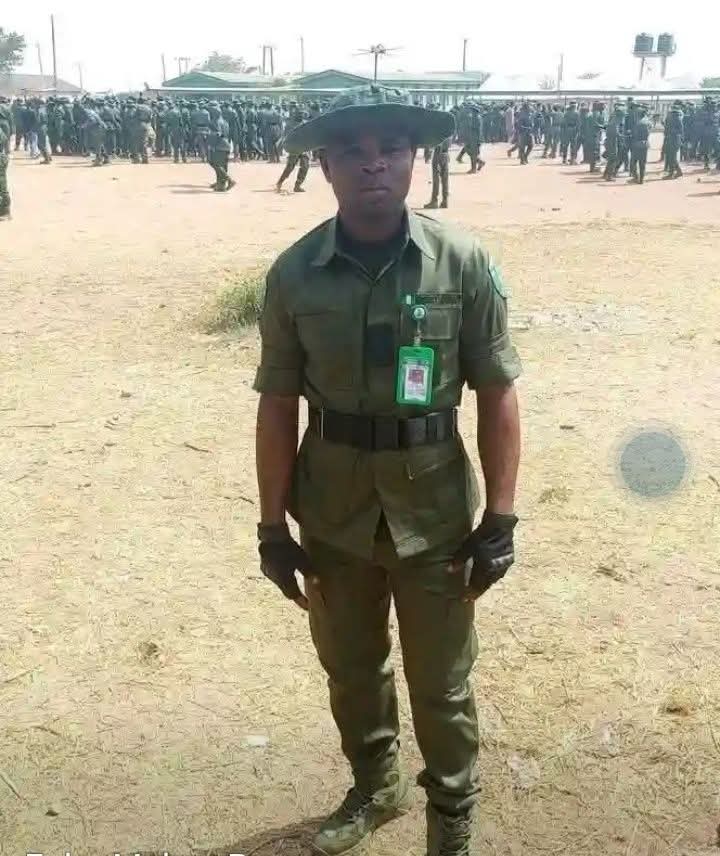
Forest guard Samuel Adeyemi was ambushed as he tracked militants along forest edges.
“We tracked unusual gunfire and moved toward the forest, but by the time uniformed teams arrived, the attackers had vanished,” said Abdulrahman Sadiq, leader of the Koro Forest Guard unit to TruthNigeria in a telephone interview.
“Samuel was hit in the back. Before help could fully arrive, he passed. Five of our motorcycles were burned to block pursuit,” Sadiq added.
Cross-Border Violence Become a Pattern
The militants targeted Koro because its location, about 45 km northwest of Ilorin on the Kwara-Kogi border. It sits along unmonitored forest corridors used by armed groups to cross state lines undetected.
Experts who responded to TruthNigeria queries say cross-border gaps let militants strike quickly and then vanish back into forest thickets before state forces can react.
“These groups exploit poorly monitored corridors between Kwara and Kogi states,” said Dr. Aisha Bello, senior counter-terrorism analyst based in Abuja.
“Their attacks overwhelm local defenses before conventional forces can mobilize.”
Community Impact: Fear, Displacement, and Loss
As violence spiraled, families scattered. Children don’t go to school. Places of worship closed. Markets and farms lie quiet. Villagers now shelter in towns such as Egbe, Oke-Ere and Ogbe, their lives upended.
“Koro was once a quiet place; now we fear even to walk forest paths,” displaced resident Alabi Fanwola told TruthNigeria in a telephone interview.
Fanwola added: “We left our farms, homes, livestock, even our children’s schoolbooks behind.”
Other families say livestock are starving and elders refuse to leave huts for fear of attackers hiding nearby.
The attacks have shattered daily routines, cut incomes and deepened trauma across mixed Muslim and Christian households.
Muslims Who Resist Are Targets Too
While many news reports describe the perpetrators as “bandits,” local leadership, including lawmakers from Kaiama County attribute the latest massacre to Lakurawa fighters tied to ISIS affiliates, not mere criminal gangs.
Reuters and rights groups reported the gunmen targeted villagers after months of sending threatening letters demanding adoption of their harsh interpretation of law.
Local sources and survivors say the killings were retaliatory executions meant to cow communities into submission, especially those with Muslims unwilling to embrace radical Sharia interpretations.
A neutral observer described the massacre as sectarian in effect: communities were punished for resisting ideological conversion.
National Responses and Security Alerts
In response to the killings, President Bola Ahmed Tinubu ordered greater aerial surveillance and forest monitoring across Kwara, Kebbi, and Niger States to deny extremists safe havens deep in bushland.
Nigeria’s Defence Headquarters has also launched ‘Operation Savannah Shield’, deploying a full battalion to track and dismantle terror cells in affected forest zones and border regions.
Military spokesmen claim arms and equipment linked to militants have been seized during follow-up operations.
Governors across impacted states have condemned the violence and called for heightened troop deployments and better inter-state coordination to stop cross-border incursions.
Expert Assessment: Asymmetric Warfare at Work
Security analysts say these attacks display characteristics of asymmetric warfare – fast raids, rapid withdrawal into ungoverned spaces, and an ability to strike before local defense can respond.
“Without joint patrols and sustained intelligence sharing, militants will continue exploiting weaknesses across borders,” said Lt. Col. Ibrahim Sule (rtd.), security analyst based in Abuja.
“These groups strike swiftly then disappear into the forest. That’s how they control territory without holding it.” Dr. Aisha Bello told TruthNigeria.
Trends Across Nigeria and Region
The Kwara massacre comes amid rising terror activity across northern and central Nigeria, where ISIS affiliates, Boko Haram splinter groups, and other criminal networks increasingly overlap in forest belts and borderlands.
Earlier in Jakura mountain and Sokoto’s Kwallajiya village, Lakurawa attacks left residents dead for rejecting militant demands, demonstrating the group’s expanding footprint beyond its northwest origins.
Across Nigeria in recent months, farmers, traders and worshippers have been killed in raids, abductions and ambushes as armed groups exploit thinly policed terrain from the Sahel to the Middle Belt.
What Must Change
Temporary patrols are no match for militants who know the forests and know their back roads.
Residents now call for:
Permanent security outposts along forest borders.
Real intelligence sharing between state agencies in Kwara, Kogi, Niger and federal agencies.
Support for displaced families, including food, schooling, and psychosocial care.
Without these, villagers say, attacks will continue to uproot lives across states once considered peaceful.
Onibiyo Segun reports on terrorism and conflict for TruthNigeria.