
By Mike Odeh James
(Kaduna, BREAKING) In a rare and dramatic counter-kidnapping success in Middle Belt of Nigeria, Nigerian Army troops rescued seven civilians within hours of their abduction along the volatile Kutura Road in Kaduna State’s Kajuru County on Wednesday, January 4, 2026.
The rapid response stands in sharp contrast to the protracted ransom ordeals that have become the norm across southern Kaduna and highlights growing international pressure on Nigeria’s security services to act decisively.
The Victims
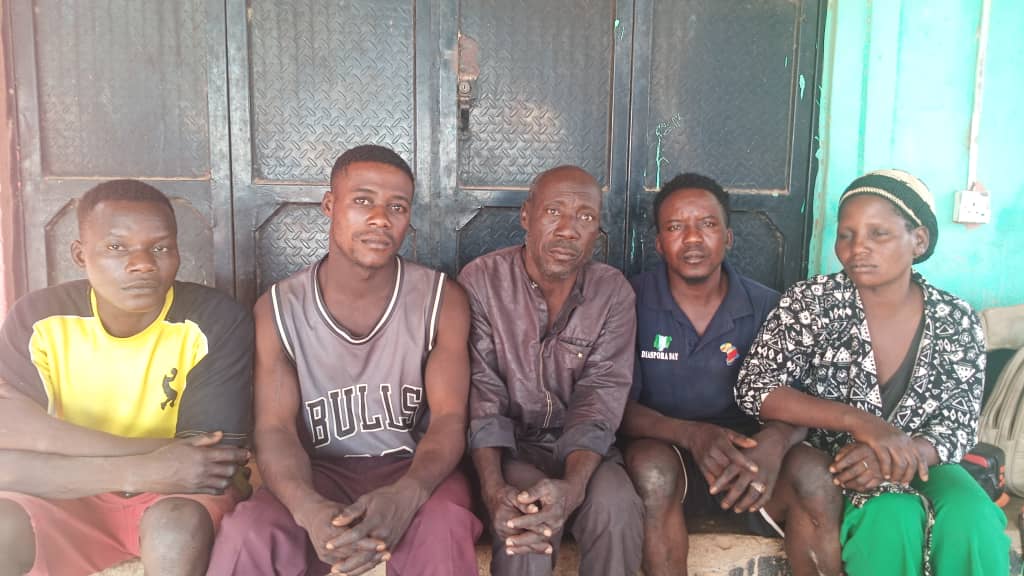
The victims — Reuben Christopher, John Reuben, Jonathan Paul, Ayaga Yohanna, Samson Sani, Prescilla Yakubu, and Gideon Yakubu — were seized after Fulani terrorists blocked the Angwaku–Bajaga stretch of Kutura Road as travelers headed to their farms. All were later reunited with their families.
Speaking exclusively to TruthNigeria, Gideon Yakubu recounted how armed men emerged suddenly from the bush.
“They appeared from different directions, all carrying AK-type rifles,” he said. “Once they pointed the guns at me, there was no option but to follow them.”
After being marched for about ten minutes, Yakubu realized his younger sister, Prescilla, had already been captured, her hands bound. The kidnappers declared the group their prisoners and demanded ₦35 million ($25,600) and motorcycles for their release, explicitly citing their Christian faith as the reason for the ransom.
Brutality in Captivity
Prescilla Yakubu, the only woman among the initial captives, described violent treatment as they were forced to walk toward the forest west of the town of Rijana in Chikun Local Government Area, which has been reported by TruthNigeria as a hub for holding hundreds of hostages.
“I didn’t know they had already captured my brother,” she said. “I was shouting for Gideon to help me. When he came, they tied him and started beating him with canes.”
She said she was slapped repeatedly and threatened with forced marriage. As the group moved deeper into the forest, additional captives from nearby communities were added, including a woman carrying a sick infant.
Moments later, Prescilla said, the kidnappers assaulted the child, an act that triggered panic among the captives.
Freedom at Last
The kidnappers’ plan unraveled when they attempted to ambush oncoming vehicles to seize more passengers. One of the approaching vehicles turned out to be an Army truck. Troops opened fire from a distance, and the militants fled immediately, abandoning the captives without firing a shot.
For residents of Kajuru County, the speed of the rescue was unprecedented.
Kajuru Under Siege: Kidnapping Christians for Ransom
The Kutura Road rescue did not occur in isolation. Kajuru County has become one of Nigeria’s most dangerous kidnapping corridors, with Christian communities disproportionately targeted by Fulani ethnic militias operating from surrounding forests.
Investigations by TruthNigeria reveal a consistent pattern: roadblocks on farm routes, village raids, forced marches into forest camps, and ransom demands calibrated around victims’ faith.
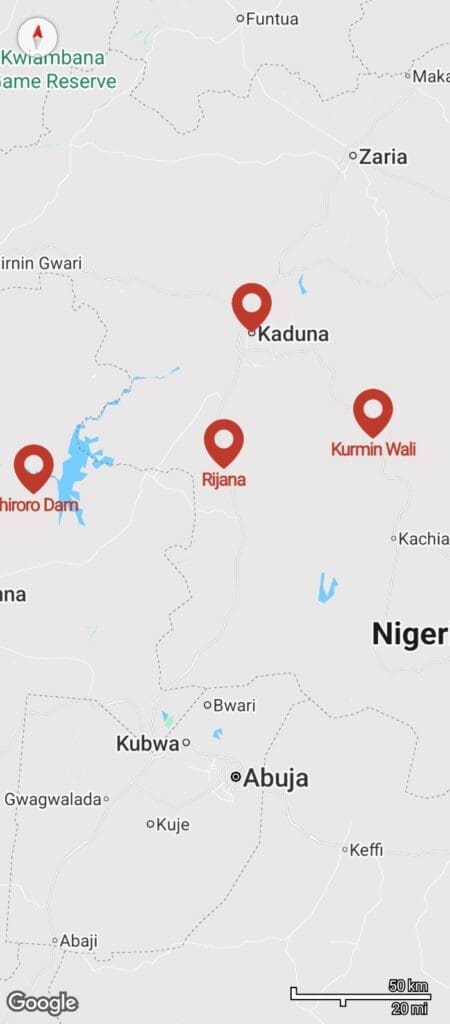
On Sunday, January 18, 2026, at about 7:00 p.m., gunmen stormed Kurmin Wali, abducting Christians gathered during a church-related event. While police later claimed dozens had been rescued, local Christian leaders disputed the figures, insisting many victims were unaccounted for and that families were quietly pressured to downplay the scale of the attack.
Earlier, on December 3, 2025, armed militants intercepted travelers near Kikware village, abducting commuters on a rural access road linking nearby settlements to Kajuru town. Survivors later confirmed the captives were taken toward the Rijana hostage forest.
Similarly, on November 17, 2025, coordinated daylight raids hit Mararaban Kajuru, where Christian farmers and traders were abducted from homes and fields. Witnesses reported forced marches into the forest and ransom calls within 24 hours — a hallmark of organized kidnapping networks rather than opportunistic crime.
Beyond individual incidents, TruthNigeria investigations have exposed at least four major terror camps — Doka (in Kajuru LGE), Rijana (in Chikun LGE), Jan Dutse (Kachia LGE), and Enugwu (Kachia LGA) — used as detention and negotiation hubs where kidnapped Christians are held, brutalized, and ransomed. Multiple survivors independently identify these camps as interconnected nodes in a coordinated kidnapping economy spanning southern Kaduna.
Why the Military Moved Faster This Time
Security analysts say the swift Army response reflects a shift in posture driven by sustained international pressure and renewed U.S.–Nigeria security cooperation.
Washington-based Africa analyst Scott Morgan attributes the rescue to tighter intelligence fusion and expanded surveillance across Kaduna’s vulnerable corridors. He notes that continued U.S. Intelligence, Surveillance, and Reconnaissance (ISR) flights over Nigeria signal improved coordination and information-sharing among Nigerian security services.
Morgan also points to recent U.S. logistical and intelligence support to the Nigerian military — coupled with diplomatic scrutiny over religious freedom- and mass kidnappings — as factors narrowing response times and limiting militants’ ability to move hostages deep into forest sanctuaries.
Wider Implications
For Kajuru’s Christian communities, the rescue offers a rare measure of hope in a region long trapped between terror camps and neglected roads. International observers, however, caution that isolated successes will mean little unless rapid response becomes standard practice.
Whether Nigeria can sustain this momentum will shape not only security in the Middle Belt but also Abuja’s credibility with international partners increasingly alarmed by faith-based kidnappings and the humanitarian toll unfolding in silence across rural Nigeria.
Mike Odeh James is a conflict reporter and he writes for TruthNigeria .