

Attack on traveling family in Delta signals insurgent reach beyond traditional hotspots
By Mary Kiara
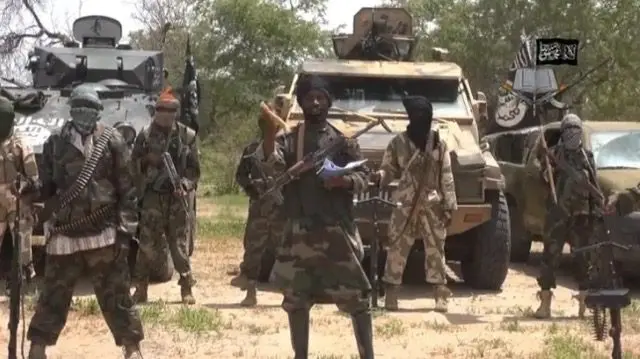
(Abuja) – Fulani militants long concentrated in Nigeria’s northern and Middle Belt regions are pushing deeper into the country’s south, raising new concerns that Abuja’s counterterror strategy is failing to contain networks once geographically limited.
The latest warning sign came on January 27 in Ndokwa East County, Delta State, more than 250 miles south of Nigeria’s core conflict corridor where Fulani militants ambushed a traveling family on a rural road linking the Ibrede and Igbuku communities.
Local officials say the attack left two children with life-threatening injuries and triggered widespread panic across surrounding farming settlements.
“God saved my family from untimely death,” said Reuben Okaroh, a former councilor and father of the victims, who spoke to local media. “My son and daughter are in critical condition, and our communities now live in fear.”
Violence Migrating Beyond the Middle Belt
For more than a decade, mass killings, kidnappings, and church attacks have been concentrated in Nigeria’s northwestern and north-central states; Kaduna, Plateau, Benue, and Zamfara.
But security monitors say recent incidents in Delta and neighboring Edo suggest Fulani militants are expanding operational zones southward.
In January, residents of Umeh, another Delta riverine community, reported Fulani militants occupying farmlands and attacking motorcycle riders. Farming activity halted as villagers abandoned crops over safety fears.
Days earlier in Edo State, protests erupted after kidnappings along major transport corridors. A Nigerian soldier opened fire during one demonstration as residents demanded protection from escalating attacks.
Aigbokhan Oseremen, an Edo-based activist, told local media that the attackers’ tagged “herders” by the media are “real terrorists”.
“When people are settled with no jobs, no accountability, and access to weapons, kidnapping becomes a business. They have wives, children, and camps,” he said. “From those forests, they come out to attack villages. It is organized crime.”
Daily life across affected southern communities is beginning to mirror patterns long seen in northern Nigeria; deserted farms, restricted travel, and population displacement.
Rural Economies Shutting Down
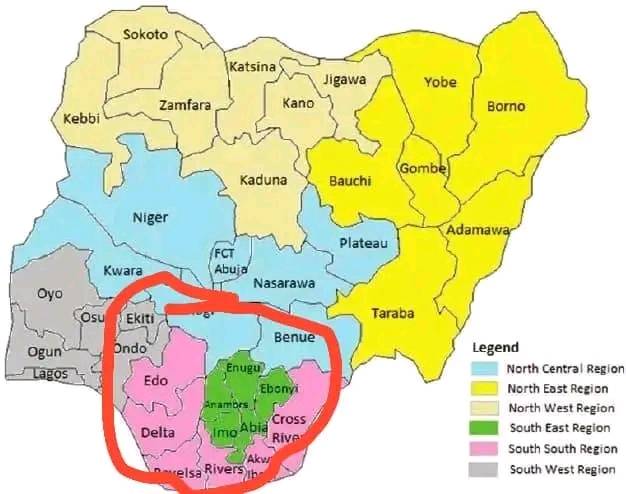
In Ndokwa East, residents say fear now governs movement.
Farmers avoid fields. Motorcycle transport between villages has slowed. Travel to nearby trading towns has dropped sharply.
Community leaders warn that prolonged attacks could cripple agricultural output in the oil-producing south-south region, an area previously insulated from insurgent violence.
Akpovienehe Duncan Afahakor, a lawyer, raised the alarm in a post on Facebook, “No one truly understands the intentions of the Fulani group. They have occupied the bushes, preventing our people from accessing their farms. Beyond this, they emerge from the bush to attack motorcycle riders. Just two days ago, without any provocation, one of our youths was shot in the leg multiple times,” he wrote.
Security Experts: A Strategic Containment Failure
Governance and security analysts say the geographic spread reflects deeper structural weaknesses.
Okechukwu Nwanguma, Executive Director of the Rule of Law and Accountability Advocacy Centre, told TruthNigeria that Nigeria’s response has remained reactive rather than preventive.
“The most disturbing aspect is not only the scale of violence, but the normalization of death and the apparent unwillingness of the state to decisively protect lives,” Nwanguma said.
He warned that militarized responses alone cannot dismantle insurgent networks.
“Without addressing root causes, poverty, land conflict, and weak justice systems, military deployments remain temporary solutions,” he said.
Abuja’s Strategy Under Pressure
Nigeria’s federal government has introduced new initiatives aimed at stabilizing vulnerable regions.
At the National Counter Terrorism Centre in Abuja, officials recently launched the Safe Nigeria Initiative, a nationwide program designed to counter violent extremism through youth employment and social integration.
National Coordinator Major General Adamu Laka said the strategy reflects a shift beyond battlefield operations.
“Military force alone cannot deliver lasting peace,” Laka said. “Violent extremism often stems from deeper social and economic challenges.”
The initiative aims to train more than 11,000 at-risk youths nationwide.
Nigeria’s Defense Ministry has also proposed deploying retired military personnel into “ungoverned spaces,” rural zones where state presence is weak.
The policy acknowledges what analysts say is the core vulnerability enabling militant mobility: vast forest corridors linking northern and southern regions.
Terrorists use these routes to transport weapons, captives, and fighters beyond traditional conflict theaters.
As enforcement weakens in one zone, violence migrates to another.
A National Pattern Emerging
Recent attacks across southern transport routes reinforce that assessment: Nine family members abducted along the Benin–Akure Expressway, armed raids reported along Benin–Sapele road corridors and militant threats triggering student protests in Ekpoma.
Security forces have responded with arrests, forest raids, and surveillance expansion, but containment remains uneven.
Strategic Implications
The southern spread carries broader implications beyond humanitarian risk.
Delta and Edo sit near Nigeria’s oil infrastructure and major commercial transport arteries. Sustained terror attacks could threaten energy production, food supply chains, and investor confidence.
Back in Ndokwa East, residents remain focused on survival.
The ambush that left one family fighting for life has become something larger, a warning that the map of Nigeria’s insurgency is changing.
If violence once confined to the north can surface hundreds of miles south, security analysts say, containment is no longer holding.
And when containment fails, spread becomes the story.
Mary Kiara reports on terrorism for TruthNigeria.