
Washington Cuts Billions in Waste. Nigeria Bleeds Trillions. Can Abuja Ever Plug the Leaks?
By Ezinwanne Onwuka
While Washington cancels billions in questionable contracts and audits spending in a sweeping push against waste, Nigeria continues to lose trillions to ghost projects, inflated contracts, and bureaucratic loopholes. With trillions vanishing from Abuja’s budget every year, the question is whether a tougher approach like Washington’s can finally plug the leaks.
Washington’s Hard Reset on Government Spending
President Trump entered office with a mission to clean up federal spending. He promised to “cut waste, fraud, and abuse everywhere that we can find it—and there’s plenty of it.”
In his first weeks, he removed several senior officials and gave the Department of Government Efficiency (DOGE) free reign to review federal contracts, eliminate wasteful programs, and reduce bureaucratic inefficiency.
The administration has criticised former President Joe Biden’s record on spending, pointing to what it describes as years of undetected overpayments and unchecked fraud.
In 2023 alone, the Biden Administration reported an estimated $236 billion in improper payments caused by overpayments, inaccurate recordkeeping, and fraud. About 74 percent of those errors were overpayments, including some issued to deceased individuals. Over four years, improper payments totaled more than $925 billion.
Federal agencies have since begun canceling or scaling back contracts identified as wasteful. In an X post on Nov. 8, 2025, DOGE said 67 contracts valued at $1.4 billion were terminated over a five-day period, generating an estimated $648 million in taxpayer savings.
The canceled agreements included a $54,000 State Department “Leader as a Coach” course, a $456,000 U.S. Agency for Global Media contract for round-the-clock FM broadcasting in Juba, South Sudan, and a $1.3 million education contract in Botswana.
On Jan. 10, 2026, DOGE announced another round of cuts, stating: “Over the last 5 days, agencies terminated and descoped 42 wasteful contracts with a ceiling value of $1.5B and savings of $269M, including a $1.2M Millennium Challenge Corp. DEI professional services contract for a ‘DCO Gender and Social Inclusion Director Full Time.’”
Nigeria’s Persistent Leakages
Nigeria faces a far more severe version of the same problem. Between 2018 and 2020, the country reportedly lost about ₦2.9 trillion to contract and procurement fraud alone—money that could have funded roads, hospitals, and schools nationwide.
Civil society group BudgIT, through its Tracka platform, monitored 2,760 government projects across 28 states between 2024 and 2025. Of these, 1,438 were completed and 660 were ongoing, but 99 were abandoned, 92 were fraudulently delivered, and 471 were never executed despite budget allocations. About ₦8.61 billion of the ₦15.07 billion disbursed was lost to diversions, ghost projects, and poor-quality work in states including Imo and Lagos.
Head of Tracka Joshua Osiyemi noted that the projects tracked represented just over 11 percent of all budgeted projects nationwide, suggesting the true scale of waste could be much higher.
Nigeria’s 2025 budget screamed scandal, with ₦6.93 trillion padded. This included ₦393 billion for 1,477 streetlights (₦266 million each) and ₦114 billion for 538 boreholes (₦213 million apiece). Anti-corruption agency ICPC said it recovered ₦37.44 billion and $2.35 million in 2025 through asset seizures and forfeitures—one of the highest annual recovery figures in its history.
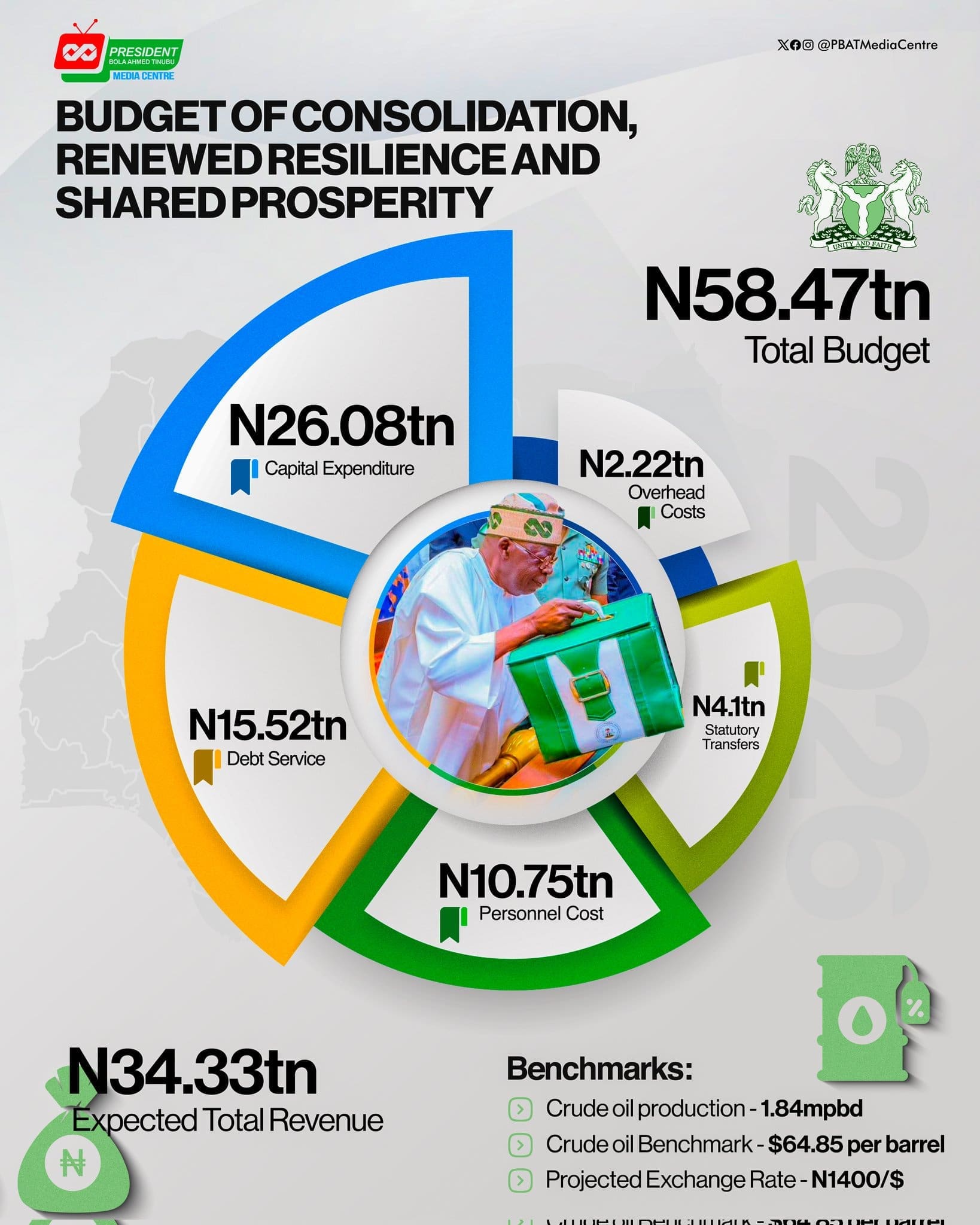
The 2026 budget showed similar concerns. BudgIT reported that of the ₦218 billion approved for health, only ₦36 million was released. From ₦858 billion budgeted for power, just ₦60 million was released, while the transport sector received ₦2.5 billion out of ₦256.7 billion allocated.
With this reality, Nigeria’s Corruption Perceptions score has remained low at 26 out of 100.
Nigeria’s Possible Path
Trump’s supporters argue that the strategy forces agencies to justify spending and saves taxpayer money. Critics counter that rapid cuts can disrupt services and weaken oversight if watchdog institutions are also targeted.
As Americans debate the impact of Trump’s crackdown, the question now surfacing in policy circles is whether Nigeria could adopt a similar playbook and achieve real results.
According to Collins Nweke, a Brussels-based international trade consultant who spoke to TruthNigeria, copying the U.S. alone will not fix Nigeria’s waste problem.
“Zero tolerance only works where the system itself is intolerant of abuse,” he said. “In Nigeria, three structural reforms must come before enforcement: independent institutions, full digitization of public finance, and certainty of consequences.”
Nweke stressed that real-time digital tracking of procurement and government spending would sharply reduce opportunities for fraud.
“Waste thrives in darkness, not in databases. Zero tolerance is not a moral posture. It is a systems outcome. Without fixing the plumbing of governance, enforcement alone will fail,” Nweke said.
What Nigeria Must Fix First
According to Nweke, the single reform that could most reduce government waste in Nigeria is a fully transparent, digital public procurement and payments system—one that tracks funds from budget approval to final payment.
He said waste often begins at the contracting stage through inflated project costs, duplicate contracts, and politically driven allocations.
“Once procurement is transparent, prices become competitive, ghost projects disappear, and citizens can follow the money,” he said. “You don’t even need to catch people first. The opportunity for waste simply collapses.”
He added that countries that reduced waste fastest did not start with mass arrests but with less discretion.
“So the reform message is this: reduce human discretion, increase system visibility, and waste will reduce itself,” he said. “Nigeria does not suffer from lack of laws or agencies. It suffers from a lack of systems that make abuse difficult and honesty pretty boring.”
Ezinwanne Onwuka writes special features for TruthNigeria.