
But Congress and White House Differ on Which Groups Drive Terrorism
By Luka Binniyat
(Kaduna) Nigerian Christians have applauded a bill before the U.S. Congress seeking sanctions against groups linked to mass killings of Christians – including controversial cattle herder associations.
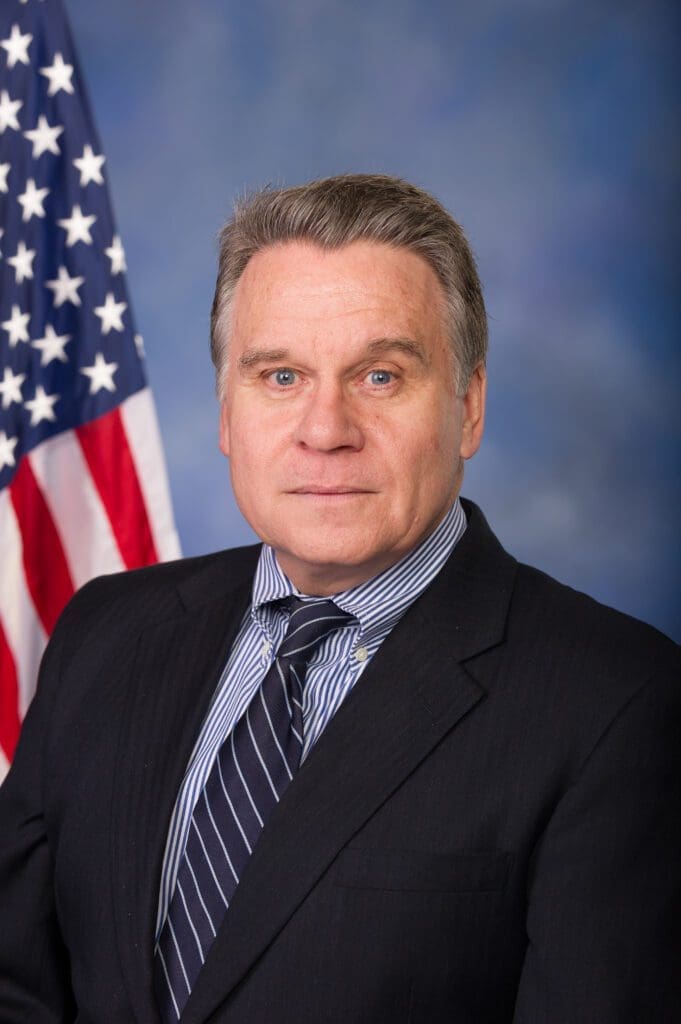
The Nigeria Religious Freedom and Accountability Act of 2026 specifically points out Fulani-ethnic nomad militias, and groups such as the Miyetti Allah Cattle Breeders Association of Nigeria (MACBAN) and Miyetti Allah Kautal Hore as targets for sanctions., according to media reports. TruthNigeria has published documentation for the position of the bill that Rep. Chris Smith, chairman of the Africa Subcommittee has acknowledged.
However, U.S. military support of Nigerian law enforcement exclusively targets insurgency groups such as ISIS and has no orders to interdict Fulani ethnic militia, according to Judd Saul, Founder of TruthNigeria.
“The U.S. government has no operational directive to investigate Fulani ethnic militia as the prime agent driving terrorism against Christians in Nigeria’s Middle Belt,” Saul told a January press conference at the National Visitors’ Center in Washington, D.C.
Nigeria Religious Freedom and Accountability Act of 2026
The proposed legislation, titled the “Nigeria Religious Freedom and Accountability Act of 2026”, was introduced in the U.S. House of Representatives by Rep. Chris Smith and Rep. Riley Moore on Feb. 10, 2026.
The proposed law seeks to strengthen U.S. oversight of religious-freedom violations in Nigeria. It mandates that the U.S. Secretary of State submit a detailed report to Congress identifying individuals, organizations, and government actors responsible for acts of violence, persecution, or discrimination based on religion.
It authorizes targeted sanctions under the Global Magnitsky Human Rights Accountability Act, including visa restrictions and asset freezes against terrorist agents or financiers. The bill also requires periodic updates to Congress and outlines mechanisms for monitoring Nigeria’s compliance with international religious-freedom standards.
In addition, it calls for enhanced support for victims of religious persecution, improved intelligence sharing between U.S. and Nigerian authorities, and a reassessment of U.S. security assistance to ensure that American support does not enable human-rights violations.
According to Smith’s official congressional release, the bill would require the U.S. Secretary of State to report on religious-freedom abuses in Nigeria and recommend sanctions, including visa bans and asset freezes under the Global Magnitsky Act, against responsible individuals and entities.
“The Nigerian government’s denial of the religious persecution occurring within its borders has enabled violence to fester. This bill seeks to help Nigeria address its many challenges and stand firmly for religious freedom,” Rep. Smith said in a statement.
The Christian Association of Nigeria (CAN) has previously welcomed international attention to the crisis.
“If international attention is what is required to spur decisive governmental action to protect lives and bring lasting peace, then we welcome it,” according to Vanguard.
“The Nigerian Christian community welcomes the bill with open arms,” Rev. Peter Ademi, National Spokesman of CAN, told TruthNigeria Wednesday, February 18, 2026
“Any law that will criminalize persons, individuals or groups that are directly or indirectly fueling the genocide against Nigerian Christians is welcomed with open arms,” he said.
“We are praying for the US lawmakers to ensure its passage as soon as possible, because we believe that President Donald Trump will sign it into law,” he said.
Several Middle Belt advocacy groups and civil society organizations have echoed similar sentiments, describing the bill as “long overdue” and “a necessary accountability tool.”
“We in the Middle Belt have always accused MACBAN as the major enablers of the Fulani Islamists terrorists carrying out a genocidal campaign against the ethnic Christians of the Middle Belt,” said Dr. Pogu Bitrus, President of the Middle Belt Forum (MBF) to TruthNigeria from Abuja.
Former Governor of Benue State, Samuel Ortom (2007 – 2023) has hailed the bill as “timely, courageous and necessary.”
Responding to TruthNigeria Nigeria inquiry on his stand on the bill, Ortom media aide Nathaniel Irkur said that his principal is excited over the bill.
“He said that it is timely, courageous and necessary call for prayers to ensure its passage into law.
Ortom was the first Nigerian governor to proscribe open, nomadic grazing of livestock in the fodder-rich state. That has pitched him against MACBAN, which Ortom accused of failed assassination plots while in government as reported in Nigeria media.
MACBAN Disputes Proposed Designation
However, MACBAN leaders have repudiated the proposed designation. The National President of MACBAN, Baba Ngelzarma, told Punch Newspaper that the association “is not a terrorist organization” and called for a fair review of the allegations.
Reacting, Ngelzarma said no court in Nigeria or abroad had ever convicted or indicted the association for criminal or terrorist activity.
“While we acknowledge the sovereign right of the United States to deliberate on religious freedom and human rights, we are concerned by narratives linking MACBAN with terrorism.
“We categorically reject such insinuations as false, unfounded, and injurious to the integrity of a duly registered national association,” he said, according to Punch.
Other Islamic leaders and northern Nigeria political figures have reportedly criticized the bill as biased, arguing that insecurity in Nigeria is complex and should not be reduced to religious framing.
The Muslim Rights Concern (MURIC) also strongly denounced the bill.
Reacting in a statement on Thursday, MURIC’s Executive Director, Professor Ishaq Akintola, said the sanctions unfairly target Muslims, arguing that the bill ignores abuses committed by groups he described as “Christian militia groups” and government officials in Southern Nigeria.
“We take the decision of the US Congress to sanction Muslims alone with a pinch of salt. It amounts to scapegoating, preconceived judgment and crusade-brandishing,” he declared.
Luka Binniyat writes for TruthNigeria on Politics and Conflict from Kaduna.