
After 3 Years, U.S. Police Training in Nigeria Nears End as Expert Calls for Continuation as Military Aid Rises
By Ezinwanne Onwuka
As a U.S. police training program in Nigeria approaches its March 31 deadline, analysts warn that shutting it down now could weaken frontline law enforcement just as Washington expands military support and extremist violence continue to rattle communities.
Building a Rapid-Response Force
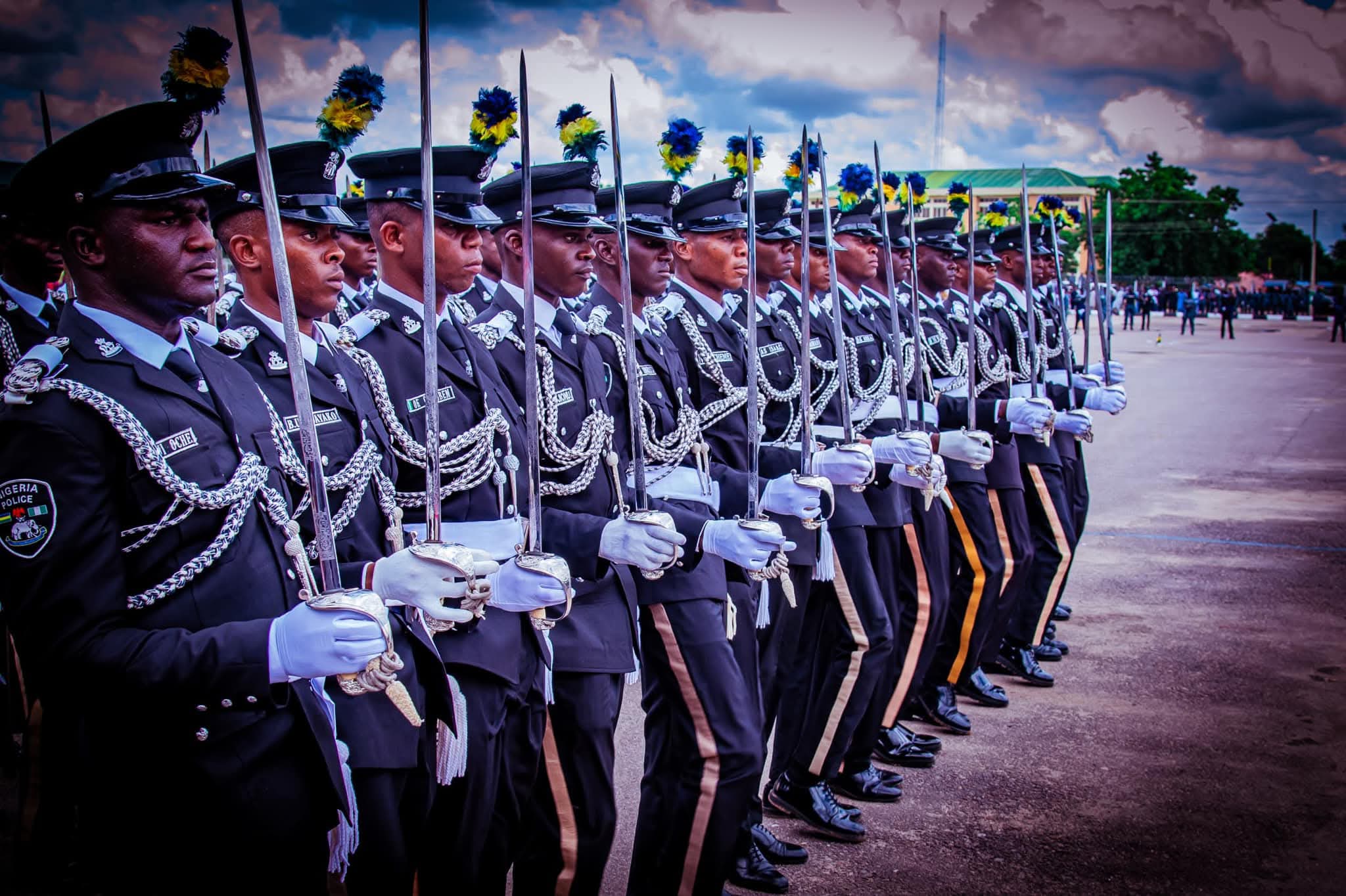
Since 2023, retired American law enforcement officers working under the U.S. State Department’s Bureau of International Narcotics and Law Enforcement Affairs (INL) have trained members of the Nigeria Police Force (NPF) to respond faster and more effectively to kidnappings, terrorism, and organized crime.
The centerpiece of that effort is the Special Intervention Squad (SIS), a rapid-response unit created after deadly Christmas Eve attacks in 2023 tore through Mangu, Bokkos, and Barkin Ladi communities in Plateau State.
The squad was launched in Jos on December 29, 2023, and expanded to Abuja weeks later to block armed groups moving into the capital from neighboring states. The move followed a memorandum of understanding between the U.S. Embassy and ex–Inspector-General Kayode Egbetokun aimed at strengthening frontline policing in high-risk regions.
Today, SIS units operate in at least nine states — Rivers, Enugu, Edo, Anambra, Imo, Benue, Plateau, Kano, and Kwara — along with the Federal Capital Territory. Its operations extend nationwide, with plans to expand further.
What the Training Has Delivered
Over the past three years, INL instructors have trained more than 400 Nigerian officers in tactical operations, hostage rescue, counter-kidnapping strategy, intelligence coordination, community policing, and human rights compliance.
The program extends beyond SIS to the Counter Terrorism Unit (CTU), Complaint Response Unit (CRU), Mobile Police (MOPOL), dispatchers, first responders, and personnel of the Nigeria Security and Civil Defence Corps.
The training has also improved how emergency reports are handled outside tactical units. A staff member at Vigiscope Ltd., which runs a mobile reporting app linking citizens directly to responders, said INL-led first responder training for civilian Police-VGS staff in Abuja and Lagos improved how they handle emergency calls.
“The training with INL handled by the Facilitator Mrs Sarah Jackson was so helpful and impactful,” the staff member told TruthNigeria anonymously.
“Following the training, our team has seen improvements in our call handling processes. One of our representatives recently received commendation from a client for exceptional service, directly attributed to the techniques learned from Sarah’s training. We’re grateful for the training and look forward to exploring more opportunities for collaboration and growth.”
On operational results, authorities report that SIS officers have arrested 139 suspected kidnappers and armed robbers and rescued 154 kidnapped victims. In one operation in August 2024, SIS personnel killed eight Eastern Security Network (ESN) fighters in Owerri, Imo State. In September 2024, they rescued 20 kidnapping victims in a separate mission.
A Strategic Crossroads
The INL program is one of several U.S.-funded security initiatives in Nigeria, especially in the Middle Belt, where Christian farming communities suffer repeated attacks from Islamist militants.
Yet the program is set to expire on March 31, 2026, even as Washington deepens military support for Abuja. Last month, about 100 U.S. soldiers arrived to train Nigerian forces and provide intelligence support on Islamist militants and other armed groups following U.S. airstrikes on militant camps in Sokoto last Christmas.
Nigeria’s army remains locked in combat with Boko Haram, its splinter faction ISWAP, IS-linked Lakurawa, and heavily armed bandit gangs engaged in kidnappings and illegal mining.
Policy analyst Kingsley Okafor cautions that Nigeria cannot afford to lose the police training program at this critical juncture.
“The regression would be immediate, measurable, and most brutal in the communities that can least afford it,” he told TruthNigeria.
“What the INL program provides is not interchangeable with any other training. It delivers two things simultaneously that are extremely rare in combination: elite tactical capability and a firm grounding in human rights and community policing. Strip away the U.S. training, and you risk one of two outcomes — a unit that slowly loses its tactical sharpness as doctrine drifts, or a unit that retains its aggression but loses its restraint. Neither outcome serves Nigerians.”
He identified Plateau, Benue, Kaduna, and the broader Middle Belt as especially vulnerable if the program ends.
A New Police Chief, A New Direction?
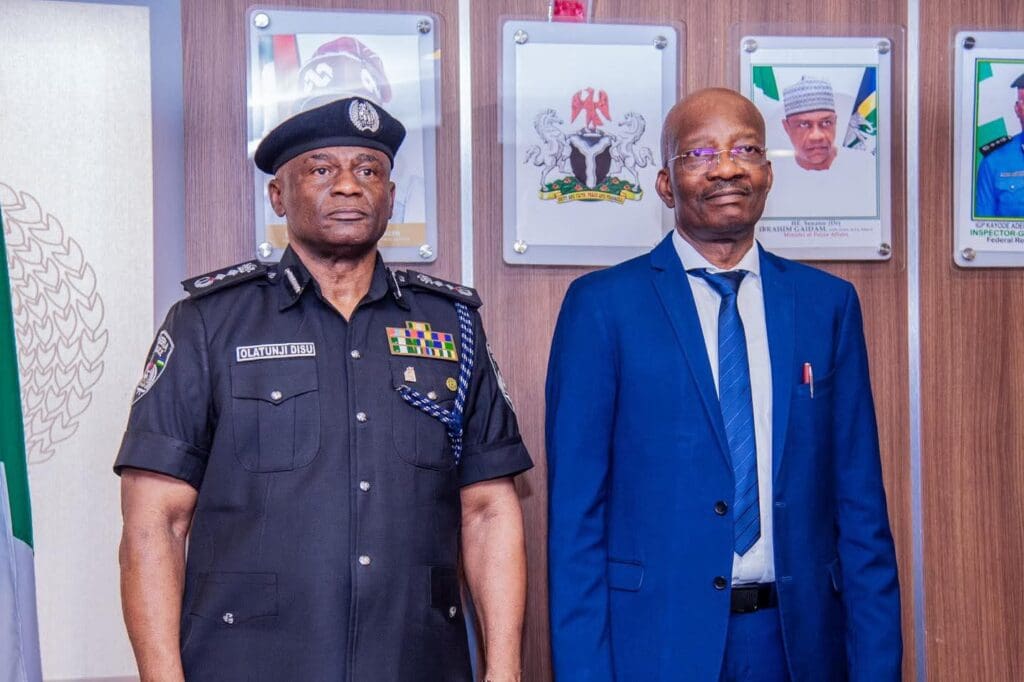
The debate unfolds amid leadership change within the NPF. Tunji Disu has assumed office as Acting Inspector-General of Police, replacing Egbetokun.
Within police circles, officers describe him as operationally tough and reform-minded. One senior source, who requested anonymity, told TruthNigeria that morale has risen since his appointment.
Okafor agrees. “Everything I am hearing about Acting IGP Disu — and the public record confirms this — is that he is intensely operational in his orientation. This is a man built for exactly this moment,” he said.
“The SIS was designed to be the IGP’s premier rapid-response instrument — the unit that takes the fight directly to terrorists, bandits, and kidnappers wherever they operate. A commander with Disu’s background will want that unit sharp, deployable, and ready. But ‘ready’ requires continuous training. The INL program has spent three years building that readiness.”
He compared cutting the INL program now to “handing a new commander (Disu) a Ferrari and immediately draining the fuel tank.”
A Gap Nigeria Can’t Afford
Okafor warns that if INL training lapse by month end, the damage will go beyond a simple program closure.
First, he says, the U.S. would lose irreplaceable “human terrain” intelligence. After three years embedded with Nigerian units, the trainers “know which officers they trained, which units are ready for advanced tasking, which commanders can be trusted, and which communities will cooperate with security forces versus those where trust has broken down,” he explained.
Second, their exit would create a dangerous seam between police and military efforts. With U.S. Africa Command advisers now supporting Nigerian Army counterterror operations, coordination with INL-trained police units like the CTU and SIS is critical. In his words, “If INL exits on March 31, that seam doesn’t get bridged; it becomes a wound.”
Finally, he points to long-standing tension between the NPF and the Army. INL trainers, he said, are uniquely positioned to ease that friction as U.S. military engagement expands.
“The U.S. government has committed $413 million to AFRICOM operations in Nigeria,” Okafor said, “Losing the people best positioned to make Nigerian security forces work together — right at the moment when coordination has never mattered more — would be an extraordinarily costly oversight.”
Ezinwanne Onwuka writes special features for TruthNigeria.