

As Fulani Militia Target Christian Towns, Washington Expert Urges Rethinking Nigeria Strategy
By Mike Odeh James
Bauchi, Nigeria–On February 22, 2026, more than 100 heavily armed Fulani Ethnic militia riding motorcycles stormed into a majority-Christian farm village of Bauchi State—roughly 290 miles northeast of Abuja. One village survivor, Daudu Said, told TruthNigeria. “They are Fulanis and they are well armed. They keep attacking us. They are trying to chase us from our land.”
“This is not the first time,” according to Mr. Said. He alleged that the attackers specifically targeted Christians. “When they enter the community, the first thing they ask is for infidels—Christians. God help you if you are one.”
Those claims reflect a growing fear in parts of Bauchi that the violence is not merely criminal but carries ethnic and religious undertones. The targeted settlements are in Gwana District, Alkaleri County of Bauchi State, a majority Muslim State that instituted Sharia law into its court system in 2001. Nonetheless, as many as 15 percent of Bauchi’s population are either Christian or traditional worshippers.
The attackers struck a military base and surrounding villages almost simultaneously. Two soldiers, a local vigilante, and a civilian were killed. Several residents were abducted. Within hours, entire communities began fleeing.
Survivors say the assault was swift and coordinated. Homes were burned. Farmlands abandoned. Families scattered toward neighboring states—Gombe, Plateau, and Adamawa—seeking refuge in schools, churches, and private homes. ThisDayLive emphasized that the motivation of the attack was purely economic, ignoring the claim of local Christians who said the motivation was largely sectarian in nature.
Bauchi State has an estimated population of about seven million people, with Christians making up roughly one-third. Community leaders say predominantly Christian villages in southern Bauchi—including areas of Tafawa Balewa and Bogoro—have experienced repeated attacks over the past year.
The February 22 attack was not isolated. It forms part of a wider pattern of armed violence attributed locally to what residents and some officials describe as Fulani ethnic militias—decentralized, heavily armed groups often linked to ethnic cleansing but increasingly capable of coordinated assaults on both civilian and military targets.
In August 2025, gunmen killed a Christian farmer in Gumel village, Tafawa Balewa. A Zaar tribal leader later condemned the killing of another Christian, Mr. Irmiya Yohanna, on his farm in neighboring Bogoro County. These incidents have deepened anxieties among minority communities who believe they are being systematically pressured off ancestral lands.
The scale of the threat is contested. Bauchi State Governor Bala Mohammed recently warned that as many as 10,000 Fulani may be operating within the state. Speaking after visiting displaced communities, the governor described the situation as beyond routine banditry and urged stronger federal intervention.
Security analysts, however, question the precision of that estimate.
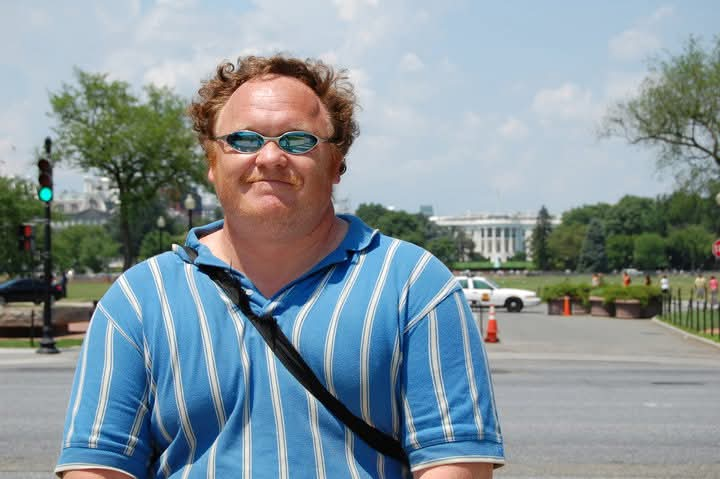
Washington-based analyst Scott Morgan told TruthNigeria that while the presence of organized armed groups in Bauchi is undeniable, the 10,000 figure should be treated cautiously. “If 10,000 fighters were involved and only three people were kidnapped, that is an underwhelming outcome,” Morgan said. “It suggests the attack may have been political in nature rather than purely operational.”
Morgan also noted the timing of the violence relative to the arrival of U.S. personnel in Nigeria.
“The U.S. personnel only arrived on February 17. Targeting them (Fulani Ethnic militia) early in their mission, while they are still preparing daily operations, is imperative for jihadists,” he said. “It shows they view the U.S. presence as more of a threat to their goals than previous actions by the Tinubu government.”
Washington’s Narrow Focus
American officials describe their role as part of a long-standing intelligence-sharing and training partnership with Nigeria focused primarily on jihadist groups such as Boko Haram and its ISIS-affiliated offshoot, Islamic State West Africa Province. The engagement is framed as advisory rather than combat deployment.
Yet, this narrow jihadist focus is fueling growing frustration among analysts and local leaders, who argue Washington’s strategy overlooks a parallel, escalating threat. While Boko Haram has dominated international headlines for 17 years, rural violence in Nigeria’s Middle Belt and parts of the northeast—often attributed to armed herder militias and bandit networks—has expanded geographically and tactically.
“Fulani Ethnic militia forms the deadliest of all the terror outfits says Friday Agbo MD of Alterkonsult, Kaduna
It’s like overlooking the Hezbollah and HAMAS and bombing the Houthis, Agbo added.
He contends U.S. policy remains locked on ideologically branded insurgents, sidelining these diffuse groups that blend criminality, ethnic land grabs, and religious targeting without Boko Haram’s global branding.
A Policy Dilemma
The core policy dilemma is classification. Unlike Boko Haram or ISWAP, these armed groups do not always present a unified ideological structure or publicly declared command hierarchy. They operate fluidly blending criminal kidnapping enterprises, land conflict dynamics, and, in some areas, religious rhetoric.
Morgan pointed out that kidnapping has evolved into a revenue model across several northern states. “Sustained insecurity often forces Aso Rock to pay attention,” he said, referring to Nigeria’s presidential complex.
For Washington, the question is whether its counterterrorism posture is calibrated to this hybrid threat environment. If the February attack in Alkaleri is viewed merely as localized banditry, it may remain outside core U.S. strategic assessments. If it is interpreted as part of a broader insurgent ecosystem targeting both state forces and minority communities, then a doctrinal adjustment may be underway—a shift many now demand to address frustrations over jihad-only targeting.
A Region in Retreat
Governor Bala Mohammed’s warning underscores how rapidly the security landscape in Bauchi is shifting. Military bases are now being tested. Civilian settlements are emptying. Churches in some rural districts have suspended services. Farming activity—the backbone of local economies—has stalled in affected zones.
For displaced residents, the debate over numbers is secondary. The motorcycles are real. The gunfire is recent. The fear is immediate.
Whether the estimate is 10,000 fighters or significantly fewer, the trajectory is clear: armed networks in Bauchi are expanding operational reach and probing state defenses.
If Washington is recalibrating its Nigeria strategy, Bauchi may become a test case for whether U.S. counterterrorism doctrine can adapt beyond the familiar architecture of Boko Haram and ISIS-linked insurgency—and confront a more diffuse, locally rooted, but increasingly lethal threat.
Mike Odeh James is a conflict reporter for TruthNigeria.