

By Luka Binniyat and Mike Odeh
(Maiduguri – Nigeria) – The Nigerian Military said Wednesday that it has killed more than 87 Islamist terrorists in Borno state, Northeast Nigeria, after deadly invasions and suicide bombings since Sunday night.
In two separate statements from Army media spokesman Lt. Col. Sani Uba
troops recorded major successes in renewed counter-terrorism offensives across Borno State, repelling coordinated insurgent attacks and neutralizing scores of fighters, including top commanders.
Deadly ISWAP Attacks
Northeast Nigeria has been rocked by two days of simultaneous, coordinated deadly attacks by either Boko Haram or Islamic State in West African Province (ISWAP). The terror rampage included three bombings in Maiduguri, the state capital, killing 23 and wounding 118 on Monday March 16, according to Reuters.
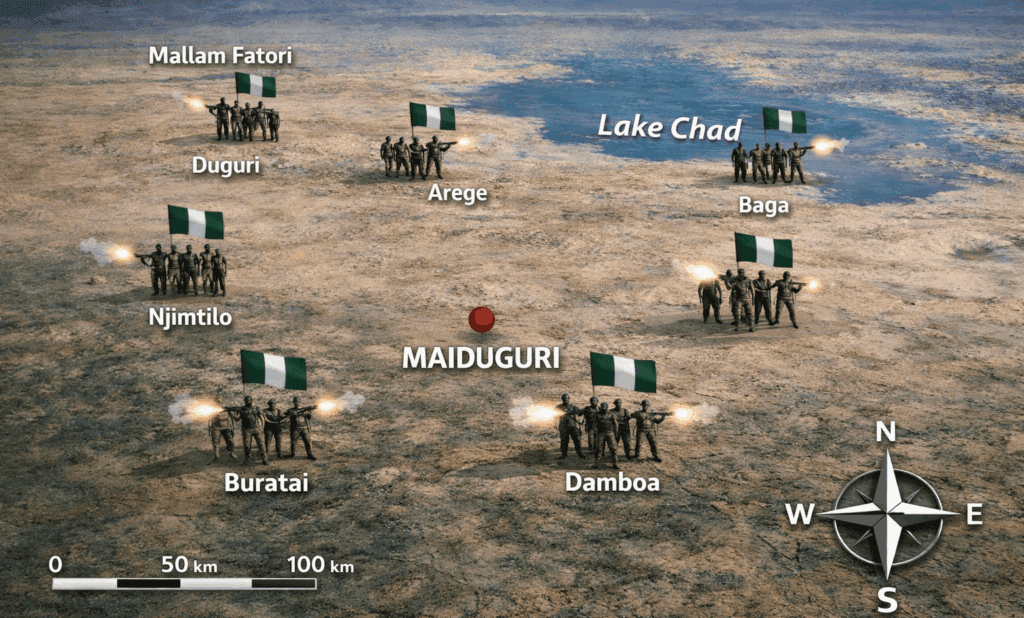
Uba said that in Mallam Fatori, located 190 kilometers north of Maiduguri near the Niger border, troops of the 68th Battalion successfully repelled a daring night assault by suspected Boko Haram/ISWAP fighters in the early hours of Wednesday, March 18, 2026.
“The attack, which occurred at about 12:50 a.m., involved terrorists advancing on foot from the Duguri general area, supported by multiple armed drones, in a bid to breach the Battalion’s Main Defensive Area.”
60 ISWAP Terrorists Killed
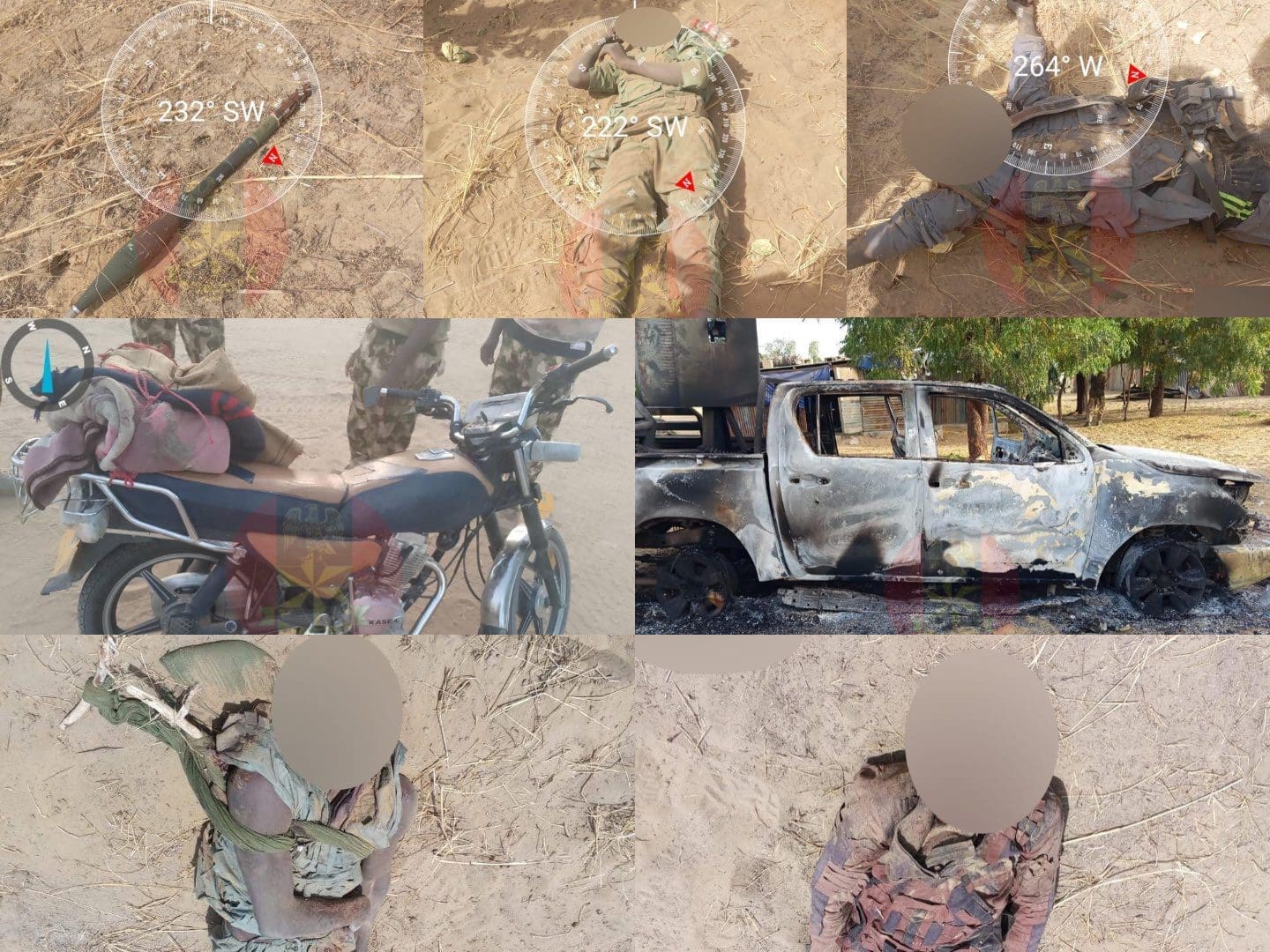
“The movement of the insurgents was swiftly detected by vigilant troops who responded with overwhelming firepower,” the statement said, adding that “over 60 terrorist fighters, including some notorious commanders, were neutralized during the fierce engagement.”
“The intensity of the firefight forced the remaining insurgents into a disorganized retreat towards the Arege general area,” as troops commenced pursuit operations supported by Intelligence, Surveillance and Reconnaissance (ISR) platforms, the statement said.
In a related development, troops of Operation Hadin Kai, a task force that included police and paramilitary units, also foiled coordinated terrorist attacks on multiple locations across the state on March 16.
At Njimtilo, about 10 kilometers west of Maiduguri in the Kano State region, terrorists attempted to infiltrate military positions near Ajiri Cross but were “swiftly detected and decisively engaged,” Uba said.
“Troops had anticipated the move and prepared a deliberate offensive-defensive posture to defeat the assault,” the military said, noting that “the attackers were routed and forced into a disorganized retreat while suffering heavy casualties.”
According to Uba, in Baga, approximately 196 kilometers north of Maiduguri on the shores of Lake Chad, troops “met the terrorists with determined resistance, bringing superior firepower to bear,” supported by precision air strikes that “disrupted the terrorists’ assault formations.”
At Buratai, about 135 kilometers south of Maiduguri, troops repelled another attack, killing several fighters, including “a key leader who spearheaded the assault,” Uba went on to say.
At Damboa, located roughly 85 kilometers east of Maiduguri, troops also thwarted insurgent advances, maintaining firm control of their positions despite intense firefights, said the signed statement.
“The engagements were reinforced by timely close air support from the Air Component and the Nigerian Army Aviation,” the statement added, emphasizing that “precision strikes compounded the terrorists’ losses as they attempted to withdraw.”
27 Terrorists Killed
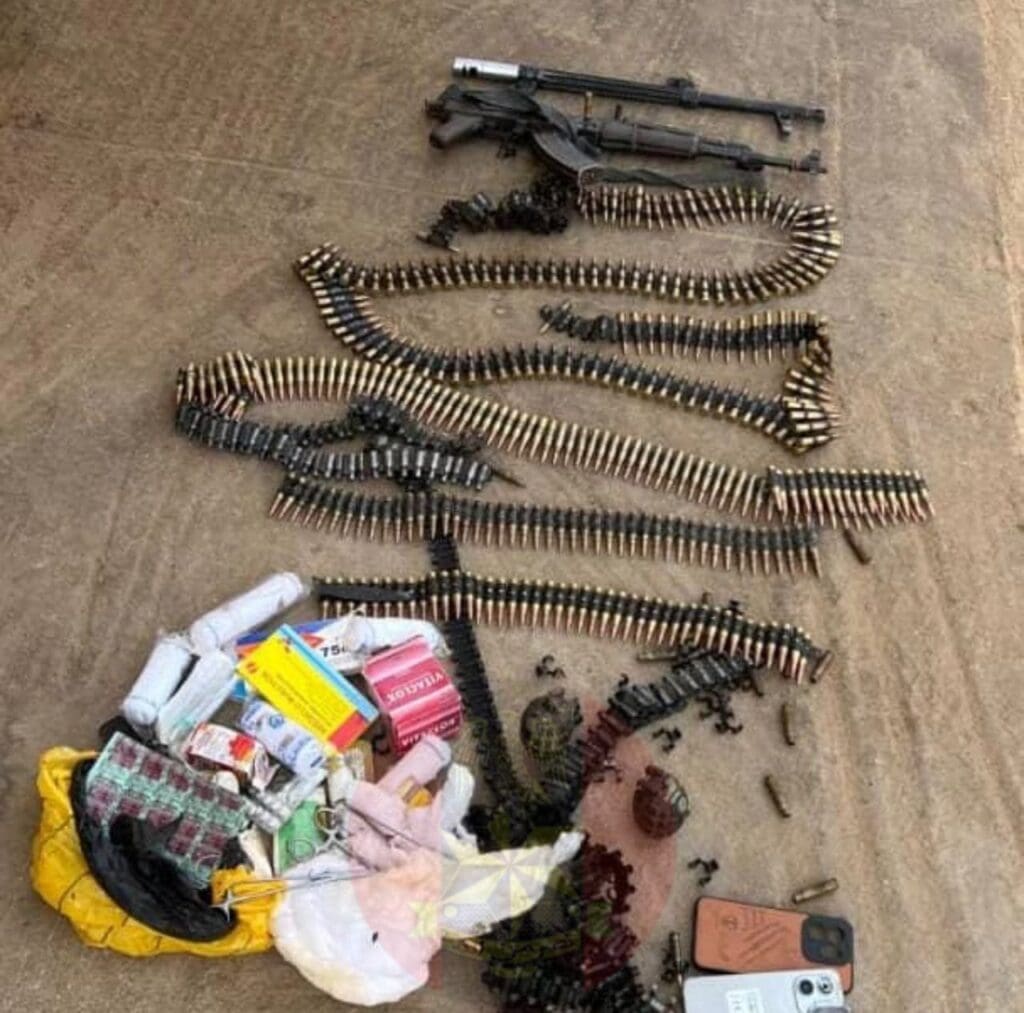
During follow-up exploitation operations around Baga extending to Korochara, Garin Giwa, and the Gidan Kaje axis, troops recovered significant arms and ammunition, including “3 PKT machine guns, 7 AK-47 rifles, 206 rounds of PKT ammunition, and 418 rounds of anti-aircraft ammunition.”
Additionally, “7 terrorist corpses were recovered, while the insurgents buried about 20 others in shallow graves,” further indicating the scale of their losses.
The military stressed that “these failed attacks demonstrate the growing desperation of terrorist elements under sustained operational pressure,” assuring that “all affected locations remain firmly under the control of our own troops.”
Expert’s Assessment
A security assessment by Col. Aliyu Danbaba (rtd.) of SignWell Consult indicates that the Nigerian military’s response to the recent Boko Haram/ISWAP attacks in Borno reflects what he described as “tactical resilience,” but also “exposes critical gaps in layered defense and early warning systems.”
Danbaba, a retired Nigerian Army colonel who served in the Northeast before retiring in 2018, spoke exclusively to TruthNigeria from Abuja on Wednesday.
“The rapid detection and decisive engagement of advancing insurgents, particularly at Mallam Fatori and other forward locations, demonstrates effective force readiness, fire discipline, and coordination between ground forces and air components,” Danbaba said.
He added that “the integration of close air support, ISR (Intelligence, Surveillance and Reconnaissance) platforms, and blocking maneuvers was instrumental in neutralizing large numbers of attackers and preventing territorial breaches.”
He further explained that “the adoption of an offensive-defensive posture, where troops anticipated enemy approaches and disrupted withdrawal routes, reflects improved operational art under Operation Hadin Kai,” consistent with modern counter-insurgency doctrine.”
However, Danbaba cautioned that the coordinated attacks, particularly the bombings in Maiduguri, reveal lapses in “urban intelligence penetration and counter-IED frameworks.”
“The ability of terrorists to strike multiple civilian targets almost simultaneously suggests gaps in human intelligence networks, surveillance coverage, and pre-emptive threat disruption mechanisms,” Danbaba told TruthNigeria.
He also warned that the reported use of armed drones signals deficiencies in counter-UAS capabilities and airspace monitoring.
Danbaba concluded that while the military has shown battlefield dominance, there is an urgent need to strengthen intelligence fusion, urban security, and civilian-military information sharing.
Luka Binniyat and Mike James Odeh write for ThruthNigeria from Kaduna.