
Western Lawmakers Challenge Abuja’s claim of ‘No Christian Genocide’
By Mary Kiara
(Abuja) – As Nigeria’s First Lady Oluremi Tinubu promoted a message of unity during a high-profile church appearance in London, Western lawmakers and religious freedom advocates intensified pressure on Abuja over what they describe as persistent, targeted violence against Christians.
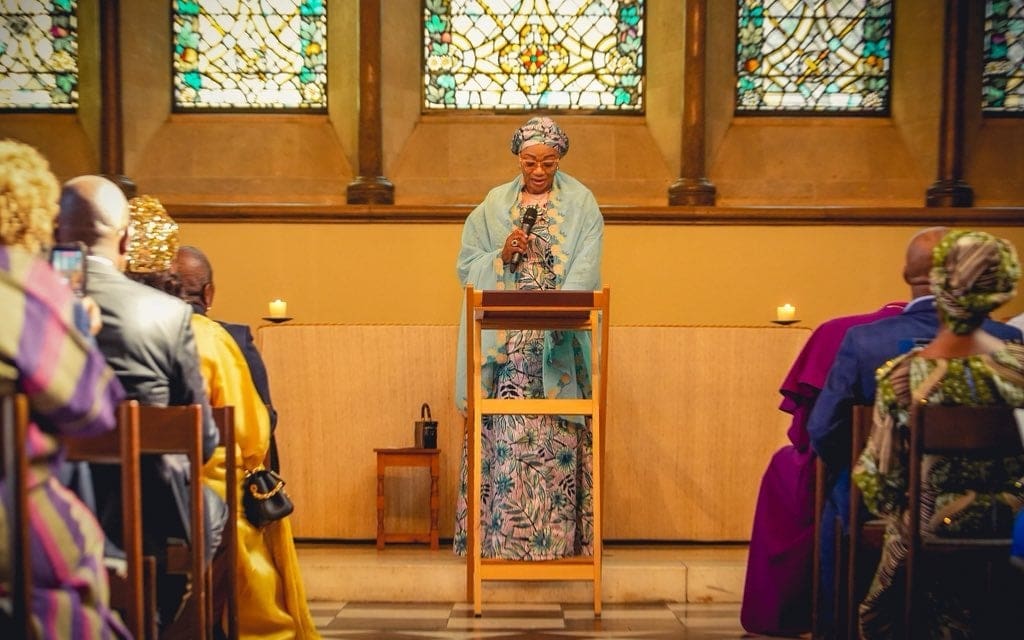
Speaking at Lambeth Palace, the official residence of the Archbishop of Canterbury, Tinubu urged religious leaders to prioritize compassion and dialogue across faith lines.
“We have to learn to listen to each other and try to get the good out of everyone, irrespective of who we are or who we worship,” Tinubu said during the Anglican Communion gathering.
Her remarks echo statements made during a February visit to Washington, where she rejected claims that Christians are being systematically targeted.
“I don’t think so,” Tinubu said in an interview with CBN News when asked whether killings of Christians amount to genocide.
Instead, she attributed the violence to terrorism, criminal activity, and broader instability.
Government Narrative Meets External Pressure
Tinubu’s comments align with the Nigerian government’s longstanding position that violence across the country was not religiously motivated.
“There is nothing like Christian genocide,” Bayo Onanuga, special adviser to President Bola Tinubu on information and strategy, said in remarks to journalists during the UK visit.
“What we have is a security challenge,” he added.
But that position is increasingly under scrutiny in Western capitals.
More than 200 British members of Parliament have urged Prime Minister Sir Keir Starmer to raise concerns about attacks on Christian communities.
In Washington, a recent congressional report described Nigeria as “the most dangerous place in the world to practice the Christian faith,” citing sustained attacks by jihadist groups and armed militias.
Media Messaging vs Ground Reality
While Nigerian media outlets largely framed the UK visit around diplomacy and religious unity, critics say the government’s international messaging contrasts sharply with documented patterns of violence.
Dr. Richard Ikiebe, president of Peace Building and Social Justice UK, said the communication strategy risks minimizing the crisis.
“The Nigerian government would rather focus on optics and public relations,” Ikiebe told TruthNigeria.
“The more we keep quiet, the harder they press,” he added, urging churches and diaspora communities to speak out.
Data and Experts Challenge Official Claims
International monitoring groups continue to document Nigeria as the epicenter of global Christian killings.
According to Open Doors’ World Watch List, nearly 3,500 Christians were killed in Nigeria in the past year – the highest number worldwide.
Brad Brandon, chief executive officer of Across Nigeria, said the scale and pattern of attacks indicate targeted persecution.
“It is a persecution issue,” Brandon told TruthNigeria.
“You’ve got over 50,000 Christians killed since 2009 and thousands of churches destroyed.”
“Their communities are being wiped out, and millions are displaced,” he said. “Christians are being targeted.”
Conflict data compiled by TruthNigeria’s Terror Tracker shows a sustained pattern of militant attacks, village raids and mass killings across Northern and central regions of the country.
Policy Stakes: Sanctions, Aid, and Credibility
The divergence between Nigeria’s messaging and international assessments is increasingly shaping policy discussions.
In 2025, the United States redesignated Nigeria as a Country of Particular Concern under the International Religious Freedom Act, a classification that can trigger sanctions and restrictions on security cooperation.
At the same time, Nigeria signed a $9 million lobbying contract in Washington following the designation.
“Foreign governments… engage in lobbying and media outreach to mislead policymakers,” Vicky Hartzler, Chair of the U.S. Commission on International Religious Freedom, said in a statement.
“Rather than working to meet their obligations under international law, CPC designated governments are trying to misconstrue religious freedom violations,” Asif Mahmood, USCIRF Vice Chair added.
U.S. broadcaster Tony Perkins said he declined a request to host Nigeria’s First Lady during her Washington visit.
“I’m not going to give them a platform to cover up what they’re doing in Nigeria,” Perkins said during a February broadcast.
A Narrative Battle with Strategic Consequences
For Western governments, analysts say the issue is no longer only the scale of the violence in Nigeria, but how that violence is presented internationally.
“We need to be able to speak truth,” David Smith, the United Kingdom’s Special Envoy for Freedom of Religion or Belief, said in a statement.
Communities facing extremist violence, he added, should be able to “experience grace instead of fear.”
As Nigeria seeks deeper economic and diplomatic ties with Western partners, its credibility on religious freedom, both in policy and in public messaging is likely to remain under sustained scrutiny.
Mary Kiara reports on Terrorism and religious-freedom policy for TruthNigeria.