
Deradicalization spending grows as Nigeria graduates 117 former Boko Haram fighters
By Mary Kiara
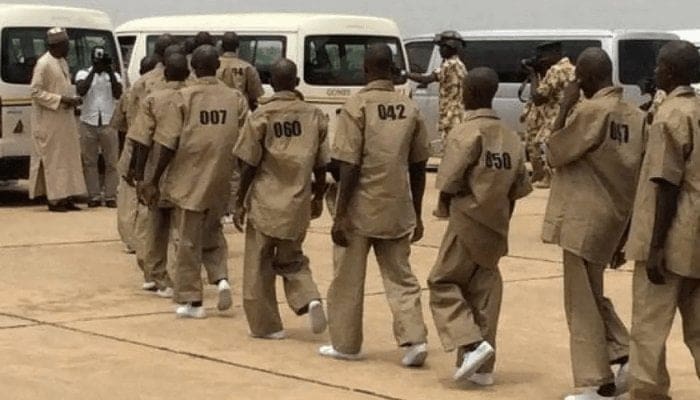
(Borno, Nigeria) – Nigeria’s military last month graduated 117 former Islamist fighters from a government rehabilitation program even as millions displaced by Jihadist violence remain in camps awaiting recovery support.
The ‘ex-terrorists’ completed Operation Safe Corridor program, a federal deradicalization initiative launched in 2016 to encourage defections from Boko Haram and Islamic State West Africa Province (ISWAP).
Military authorities describe the initiative as a strategy to weaken insurgent ranks. Critics argue it exposes a growing imbalance between resources spent rehabilitating perpetrators and support available to victims.
Reintegration as Counter-Insurgency Strategy
The 117 fighters completed psychological counseling, ideological disengagement training and vocational instruction at the Mallam Sidi rehabilitation center, according to Defense Headquarters.
Major General Jamal Abdusalam, Nigeria’s Chief of Defense Operations, said reintegration programs are necessary to stabilize regions affected by insurgency.
“While military operations create conditions for stability, structured rehabilitation and reintegration are critical to preventing renewed violence,” Abdulsalam told journalists during a Defense headquarters briefing.
Operation Safe Corridor involves personnel from 17 government agencies and has recently expanded beyond the northeast insurgency zone into parts of northwestern Nigeria where armed groups operate.
Spending Disparities Draw Scrutiny
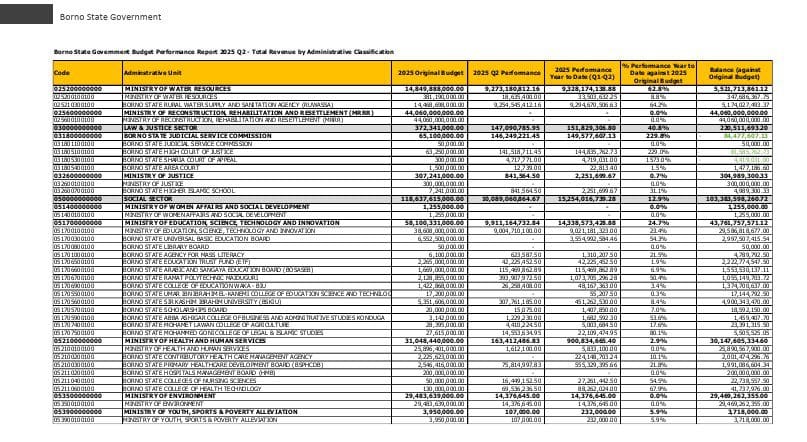
Budget disclosures suggest reintegration spending is scaling rapidly.
Records from the Borno State 2025 budget performance report show the state spent ₦4.3 billion ($2.8 million) on livelihood packages for rehabilitated fighters.
That figure exceeds capital spending for several key public health institutions in the state.
Comparative allocations included:
· ₦2 billion for primary healthcare development board
· ₦2.7 billion for the Borno state teaching hospital
· ₦3.1 billion for the hospital management system
Analysts say the contrast fuels resentment among displaced civilians who remain dependent on humanitarian assistance.
Millions Still Displaced
Human rights monitors estimate more than 3.7 million Nigerians remain internally displaced across northern Nigeria after more than a decade of insurgent violence.
Christian villages, churches and agricultural communities have been repeatedly targeted during the conflict with Boko Haram and allied Fulani militant groups.
Advocates say trauma recovery for survivors has received far less attention than reintegration programs for former fighters.
“It appears rehabilitation attention has mostly been focused on the rebels themselves, whereas the communities also suffered very far-reaching trauma,” Vivian Bellonwu, founder of Social Action Nigeria told TruthNigeria.
“These are communities where women were abducted, families massacred, and children orphaned. Psychological recovery has not been sufficiently addressed.”
She warned reintegration without parallel victim recovery risks destabilizing receiving communities.
“How do you expect victims to forget?” Bellonwu said.
Relapse Risk Debate
Security analysts say measuring ideological disengagement remains difficult.
“Repentance is a thing of the mind,” Senator Iroegbu, security analyst and political commentator said in an official statement.
“Someone can pretend to have repented because the conditions to express otherwise are absent. This program is controversial. Has it stopped recruitment? That is the test.”
Some frontline personnel have also raised concerns about monitoring former fighters after reintegration, warning that weak oversight could allow defectors to return to insurgent groups.
Military authorities have not confirmed systemic security breaches.
Amnesty Policies Face Political Criticism
Nigeria’s reintegration programs have drawn criticism from some lawmakers.
Bitrus Laori, a member of Nigeria’s National Assembly representing Adamawa State, warned during a parliamentary debate that rehabilitation programs could undermine justice for victims.
“As long as the victims are not rehabilitated and the terrorists are rehabilitated, that is the message we are passing,” Laori said during plenary proceedings.
“There will be no end to crime if the victims are ignored.”
Military Capacity Limits
Nigeria’s military leadership says counter-insurgency efforts require broader institutional support.
General Olufemi Oluyede, Nigeria’s Chief of Defense Staff told lawmakers during recent budget hearings that the armed forces cannot defeat insurgent groups alone.
“The Armed Forces cannot resolve these challenges alone,” Oluyede said.
“The soldiers hardly have rest because we don’t have the numbers. Recruiting more personnel comes with other challenges, housing, logistics, and welfare.”
“That is why strengthening the police and civil defense is critical. They have more men and better reach to fill the gaps after military operations,” he said.
Life inside Displacement Camps
At an internally displaced persons camp in Borno State, survivor Samaila Ishaya told TruthNigeria daily survival remains difficult years after attacks forced his family to flee.
“We only manage with what little is provided,” Ishaya said.
“Many of us have lost our farmlands and cannot afford to send our children to school.”
“We keep praying to God to help us,” he said.
Deradicalization programs are used in several counter-terror frameworks globally, including in Saudi Arabia, Iraq and Indonesia.
But analysts say such programs remain controversial when implemented without transparent monitoring, victim restitution or prosecution for past crimes.
Mary Kiara reports on terrorism for TruthNigeria.