
By Luka Binniyat
(Kaduna) — The Nigerian military has admitted suffering casualties after Islamic terrorists attacked a military base in Borno State, Northeast Nigeria, but it refused to acknowledge whether a General was among them — as widely reported in Nigerian media.
Nor did the Military say a word on a reported bloody invasion of Pulka military base by Islamists on Thursday morning, April 9, 2026.
Pulka Assault Raises Fresh Security Concerns
Pulka in Gwoza County, 52 miles South of Maiduguri, capital city of Borno State, houses a major IDP camp for thousands of mostly displaced Christian victims of the terrorists.
A Statement made available on the X handle of the Nigerian Defence Headquarters Abuja signed by Major General Michael Onoja, Director, Defence Media Operations Defence Headquarters Abuja, Thursday April 9th, reads, “In continuation of the Armed Forces of Nigeria’s (AFN) counter terrorism efforts, troops of the 29 Task Force Brigade in Operation Hadin Kai came under a coordinated terrorist attack on their location in Benisheikh, Borno State,” states the Nigerian Defence Headquarterson X.
Conflicting Military Reports
The Brigade Headquarters in Benisheikh lies about 70–80 km west of Maiduguri along the Maiduguri–Damaturu highway, within the “Timbuktu Triangle” insurgency zone.
A typical brigade hosts several hundred to over 1,000 troops, though exact strength is not publicly disclosed.
“The attack occurred at approximately 0030hrs (12:30am) on Thursday, 9 April 2026, as insurgents attempted to breach the defensive perimeter of the military installation,” said Onoja.
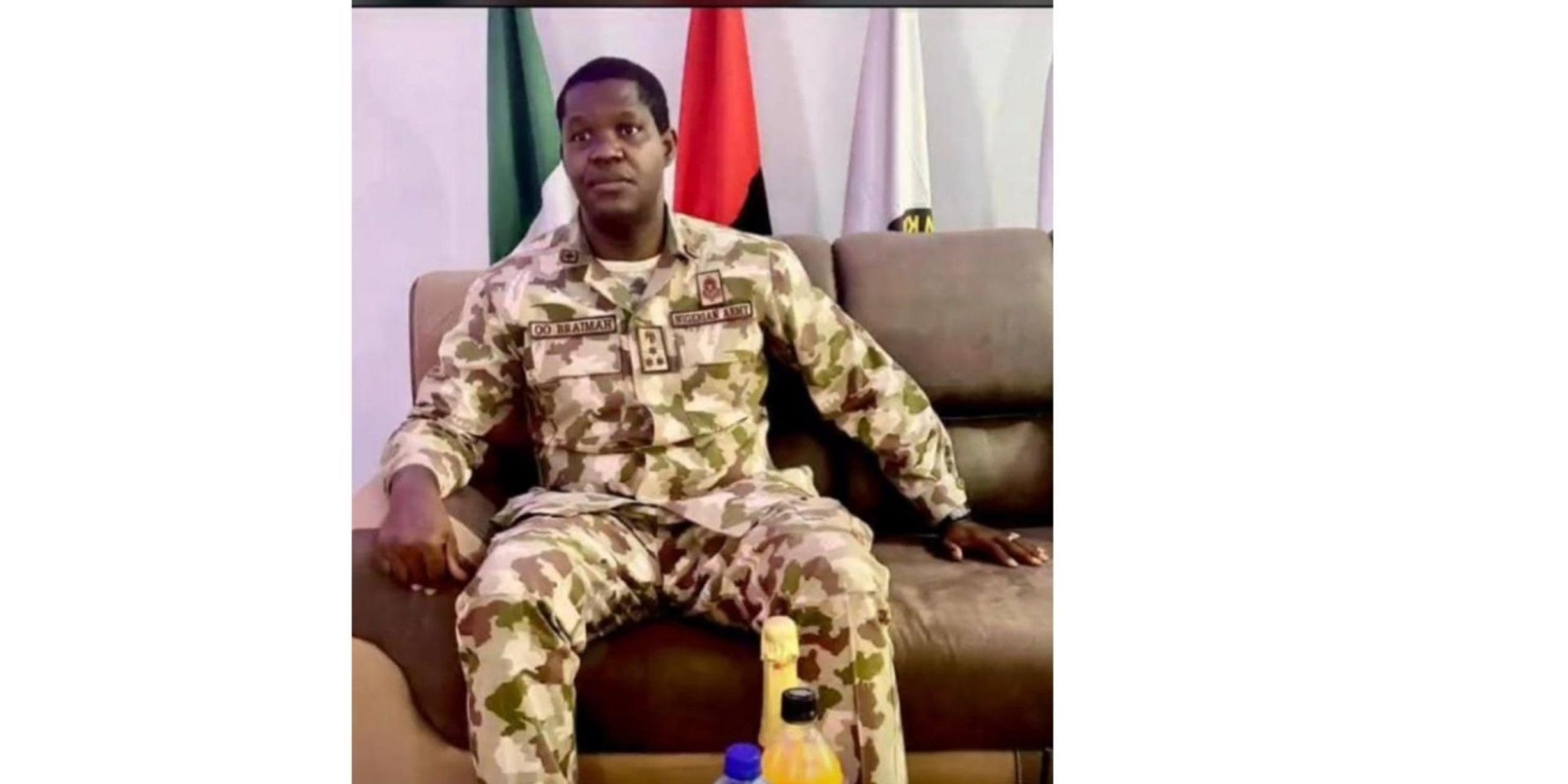
Painting the valour of the troops he said: “However, the troops, led by the Commander 29 Brigade, Brigadier General Oseni Braimah, responded with exceptional courage, professionalism, and superior firepower.
“In a well-coordinated counteraction, the insurgents were decisively engaged and forced to retreat in disarray, abandoning their mission and leaving behind traces of their failed assault,” he says.
“Regrettably, the encounter resulted in the loss of a few brave and gallant soldiers who paid the supreme price in the line of duty,” he said without mentioning the number of casualties and their names.
‘Disregard misinformation and sensational reports:’Army Brass
He however explains that: “In line with established military tradition and respect for the fallen, the general public and media are kindly requested to allow the Armed Forces to formally notify their next of kin before the release of further details.
“The public is also urged to disregard misinformation, sensational reports, and unverified content circulating across social media platforms, as these undermine ongoing operations and national security efforts,” he warns in the Statement.
Yet, all this after the media went viral with the alleged killing of Brig. Gen O.O. Braimah
How A Brig. General Was Killed.
Sahara Reporters reported today that it has fresh details on the circumstances surrounding an alleged death of Brigadier-General O.O. Braimah during the deadly attack early today.
The news sources said that according to military sources the late commander attempted to escape the attack scene but was unable to do so due to a faulty armoured vehicle.
“According to multiple military sources, the late general tried to withdraw from the embattled base in Benisheikh, Kaga Local Government Area, as insurgents advanced with overwhelming firepower
“However, his escape was thwarted when the armoured vehicle he relied on reportedly failed at a critical moment,” said Sahara Reporters.
Naijanews.com which also reported the death of Braimoh said “One of the officers said the Brigade Commander was trying to manoeuvre out as the attack intensified.
“He attempted to leave in a bulletproof vehicle, but it failed to start.”
“The malfunction, sources said, left the senior officer exposed as the attackers closed in,” TGNEWS also reports.
“That was how he was captured and eventually killed.
“Another insider described the moment as chaotic and tragic.
Terrorist Attack Pulka Military Base Guardian Christian IDPS.
On the attack on Pulka military base, Reuters reported that, “Fighters attacked the towns of Pulka and Bakin Ruwa in Gwoza district at about 2130 GMT on Wednesday, before insurgents tried to overrun the headquarters of the 29 Task Force Brigade in Benisheikh at midnight,” Defence Headquarters said.
The Guardian reports that the terrorists allegedly looted food items from shops in the town of Pulka and destroyed other facilities, including machines, vehicles and equipment of a road construction firm. It says that casualty figures are still unclear but between four and seven were killed — mainly IDPs.
Experts Cite Operational Gaps, Intelligence Failures
As a retired officer who has operated in that terrain, Col. Aliyu Danbaba (rtd) of SignWell Security Consult, Abuja explained the likely reasons that would cause the seeming loss by the Nigerian military in Thursday’s attacks.
“It is becoming rather embarrassing with the kind of losses that our boys are witnessing these days in the NorthEast. There is a serious operational lacuna,” he said to TruthNigeria.
“First, it is possible for an Armoured Personnel Carrier (APC) to break down, even when carrying a senior officer like a Brigadier General,” he added.
“Military vehicles around that area are under very harsh conditions like extreme heat, dust, poor maintenance cycles, and overstretch from years of continuous deployment,” he said.
“I could have outrightly suspected sabotage, but breakdown alone does not automatically mean sabotage.
“But also put in mind that insurgents have historically relied on informants within local communities and, in rare cases, collaborators within security structures,” he said
“However, the military should investigate it thoroughly to rule out negligence or internal compromise,” he said.
When asked how the terrorists could move undetected to launch attacks, he said: “This is a major concern.
“In asymmetric warfare, groups like Boko Haram and ISWAP often exploit gaps in intelligence, night movement, and local support networks,” he said.
“They move in small and medium, fast units. These criminals sometimes blend in with civilians or they use unlikely bush paths that avoid main military surveillance ,” he said.
According to him, if multiple attacks happened almost at the same time, it suggests good coordination and prior intelligence gathering by the terrorists who now fight under high morale.
On whether the Nigerian military lacks basic working tools, he said that the answer is mixed.
“Nigeria has capable and brave troops, but challenges remain in logistics, intelligence gathering, surveillance technology (like drones), and equipment maintenance.
“In some forward locations, troops may not have all the modern tools needed for rapid response or early warning,” he said.
Luka Binniyat reports for TruthNigeria on Politics and Conflict from Kaduna. Suleman Ayuba contributed to this article.