
Pastors abandon restraint, warning security failures and delayed justice risk emboldening attackers
By Mary Kiara
(Lagos, Nigeria) — Prominent Christian leaders in Nigeria are openly criticizing government security responses after Easter-period killings, signaling a break from years of clerical restraint and raising new questions about state accountability.
A Shift in Tone from the Pulpit
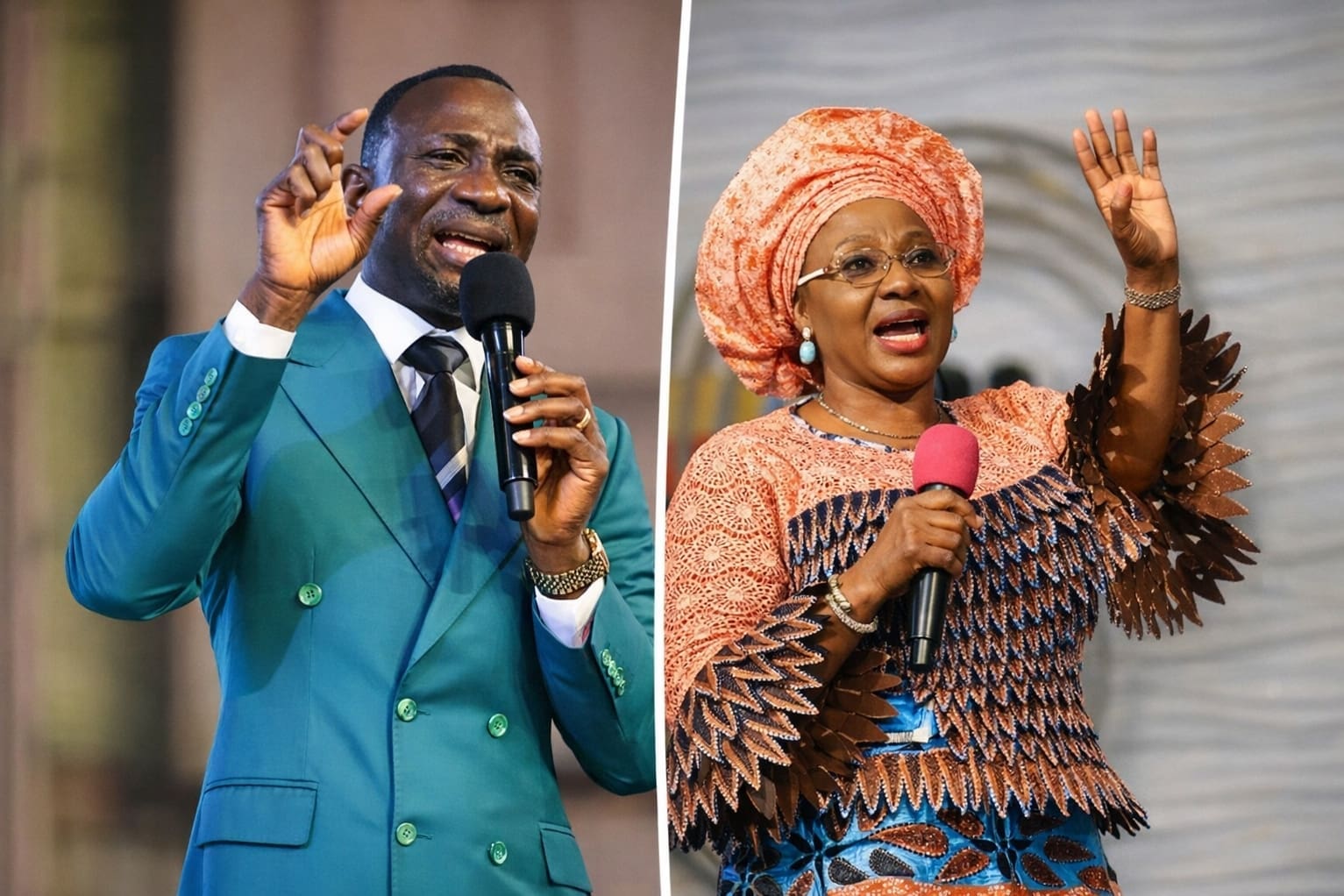
“I see two standards… the government is failing us” Pastor Sarah Omakwu, senior pastor of Family Worship Centre in Abuja, said while addressing recent killings across northern Nigeria.
“When there’s agitation by the Easterners, they send Air Force, Navy and Military to go stop them, but when Fulani boys speak on the internet, they say anything and do anything and instructions are given for no action or consequence to take place,” Omakwu said, questioning what she described as uneven military enforcement across regions.
Her remarks followed attacks in Plateau, Benue, and Kaduna states during the Easter period that had over 50 killed.
“Why are the same soldiers not hovering over Jos, Benue or Kwara?” she said, referring to repeated militant attacks in central Nigeria.
“People have been removed from their lands, and nothing happens.”
From Restraint to Direct Criticism
For years, senior clergy in Africa’s most populous nation have largely avoided direct confrontation with political authorities.
That posture is shifting.
Recent statements from leading pastors show a move away from calls for patience toward direct criticism of government response and enforcement gaps.
“Those who kill people… should be brought to book urgently,” Pastor Paul Enenche, senior pastor of Dunamis International Gospel Centre, said while addressing Christian killings in Nigeria.
“It should not take two, three weeks,” Enenche said, arguing that delays in arrests risk emboldening attackers.
He warned that failure to act decisively could suggest “complicity or indifference within the system.”
Open Frustration with Political Leadership
Some clerics went further, openly questioning political leadership.
“It’s a waste praying when you have elected a bad person,” Apostle Johnson Suleman, founder of Omega Fire Ministries, said during service.
Citing the killings in various communities in Jos, Suleman expressed concern over the priority placed on photo-ops with victims of terror attacks by the government and its officials.
“The height of insensitivity is when people are mourning and you’re sending media to do damage control,” Suleman added.
“In the past when one man dies in a street, for one month people will still be talking about it but now it’s a normal thing, a mother is burying a child and all they do is just photo-ops.
“And when you talk, they send their media people, that’s the height of insensitivity,” he added.
His remarks reflect growing frustration among religious leaders who say repeated killings are becoming normalized.
A Pattern of Violence Across Regions
The statements follow multiple attacks across Nigeria’s Middle Belt, where Christian farming communities have faced repeated militant raids.
In Jos, Plateau State, a Palm Sunday attack left at least two dozen people dead, according to police and community estimates, though figures remain disputed.
Additional attacks were reported in Kaduna and Benue states within days.
“Failure to prevent further predictable attacks… will be seen as complicity or complacency,” Emmanuel Ogebe, a U.S.-based human rights lawyer, told TruthNigeria.
“This attack in the heart of Jos… has shattered the illusion of urban safety,” Ogebe said.
International Policy Implications
The shift in tone from Nigerian clergy is drawing attention from international religious freedom advocates and policymakers.
“Militant groups are reported to be the greatest threat to Nigeria’s Christians,” Nina Shea, director of the Center for Religious Freedom at the Hudson Institute, said in a policy statement.
“The federal government remains passive in the face of desperate cries for help,” Shea said, urging renewed U.S. attention to Nigeria’s religious freedom designation.
Why This Shift Matters
Religious leaders in Nigeria command large followings and often shape public opinion across ethnic and political lines.
Their move toward direct criticism signals declining confidence in state protection and raises the possibility of broader political consequences.
A Turning Point in Public Messaging
Historically, many church leaders emphasized prayer and reconciliation in response to violence.
Recent statements suggest a departure from that approach.
Instead of restraint, the tone now emphasizes accountability, enforcement, and government responsibility.
Whether this shift becomes sustained political pressure remains uncertain.
But for now, the message from Nigeria’s pulpits is changing, and becoming harder for authorities to ignore.
Mary Kiara reports on terrorism and religious-freedom policy for TruthNigeria.