
Palm Sunday Aftermath: Grief Turns to Protest at Jos Mass Funeral Over Alleged Army Abuses
The burial of seven Palm Sunday victims was suspended for hours after protesters charged that soldiers target Christian youths instead of confronting armed terrorists.
By Masara Kim
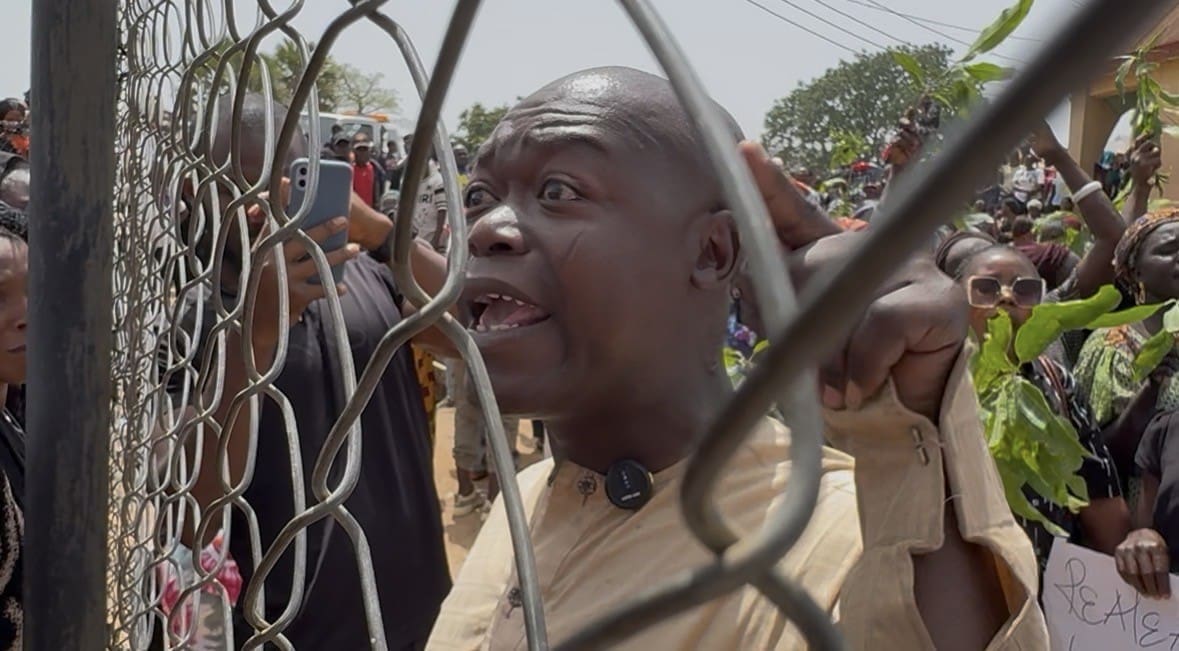
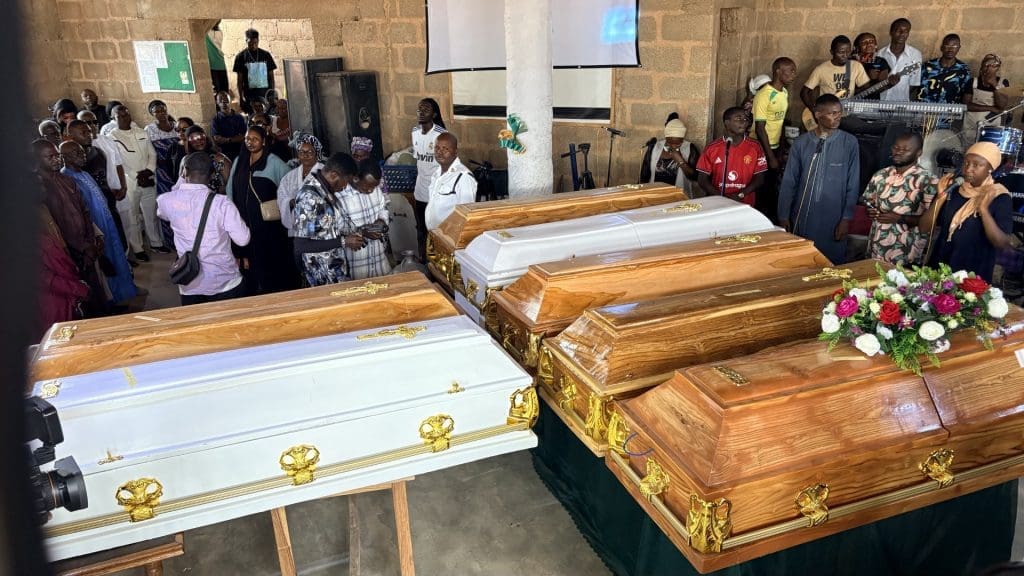
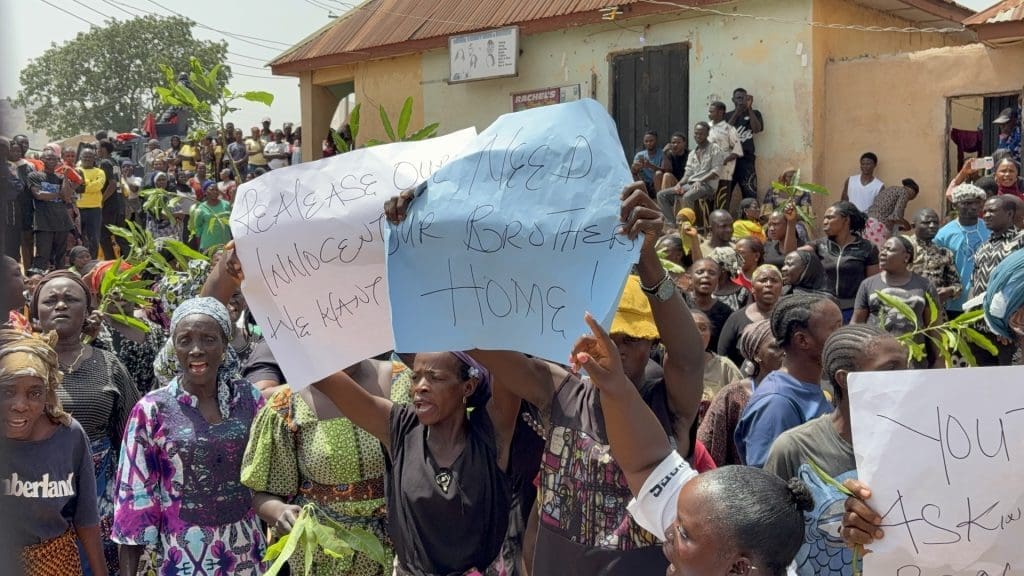
Hundreds of Christians on Tuesday, April 7, barricaded the venue of a mass funeral in Jos, Plateau State, halting the service for seven victims of a Palm Sunday attack in protest against what community leaders described as frequent abuses by the Nigerian Army. A crowd estimated at 500–1,000 blocked the entrance of the Evangelical Church Winning All (ECWA) in Angwan Rukuba, trapping mourners and government officials for hours as they demanded the release of three youths arrested during Holy Week.
The protest followed an attack on Palm Sunday, March 29, in which more than 30 Christians were killed in the busy Angwan Rukuba suburb in north Jos. Witnesses told TruthNigeria the assailants shouted religious slogans in Arabic and spoke Fulani. The attack triggered days of religious tension and sporadic clashes in parts of north Jos, prompting authorities to impose a curfew.
Singing gospel songs and waving tree branches, Tuesday’s protesters accused the Nigerian Army of targeting Christian youths who had been standing guard outside their homes while failing to prevent repeated assaults on their communities.
“How could these terrorists come and attack us here, innocent Nigerians, in Angwan Rukuba, and the Nigerian Army did not have the effrontery to confront them even when we told them they entered here,” community leader Jos Jarawa Elisha told TruthNigeria. “They parked their trucks here and refused to engage them, saying they were waiting for command. Which command? Who commands who when they are killing your people? And then you still follow our people at home and arrest them. For what reason?”
TruthNigeria learned that three youths were arrested in north Jos on March 30 and charged with impersonation and arson by the Nigerian Army. A statement on the army’s official social media pages boasted that troops were making “remarkable strides” against terror.
“This pivotal arrest serves as a direct rebuttal to recent allegations suggesting military complicity in the Jos North unrest, effectively proving that the atrocities previously attributed to official personnel are being committed by criminal elements using deceptive attire to sow discord and defame the Armed Forces,” says the statement by Captain Chinonso Polycarp Oteh, the spokesman for the Joint Task Force Operation Enduring Peace on 3 April 2026. The post was accompanied by a photo of two of the detainees showing a pocket knife and a machete.
But Panmak Lere, a rights advocate and Chairman of the Youth Wing of the Christian Association of Nigeria (YOWICAN), said the detainees were seized in front of their homes while standing guard during an armed incursion.
“Three of them were arrested right in front of their houses,” Lere told TruthNigeria. “It raised a lot of concerns that while they were burying their dead, members of the same community who were also bereaved were being incarcerated. When things happen in this manner, security operatives have a duty to ensure there is no reprisal. But arresting people right in front of their houses was very uncalled for.”
TruthNigeria witnessed the protest as it unfolded around 11 a.m., while the funeral service for seven of the more than 30 Palm Sunday victims was underway. Several trucks carrying soldiers and police escorted an open trailer transporting the coffins from the Jos University Teaching Hospital mortuary to the ECWA church. Minutes after the service began, crowds of women and youths gathered outside, chanting “no youths, no funeral” as the protest swelled.
At the same hour, 35 miles away in Riyom County, a civilian guard leader was being buried. Badung Sunday Alamba, a final‑year college student who led a 15‑man volunteer guard team, was killed in an ambush during a routine patrol the previous night, according to local leaders. His death came just hours after three other civilian guards were buried in Heipang, 10 miles away, following a confrontation with armed attackers.
Solomon Dalyop, leader of the Berom ethnic group that dominates northern Plateau, told reporters the three guards in Heipang were part of a ten‑man team that faced an estimated 200 attackers. He said the fighting lasted more than an hour before soldiers stationed two miles away intervened.
“They came more than 200 and surrounded this particular place,” Dalyop said. “The whole of Heipang was under siege last night. God, out of his mercy, allowed these three persons to be the sacrificial lambs so others could survive. By the number they came, the arms they used, and the hours of operation, it is a miracle for us.”
During the April 7 funeral service, Governor Caleb Mutfwang acknowledged the role of civilian vigilantes and said attacks in Plateau communities often target Christians for their faith. Represented by his Chief of Staff, Jerry Satmak, Governor Mutfwang urged unity and pledged to work toward the release of the detained youths. His assurances, however, did little to calm the crowd.
“Release our kids,” protest leader Ruth Dakat shouted. “Should our children just lay down and get martyred? Where is the government? Are you not supposed to protect us? Whenever our kids come out with sticks and machetes to defend themselves against terrorists with machine guns, you arrest them. For what reason? We, the parents, are demanding the release of our children.”
The protest continued until midday, when officials relented and brought the detainees from the army camp to the church premises. Their arrival was met with shouts of joy and singing as protesters opened the church gate, allowing the funeral service and subsequent burial to proceed.
Masara Kim is a conflict reporter in Jos, Nigeria and a senior editor of TruthNigeria.