
Yoruba Communities in Kogi Mobilize Against Fulani Ethnic Militia Terror
By Segun Onibiyo
(Kogi state) – A respected traditional ruler in the Northcentral State of Kogi has drawn a line in the sand to resist infiltration into his state of Fulani ethnic militias (FEM), TruthNigeria has learned.
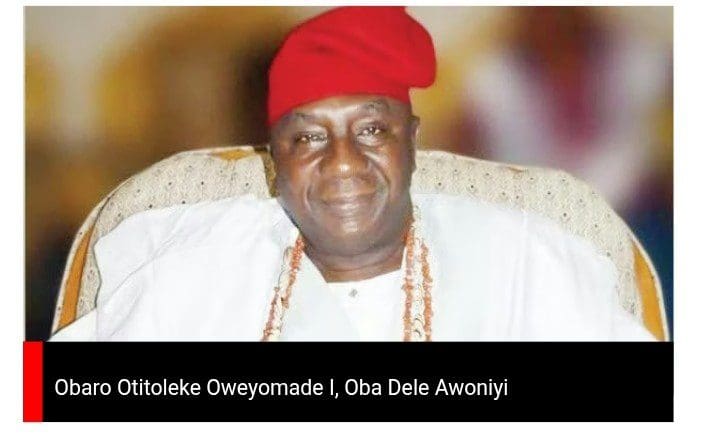
“We will not watch our land become another Sambisa,” declared His Royal Majesty Obaro of Kabba and Chairman of the Okun Traditional Council is Oba Solomon Dele Owoniyi, the traditional ruler of Kabba in Kogi State, in an interview with TruthNigeria.
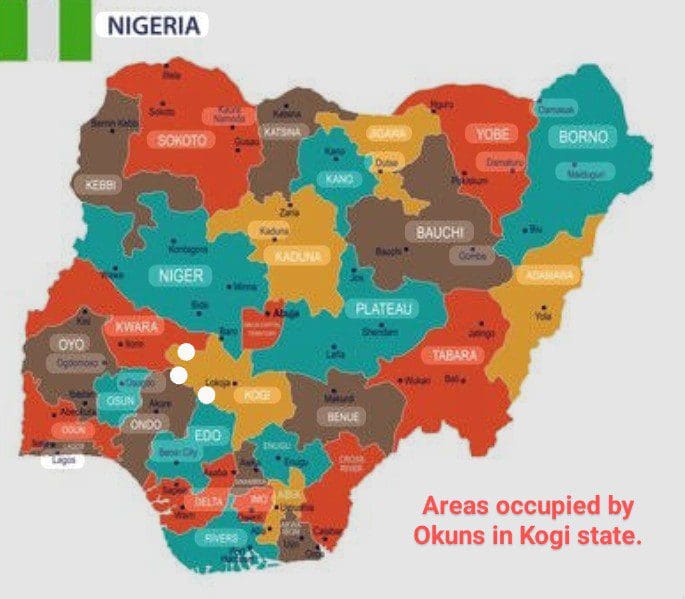
Okun is not a state in Southwest Nigeria, but the word refers to a subgroup of Yoruba people located in Kogi State. Financial supporters of this effort to defend ancestral land from land grabbers is coming partly from Okun ethnic people in the West.
“The Okun people will defend their ancestral soil with honor, as our fathers did before us.”
Okun land, situated in the western senatorial zone of Kogi State, is home to Yoruba-speaking communities. Historically peaceful and agriculturally prosperous, these communities have now become recurring targets of terrorism from jihadist insurgency known as Ansaru as well as the Fulani Ethnic Militia (FEM) migrating through Nigeria’s Middle Belt.
Secret Funding, United Front
In response to the recent invasion of Fulani terrorist groups, a bold grassroots defense initiative has emerged. The Okun people scattered across towns like Kabba, Egbe, Isanlu, and Mopamuro, have mobilized retired soldiers, hunters, and youths under a united formation: the Okun Joint Community Guards. Financial and logistical support comes primarily from the Okun diaspora in the UK, Canada and the United States.
Mr. Ojuekayie Peter, coordinator of the Okun Safety Initiative in the UK, told TruthNigeria via encrypted call that ₦6.3 million (approx. $4,000 USD) has been raised in five months.
“This isn’t about showmanship,” he said. “All disbursements are discreet. Our priority is safeguarding both donors and those risking their lives on the frontlines.”
On remaining anonymous, Ojuekayie explained: “You don’t want the enemy to know your source. Even the government may want you shut down. They’re doing next to nothing to protect our people in Okun land.”
Mrs. Bolanle Obaro, another diaspora member based in Canada, added, “Funds cover fuel, radios, torchlights, boots, and monthly stipends for 150 volunteers. While there’s no uniform, many wear ancestral charms, symbols of cultural resilience and spiritual protection.”
King Oba Solomon Dele Owoniyi explained the recent attacks to TruthNigeria. “In March 2025, we witnessed a coordinated attack by Fulani Ethnic Militia on three Okun communities in Ekinrin-Adde, Do Apé, Egbe and Isanlu, leaving villagers dead, many others injured, and others displaced. Over the past 18 months, Fulani Ethnic Militia terrorists carried out separate attacks across the Okun-speaking areas of Kogi West, resulting in deaths and the destruction of multiple farmlands and homes.”
On May 15, 2025, a first-class traditional ruler, Oba James Dada Ogunyanda, the Obalohun of Okoloke, Yagba West, was kidnapped by suspected Fulani Ethnic Militia terrorists, sparking panic across Yagba West County (LGA), where kidnapping incidents have become alarmingly frequent.
Birth of a Militia
Retired Captain Jide Olorunsogo, who leads the Aiyegunle-Oka tactical unit, told TruthNigeria, “The idea was born at a secret security summit in Kabba, January 2025, after relentless attacks on Odo Apé and Isanlu. We merged hunters’ terrain knowledge with ex-military strategy.”
“It became vital after the abduction of leaders. Our people live in perpetual fear,” he said.
“We no longer wait for police. We’ve mapped terrorists’ routes and now use community intel and rapid response.”
State security agencies are often overstretched and sometimes even complicit, he claimed.
Voices from the Ground
“We stopped sleeping at home,” said Mrs. Florence Ajayi, a widow from Mopa. “My children and I sleep in the church compound now. But with the community guards patrolling, I feel hope again.”
Another survivor, Mr. Sunday Ojo, a cocoa farmer from Isanlu-Isin, recalled how vigilantes saved his village. “They heard gunshots from two hills away and rushed in. Without them, maybe we’d all be dead.”
Cultural Guardians Turned Security Experts
Known for hospitality and academic excellence, Okun land has long played a stabilizing role in Kogi State politics. But now, persistent terrorist attacks have triggered a new political consciousness.
“We cannot keep appealing to a government that offers only condolences,” said Chief Adegboyega Ogunyemi of Egbe. “This is self-preservation.”
“We are Yoruba, proud and resilient,” added Chief Modupe Dada Oloriawo, the Olu of Ekinrin-Adde. “If Amotekun thrives in the Southwest, our model must rise too.”
Security Analysts Weigh In
Dr. Abubakar Aldo, a security analyst in Abuja, told TruthNigeria, “What’s happening in Okun land is part of a national trend. Rural communities are losing faith in centralized policing. Like in Zamfara, where Hausa farmers now defend themselves, the Okun case is constitutionally sensitive but socially necessary.”
He warned, “The rhetoric must be careful. Dialogue must remain open. Otherwise, it risks being interpreted as ethnic aggression.”
Despite the dangers, the organizers remain focused.
“We’re not forming an army,” Ojuekayie clarified. “We’re empowering our people to say: ‘No more blood on our soil.”
Durojaiye Fanro, in charge of finance, added, “The diaspora continues to pool resources from Canada, the U.S., and Ghana. We’ve launched a secret WhatsApp-based donation platform under the ‘Okun Development Network’ for transparency.”
“This is about survival, not secession,” said another London-based donor. “We love Nigeria. But we love our people too. If the state won’t protect them, we must.”
The Okun Uprising continues quietly, tactically, and culturally grounded in ancestral resolve.
Onibiyo Segun reports on terrorism and conflicts for TruthNigeria.