
Attacks on Christian Communities Persist, Many Unreported by Nigerian Media
By Luka Binniyat
(Kaduna), Nigeria – The verdict is in on Kaduna Governor Uba Sani’s back-channel peace accord with armed bandit-terrorists last year, and it isn’t pretty, TruthNigeria has learned.

The accord, signed in November 2024, aimed at ending years of violence that displaced thousands, crippled farming, and halted trade across large swathes of Kaduna’s verdant lands. Gov. Sani publicly boasted that the peace deal did not involve ransom payments or cash but instead spurred rehabilitation for repentant fighters.
Yet nearly twelve months later residents and community leaders say attacks, kidnappings, and killings targeting Christian farmers have continued unabated.
Renewed Attacks on Christian Farmers
It has not been revealed which criminal groups were part of the governor’s amnesty negotiations. The vast forests of Birnin Gwari shelter the deadly jihadist insurgencies of Ansaru and Boko Haram as well as large gangs of so-called bandits who are militant Islamists as well and notorious kidnappers-for-ransom. The pattern of attacks in 12 months appears to show that the armed groups sheltering in the forests of Birnin Gwari – on the border with bandit-heavy Zamfara State – simply transferred their targets to the poorly defended Christian tribes of Southern Kaduna.
Despite promises of peace, Southern Kaduna Christians remain under siege. In September 2025, gunmen identified as Fulani militias attacked Wakeh village in Agunu Ward, Kachia county, killing nine Christians, wounding eight others, and burning down homes.
In April 2025, the Evangelical Church Winning All (ECWA) raised alarm over escalating abductions and killings in Kwassam, Kauru, and Binawa communities of Saminaka District Church Council (DCC) in Lere county, where more than 100 Christians were abducted and several killed.
Christian leaders also have been targeted. In March 2025, the Southern Kaduna Christian Leaders Association (SKCLA) decried the rising number of clergymen kidnapped or murdered in the region, citing the abduction and killing of Rev. Fr. Sylvester Okechukwu as a particularly shocking example.
Kidnapping Crisis and Community Protests

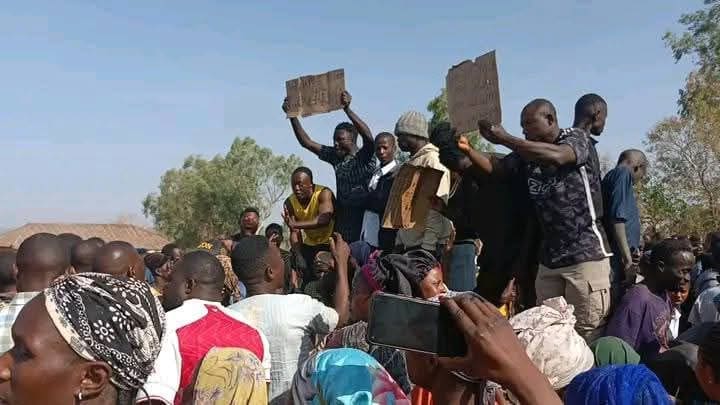
The wave of kidnappings has provoked public outrage. In Kachia, residents recently staged demonstrations to protest the rising number of abductions, accusing security agencies of failing to protect vulnerable farming communities. Placards carried during the protest denounced government inaction and called for immediate military intervention to secure rural villages.
Kidnappers continue to target church congregations, rural farmers, and even local government officials, despite the supposed truce, according to reports.
On Jan 12, 2025 16 worshippers were kidnapped during a Sunday service at Alheri Baptist Church in Kaduna in Chikun County.
On January 21, 2025, bandits abducted a ward councilor in Kajuru Local Government Area (county) from his residence.
Media Underreporting Creates ‘Fog of War”
Christian clergy and rights groups accuse the mainstream Nigerian press of underreporting the violence. While sporadic reports surface of sensational massacres and abductions, survivors insist that the true number of victims is significantly higher than reported. They argue that a culture of silence or reporting only the “tip of the iceberg” hides the suffering of affected populations and emboldens perpetrators.
For example, the stories below were exclusively reported by TruthNigeria but never corroborated by other media despite publicly named sources and videotaped testimonies.
· ‘Exclusive: Christian Hostages in Nigeria Freed’ — Survivors Reveal Horrors of 3-Month Captivity” Summary: Survivors’ first-hand accounts of three months in captivity after mass abductions; details of conditions, torture, and where the hostages were being held.
· ‘Kidnapped Nigerian Nurses Forced to Treat Terrorists — Reveal Harrowing Month in Captivity’ Summary: First-person testimony from two nurses abducted in Kajuru — describing being forced to tend wounded fighters and their captivity timeline.
· ‘Volunteer Guards Save 30 Kidnapped by Islamist Terrorists’ / related Kajuru reports — Summary: Local volunteer/citizen-guard actions that rescued hostages after village raids; on-the-ground witness accounts and alleged movement of hostages across state lines.
· ‘Citizen Guards Halt Midnight Kidnap in Kaduna, Rescuing Family of 5’
Summary: Local retired cop and citizen guards foiled a midnight abduction attempt and freed a family — detailed quotes from the rescuers and victims.
· ‘Radical Muslims Are Kidnapping, Torturing and Disappearing…‘ (Southern Kaduna leader / local leader abducted) Summary: Exclusive eyewitness and leader interviews describing abductions and disappearances in Southern Kaduna, with personal testimony and local context.
Broken Promises and Failed Peace Deals
The governor’s Kaduna peace accord is not the first of its kind to collapse under the weight of repeated violations by armed groups. Past efforts to negotiate settlements with bandits in Zamfara, Niger, and Katsina states also failed. In Katsina, for instance, reports indicate that peace agreements signed with bandit leaders were routinely broken, with fresh attacks resuming only weeks after accords were reached.
Analysts say the pattern reflects a wider problem: peace deals with armed groups often are entered hastily, without robust mechanisms for disarmament, community security, or long-term reintegration. Instead, communities are left vulnerable while bandits regroup, exploit government goodwill, and launch renewed offensives.
Abdulrahman Abdullahi, Chairman, Coalition of Civil Society Organizations, Katsina speaking to Daily Trust on the Katsina peace accord last week, said, “Why new deals with killers in Katsina may fail again, is that local truces are often survival-driven, not transformational; they often lack the mechanisms needed to prevent recurrence of violence.”
Dr. Isma’il Tanko Wudilawa, retired Joint Task Force Commander, told TruthNigeria in Kaduna that while dialogue offers non-violent options, he pointed out that such deals must be backed by enforcement.
“The sincerity of both sides must be assured, and agreements must include robust follow-up.
“These policiessometimes fail to incorporate genuine reintegration, oversight, or accountability, making deals vulnerable to being exploited,” he said.
Luka Binniyat is a conflict reporter for TruthNigeria.