By Ezinwanne Onwuka
A bipartisan bill in the U.S. Senate seeks to hold Nigeria accountable for the persistent massacre of Christians. But while the legislation marks a breakthrough in Washington’s response, rights activists warn it leaves out one of the deadliest actors behind the violence: the Fulani ethnic militias.
A Bold Move with Big Gaps
The Nigeria Religious Freedom Accountability Act of 2025, introduced by Sen. Ted Cruz (R-TX) with four co-sponsors, would sanction Nigerian officials who fail to protect Christian communities or enforce Sharia-based blasphemy laws.
The bill also presses the State Department to restore Nigeria’s designation as a “Country of Particular Concern (CPC),” a label reserved for governments that tolerate systematic violations of religious freedom.
The legislation names Boko Haram and the Islamic State in West Africa Province (ISWAP) as perpetrators while omitting Fulani militias widely reported to be behind most of the violence in Nigeria’s Middle Belt and northwest regions.
Groups such as the Observatory for Religious Freedom in Africa (ORFA) have documented Fulani militias’ role in attacks described as genocidal campaigns against Christians and indigenous communities.
“Currently, militant groups of nomadic Fulani Muslim herders are reported to be the greatest threat to Nigeria’s Christians, particularly those in Middle Belt farming communities” testified Nina Shea, a senior fellow at Hudson Institute’s Center for Religious Freedom, at a congressional hearing in March.
U.S. Aware of Fulani Violence, But Response Limited
In U.S. media and policy debates, jihadist groups dominate coverage, leaving Fulani militias underreported despite their staggering toll.
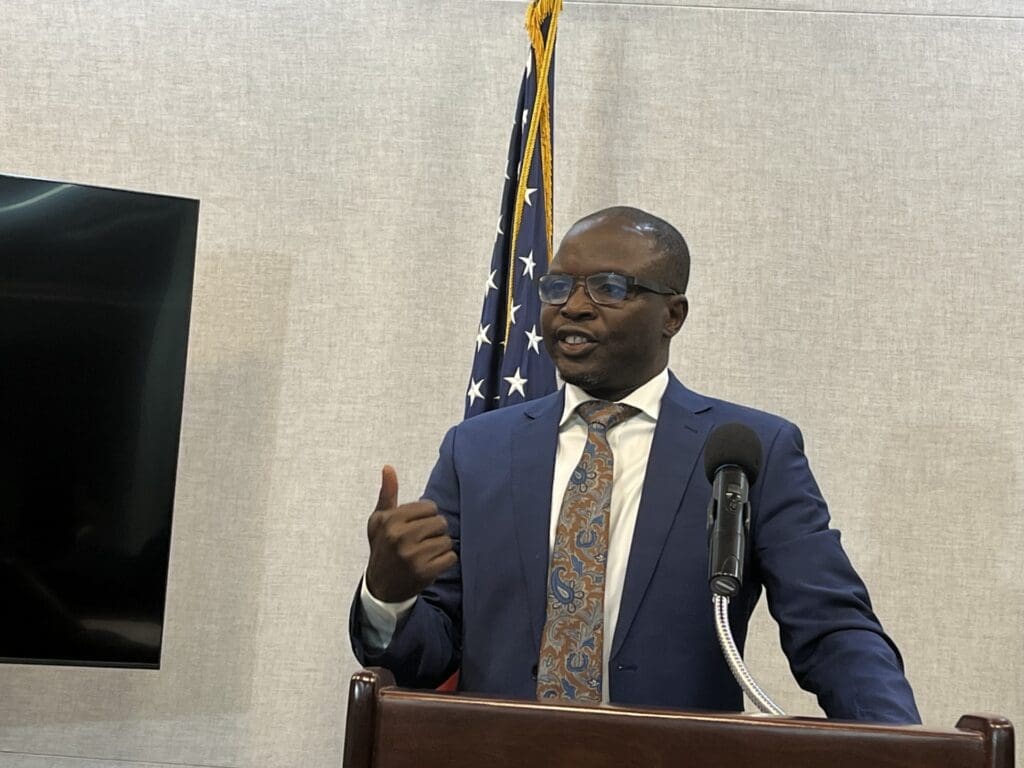
Stephen Enada, Executive President and Co-founder of the International Committee on Nigeria (ICON), explained why they are absent from the bill.
“There is nothing like a U.S. permanent bill on any entity in Nigeria, rather, there are evolving bills that can be marked up as the U.S. foreign policy keeps on changing…,” Enada told TruthNigeria.
“Therefore, there is no omission thereof regarding the Fulani militia. It means there was no strong advocacy for such to be included in the current resolution. The U.S. government on foreign policy is all about trade-offs and Fulani militia as a designation is not accommodated in the current Senate Bill.”
On whether Washington simply does not grasp the scale of violence by Fulani ethnic militias, Enada said, “The U.S. lawmakers are adequately aware of the scale of egregious atrocities committed by Boko Haram and Fulani militia and others.”
“The question is simple, this is not U.S. territory, and many parties have not successfully engaged the U.S. government on how this atrocity impacted U.S. interests in the sub-region. Global politics is about trade-offs and as such should be pursued within that prism of geopolitical tensions and interests.”
Sanctions With Teeth
Beyond the CPC designation, Sen. Cruz’s bill includes targeted sanctions against Nigerian officials who ignore or enable violence.
Diplomats see this as a long-overdue step, as Abuja has often dismissed or downplayed reports of mass killings.
“The Federal Government in Abuja remains passive in the face of desperate cries for help and detailed reports of relentless horrific violence coming from Middle Belt citizens and their elected officials, church leaders, journalists, and Nigerian and international human rights groups,” said Shea.
“The government allows Fulani violence to continue with impunity. There is a broader concern that this resolute inaction evidences a plan to forcibly Islamize Nigeria.”
Yet, the CPC label carries risks. It could block Nigeria from certain U.S. arms purchases and complicate loans from institutions such as the World Bank.
The push for this bill follows rising advocacy in Washington, including a congressional hearing earlier this year and pushback against the Department of State’s “2024 Country Reports on Human Rights Practices: Nigeria” which acknowledged the “Islamist terror” without recognizing Fulani militias, whose attacks often blend ethnic cleansing, land seizures, and religious persecution.
TruthNigeria earlier reported the positive reactions to the bill from Nigerian thought leaders.
What Comes Next
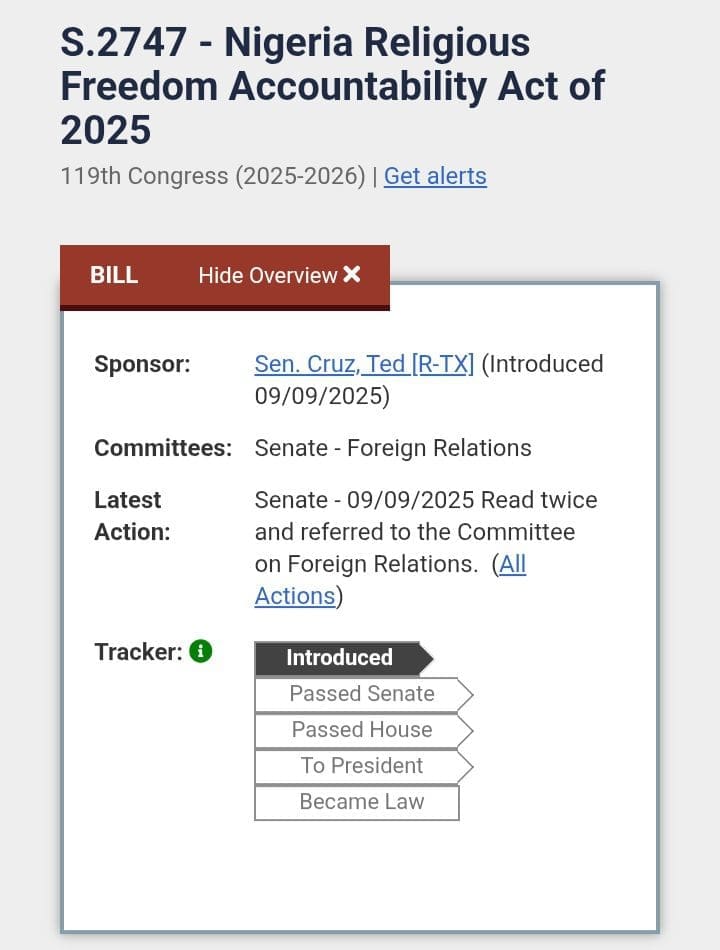
While still in its early stages, diplomats see the bill as a starting point. Enada urged civil society groups in Nigeria to push harder for recognition of Fulani violence.
“To make an incursion into a highly tensed complex issues in our world and for the U.S. government to act, one must out-evidence and out-argue other oppositions bandying moral equivalence narrative and counter mischaracterization of events and incidents in Nigeria,” he said.
“There must be proper documentation of atrocities ongoing in Nigeria; declaration by international bodies to agree such atrocities ever occur, and work hard to engage such international bodies to deploy all international instruments to combat terrorism and other human rights violations.”
As Nigerians and human rights activists await further progress on the bill, there is optimism that the introduction of the sanctions-backed legislation signals that Washington is beginning to move past Abuja’s talking points and side with Nigeria’s victims.
Ezinwanne Onwuka is a special features writer for TruthNigeria.