U.S. Senate Bill Overlooks Menace of Fulani Ethnic Militias
By Onibiyo Segun
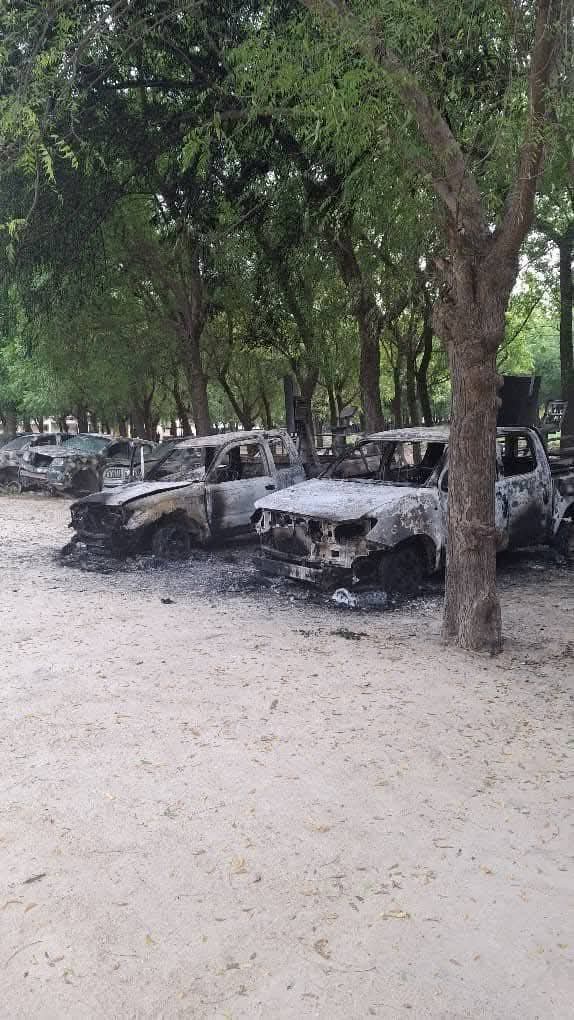
Banki, Borno state, Nigeria – September 19, 2025, will be remembered as another dark night in Nigeria’s northeast. Insurgents stormed the military barracks in Banki, a dusty border town near Cameroon. Soldiers fled across the frontier, abandoning weapons and civilians.
Two security experts told TruthNigeria the Nigerian Air Force’s quick response was crucial in preventing the attack from spreading. Retired Brigadier-General Danladi Aliyu called the strikes “a turning point in the counterinsurgency,” saying they showed “air power can deny terrorists the safe havens they rely on.” Dr. Zainab Musa, a security analyst in Maiduguri, added that the raids “sent a strong message of capability at a time when morale was shaken.”

Residents described chaos as Boko Haram fighters fired heavy weapons into the compound. “The ground shook from the blasts,” said Musa Ali, a trader who escaped into the bush. “We saw soldiers running before anyone else.”
Banki is a strategic town in Borno State, lying less than two miles from Cameroon. Its roads funnel trade, aid, and arms between the two countries. Losing the town’s barracks was both a psychological and tactical blow.
Within 24 hours, Nigeria’s air force launched counterstrikes in the Banki–Yobe region. Fighter jets destroyed insurgent hideouts and killed more than 25 militants, according to the Guardian Nigeria. Officials said the raids restored “a measure of confidence.”
But for civilians, fear lingers. “We cannot sleep in our houses,” said Hauwa Ibrahim, a mother of four. “If the army can run, what chance do we have?” Her family now camps along the Cameroon border.
Security experts say the incident underscores Nigeria’s fragile hold on the northeast. Dr. Kabiru Adamu, a defense analyst in Abuja, said the attack showed “a recurring pattern of insurgent dominance at border towns.” He warned that retreating soldiers embolden extremists.
Another analyst, Dr. Bulama Bukarti of the Tony Blair Institute, wrote in Church Times that “international policy responses often miss the full threat. Focusing only on Boko Haram and ISWAP ignores the violence of Fulani militias who target rural Christians.”
That criticism has grown louder since the U.S. Senate introduced Bill S.2747. The legislation highlights Boko Haram and ISWAP as threats to religious freedom but does not mention Fulani militias, which are responsible for years of huge massacres across Nigeria’s Middle Belt.
Path-breaking research by the Observatory for Religious Freedom in Africa (ORFA) have documented that Fulani armed groups are now the largest killers of Nigerian Christians. Entire villages in Plateau, Benue, and Southern Kaduna have been destroyed. Survivors speak of ethnic cleansing underreported in Washington.
For residents of Banki, Washington’s silence is puzzling. “We hear America talks about Boko Haram,” said Ali, the trader. “But who talks about the Fulani men with guns killing farmers?” His question echoes across Nigeria’s rural heartland.
Nigeria’s government insists it is responding with force. Air strikes, ground patrols, and new deployments have been announced. But critics say officials continue to downplay ethnic militia violence, partly out of political pressure from powerful political blocs in the Nigerian parliament and Senate.
TruthNigeria has documented a string of recent Boko Haram attacks that mirror Banki’s ordeal. In early September, militants ambushed a convoy near Gwoza, killing nine travelers. Two weeks earlier, fighters attacked Ngala, displacing hundreds of families and looting food stores. Both towns lie along the volatile Cameroon border where security is thin.
These incidents illustrate how insurgents exploit weakly-defended corridors, retreating into border forests after raids. Security analysts warn that without coordinated cross-border operations, attacks will persist regardless of airstrikes.
As Banki rebuilds, the broader crisis remains unresolved. Insurgents still hold swathes of Borno, and Islamist Fulani ethnic militias operate with impunity in the Northcentral region of Nigeria. Without a comprehensive response, experts warn, Nigeria risks further bloodshed and international indifference.
Onibiyo Segun reports on terrorism and conflicts.