
Three Months after Deadly Assault, No Reconstruction, and Question Lingers: Who Financed It?
By Steven Kefas
(Yelewata, Benue State) — Weeds now choke the stalls where traders once hawked yams and other food produce, transforming Yelewata’s once-bustling market into a ghostly monument to terror.
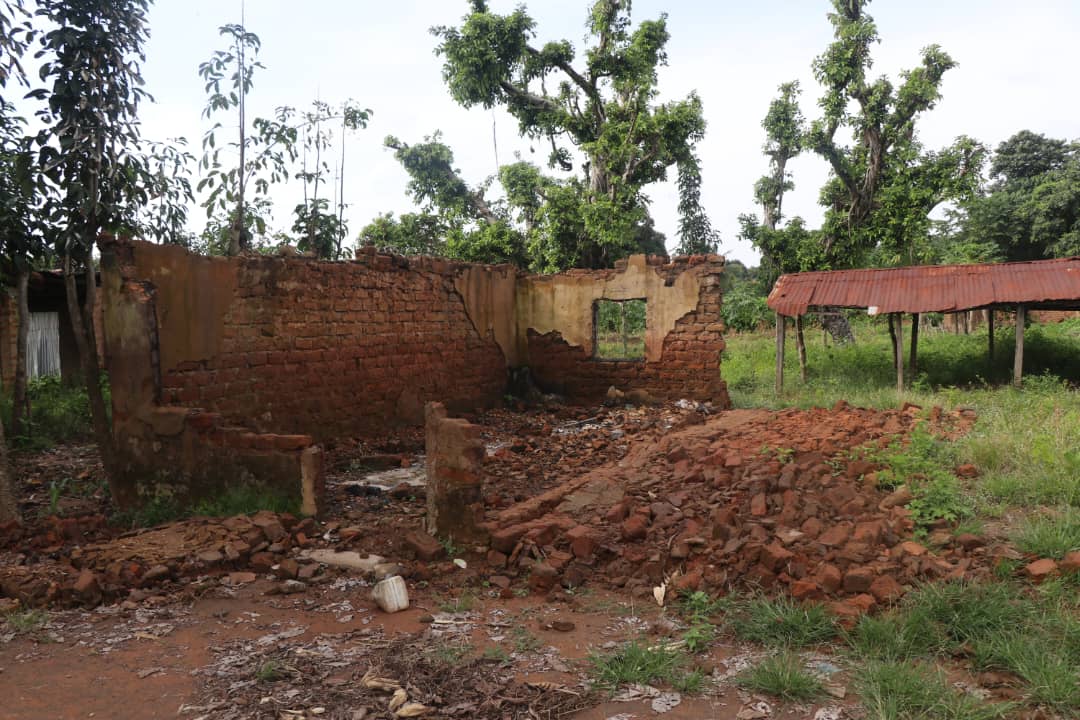
What remains of Yelwata market is a terror-scape. Three months ago, 150 to 200 Fulani ethnic mercenaries turned this farm hub of more than 10,000 people into a killing field, hacking and burning 270 victims in a four-hour reign of terror on June 13-14, 2025. More than 3,000 residents were displaced during the attack, leaving a once-thriving economic hub in ruins.
News analyst Zariyi Yusuf, immediate past National Coordinator of Middle Belt Patriots, sees a sinister pattern following his recent visit to Yelwata.
“If I ever had doubts it is a genocide happening in Nigeria’s Middle Belt, my visit has eliminated them,” Yusuf told TruthNigeria. “There I saw widows surviving under subhuman conditions in displacement camps right in their homeland.”
The destruction follows a calculated strategy, according to Yusuf: “The mission of these heavily armed and powerfully backed Islamists is not only to shed innocent blood to pursue their ideology, but to cripple the economy of the peoples they plan to totally annihilate.”
An earlier TruthNigeria investigation estimated that the attack cost its sponsors approximately $300,000—a significant investment in orchestrated violence that raises urgent questions about who funded this devastation and why powerful leaders remain silent.
The Economic Devastation
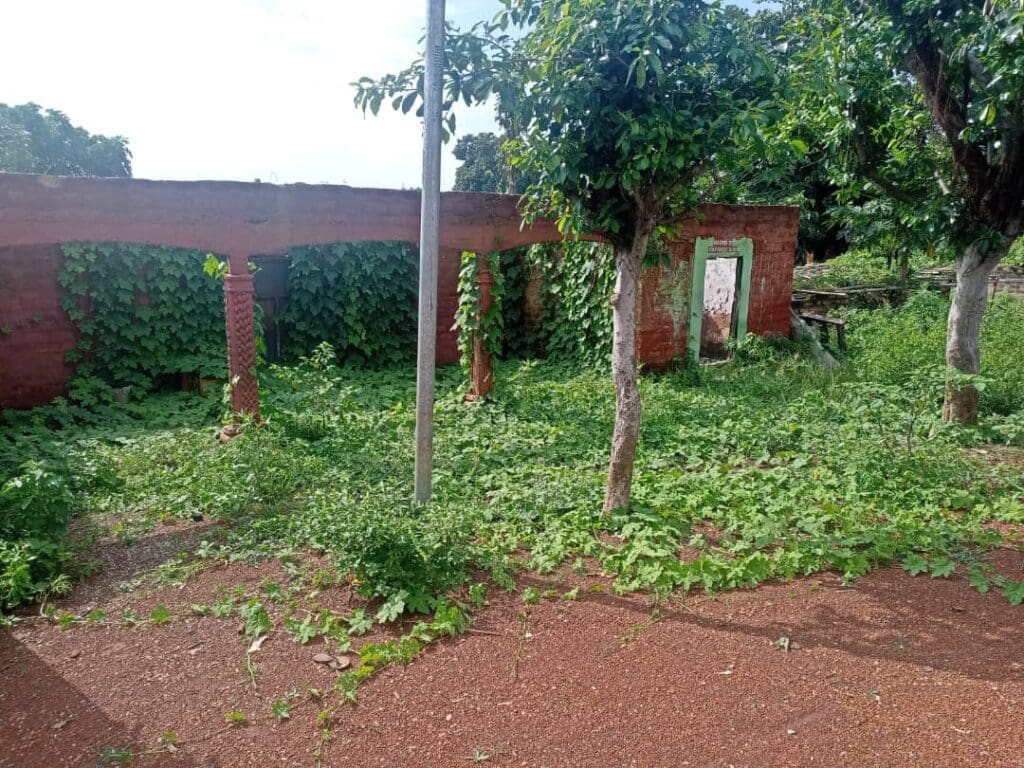
“The market you are seeing here used to be a big market. People from different places, including Lafia in Nasarawa State, come here for business,” said Achin Mathias, a youth leader whose voice carries the weight of collective grief. “The market generated a lot of revenue for Guma local government. Now look at the market overgrown by weeds,” he told TruthNigeria.
Before the attack, Yelwata market served as Guma Local Government’s economic lifeline. Farmers from across the region converged there weekly, creating a vibrant ecosystem where Middle Belt agricultural abundance met commercial demand from neighboring states. Traders from Nasarawa, particularly Lafia and Akwanga—approximately 14 and 50 miles respectively from the attack site—ferried farm produce directly from the Benue River valley separating the two states.
Accountability Vacuum
Three months after one of Benue’s deadliest attacks, the silence from powerful figures is deafening. Former Benue Governor George Akume, now serving in President Tinubu’s cabinet as Secretary to the government of the federation, has taken no visible action despite having access to federal resources. Similarly, Gov. Hyacinth Alia, who commands significant resources, remains conspicuously absent from reconstruction efforts.
These wealthy, powerful men have access to billions of Naira yet have offered no concrete assistance to Yelewata’s survivors. Their inaction becomes more troubling when viewed against the backdrop of who allegedly funded the attack.
The spokesman to Guma Local government Chairman, Ernest Tortiv, was asked why the market remains a skeleton despite its economic importance? “There are plans in the pipeline not just for the market but on other things in Yelwata,” he told TruthNigeria.
Following the Money Trail
According to sources familiar with the investigation, the funders of the Yelwata attacks include individuals “within the government.” This raises disturbing questions about the $300,000 investment in Yelewata’s destruction and whether government officials are complicit in financing terror.
The pattern is clear: well-funded attackers systematically destroy Middle Belt communities while those with power to act—whether in government or civil society—remain silent.
Geographic Strategy and Cross-Border Operations
The attack’s geography reveals calculated planning, analysts told TruthNigeria. Most, if not all, mercenaries crossed into Benue from Nasarawa state—a journey of approximately 5 to 10 miles from known staging areas such as Kadarko to Yelewata. There are no Fulani herding settlements on the south side of the Benue River in Guma County (Local Government Area), which belies the oft-used claim that the Yelewata massacre was another so-called farmer-herder clash.
This cross-border operation required sophisticated coordination and funding, hence the $300,000 cost estimate pointing to sponsors with significant resources and organization.
Land Appropriation Through Economic Warfare
Pastor and activist Josiah Terhembe suggests there is a broader land-appropriation strategy. “It is no coincidence that the market was destroyed during the attack,” Terhembe explained. “The attackers aside being on a mission to ethnically cleanse the people, also were out to grab lands.”
By destroying the economic foundation that makes community life viable, attackers force survivors to abandon their land—achieving through economic pressure what violence alone couldn’t accomplish.
Government Complicity
Perhaps most troubling is the government’s response. Three months after the massacre, no reconstruction efforts have begun. The market remains exactly as attackers left it.
“It leaves us to no longer ponder the incapacity of the government but its complicity in this matter,” Yusuf observed. “Because I wonder how a town has been abandoned and turned into ruins after one of the bloodiest attacks by Fulani Islamist militia, while it stands right on a major road not far from the Benue state capital.”
The Wider Pattern
Yelewata isn’t isolated. Terhembe confirms this represents a regional pattern: “Yelwata is not an isolated case, it is the same all over Benue and other parts of the Middle Belt and the government is not ready to act.”
Today, Yelewata’s survivors face an impossible choice: remain on ancestral land without economic opportunity or abandon their loved ones’ graves for uncertain prospects elsewhere. Residents who remain survive on humanitarian aid rather than farm the nutrient-rich soils throughout the County.
The market’s destruction represents more than physical damage—it conveys systematic economic warfare funded by powerful interests and enabled by governmental silence. Until someone answers for the $300,000 investment in terror, until powerful leaders act instead of remaining silent, and until the international community acknowledges this genocide, Yelwata remains suspended between survival and surrender.
The growing weeds in abandoned stalls tell the story of how terror achieves its goals not just through violence, but through the calculated destruction of economic bonds that hold communities together—while those with power choose silence over justice.
–Steven Kefas is a conflict reporter for TruthNigeria.