
Yelewata Massacre Survivors: Three Months On, a Community Left in Ruins
By Mike Odeh James and Olikita Ekani
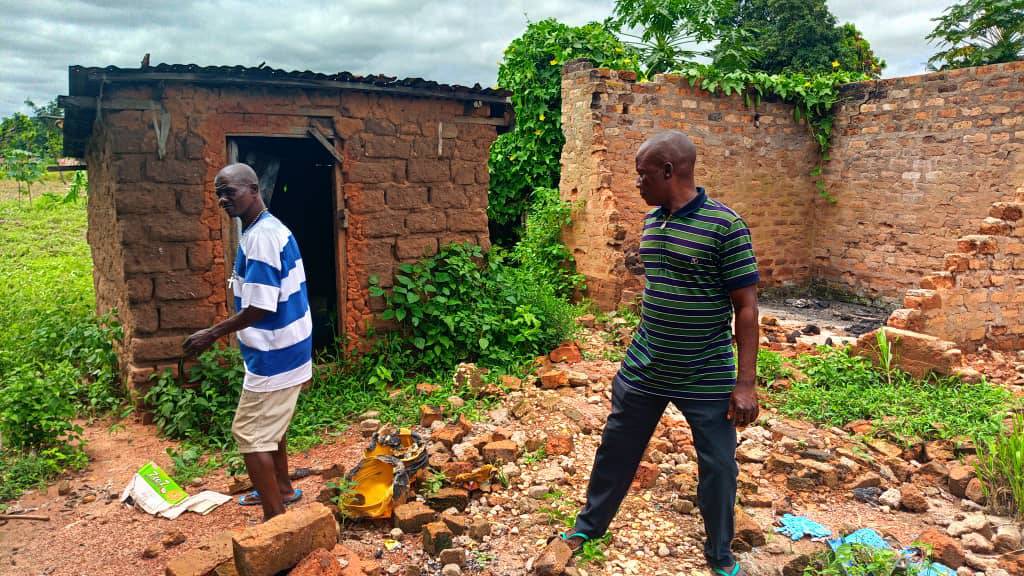
Makurdi, Nigeria–Three months after armed men stormed the Christian farming community of Yelewata in Nigeria’s Middle Belt, survivors remain without relief, their lives defined by loss and unfulfilled government promises.
The village chief, Julius Joor Kwumaga estimated that more than 240 homes were destroyed, but residents—backed by later assessments—say the figure is closer to 400. None have been rebuilt.
“Since Yelewata was attacked, state and federal officials have come here and promised to rebuild our houses,” the chief told TruthNigeria. “But it was all words. Nothing has happened.”
The devastation has left families homeless, their mattresses, cooking pots, and household goods burned to ashes. Food stocks were destroyed, farmlands scorched, and entire livelihoods erased. Farmers who once fed their families with bountiful harvests now sit idle, their hands empty.
“We thought government officials would help supply farmers with new seedlings,” the chief added. “But nothing of that sort has happened.”
Fields Overtaken by Weeds
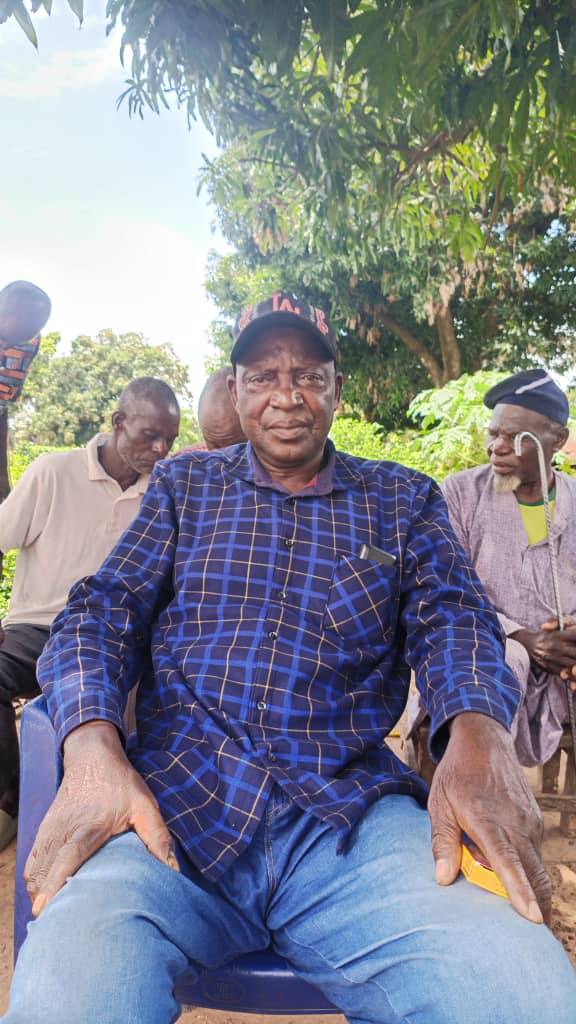
For Elder Tze Fidelis, a 70-year-old farmer, the attack was not just an assault on his community but the destruction of a lifetime of labor.
“I had over seven farmlands worth 20 hectares,” he recalled. “I used to plant yams, cassava, rice, and corn, with about 15 boys helping me till the land.”
Before the massacre, Fidelis paid laborers 500 to 600 naira a day (approximately 34-41 cents USD) and invested heavily in fertilizer and tools. The returns sustained his family. After harvest, he earned up to ₦20 million each year (about $13,300 USD), reinvesting most of it into the next farming season while using the rest to feed his extended household and pay school fees for his ten sons and many grandchildren.
“Today we have no farmland, no food, no money,” Fidelis said quietly. “All we have are grandchildren to feed.”
Losing his fields meant losing his entire income—a crippling blow to his family’s survival.
‘Everyone in Yelewata Is a Farmer’
Donald Terso, a yam farmer and trader, told TruthNigeria that he once harvested around twelve heaps of yams per season—some 600 to 800 tubers. Buyers came from as far as Lagos, Onitsha, and Enugu to purchase his produce.
“Sometimes, after paying taxes and covering farm bills, I would still have about ₦2 million left (around $1,300 USD),” he said. “With that, I could feed my household, pay community levies, donate to the church, and take care of other needs.”
Now, he says, the season has arrived but the farmers cannot access their land.
“Fulani terrorists have not only destroyed our stocks,” Terso explained. “They have occupied our farmlands and are grazing on them as we speak.”
Asked about the size of Yelewata’s farming population, Terso gave a blunt answer: “Everyone in Yelewata is a farmer, so long as you can walk and hold a hoe or machete.” He estimated there are over 3,000 active farmers in the community, each one capable of producing between ₦700,000 and ₦2 million in harvest value per season.
A Community-Wide Collapse
The scale of economic devastation becomes clear when the losses are added together.
Elder Fidelis’ annual loss: ≈ ₦20 million (~$13,300 USD)
Terso’s annual loss: ≈ ₦2 million (~$1,300 USD)
Combined individual losses: ≈ ₦22 million (~$14,600 USD)
Multiply this across the thousands of Yelewata’s farmers, and the community’s collapse is staggering.
The Scale of Destruction
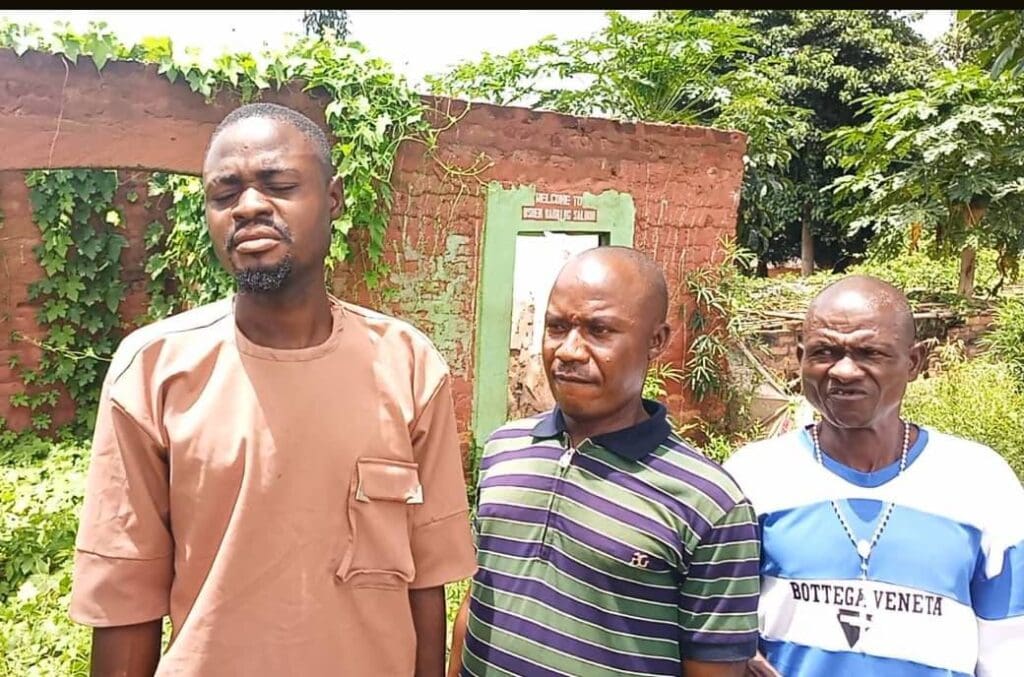
According to Paul Kikin Ornaga, Secretary of the Yelewata Youths Association, the toll of the June attack was catastrophic:
Farmlands destroyed: 8,025 hectares of yams, cassava, soybeans, rice, guinea corn, maize, millet, and groundnut.
Food reserves destroyed:
16,000 bags of soybeans
50,000 bags of rice
70,000 bags of corn
30,000 bags of millet
Heaps of yams valued at ₦500 million (≈ $380,000 USD)
Homes & properties: 400 houses burned, 55 warehouses and shops destroyed.
Fruit trees: 562 mango, orange, guava, and pawpaw trees cut down.
Livestock: More than 20,000 animals—including goats, sheep, and poultry—stolen or slaughtered.
Estimated Economic Loss
According to Ornaga, the total damage to Yelewata is valued at over ₦20 billion (≈ $13.6 million USD):
Food crops and reserves: ₦10 billion (approx. $6.8 million USD)
Livestock: ₦3.5 billion (approx. $2.3 million USD)
Homes, warehouses, and shops: ₦4 billion (approx. $2.72 million USD)
Fruit trees and farmland: ₦2.5 billion (approx. $1.695 million USD)
Yam reserves: ₦500 million (approx. $339,000 USD)
Human Toll Beyond Numbers
The human losses dwarf even the staggering material destruction. Yelewata buried more than 300 men, women, and children—most of them farmers, hunters, and breadwinners.
“All schooling and educational activities have completely stopped in Yelewata,” Ornaga told TruthNigeria.
Where is The Over 4 Billion Naira
Three months later, the village still waits for relief. What remains is not just the ashes of homes and crops but the unspoken question hanging heavy in the air: how much longer can Yelewata survive without help?
As Yelewata waits in silence, its families are left with nothing but memories of their dead and the ashes of their farms. Local leaders say they can no longer wait for government promises alone. They are appealing for urgent intervention from international humanitarian agencies, churches, and relief organizations in the United States and beyond—warning that without immediate aid, Yelewata’s survival itself is at risk.
Locals Say Despite ₦4 Billion Donations, Yelewata Remains in Ruins
Residents of Yelewata, a farming community of more than 20,000 people in Benue State, told TruthNigeria that despite high-profile donations that amount to over ₦4 billion, not a single house has been rebuilt, no farmer has been compensated, and no displaced family has received meaningful aid.
The contributions include ₦1 billion from Nigeria’s First Lady, Senator Oluremi Tinubu, support from the International Organization for Migration (IOM), the Federal Government, and the Nasarawa State Government. Yet, survivors say three months after the June 13 massacre, they are still abandoned.
“As we speak, you can see for yourself—houses remain burnt and overgrown with weeds. Charred foodstuffs are still lying where they were destroyed,” said Paul Kikin Ornaga, assistant secretary of the Yelewata Youth Association.
He added: “We don’t even have up to 1,000 men and women left in Yelewata today. Where is the ₦4 billion that was donated to rebuild this community? Three months after, nothing has happened.”