
By Onibiyo Segun
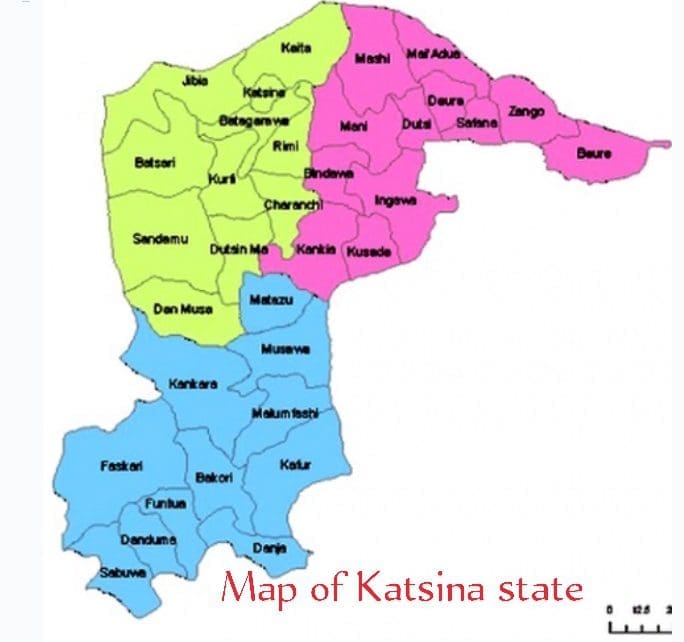
Malumfashi county, Katsina state, Nigeria – At dawn on August 19, 2025, the quiet of Unguwan Mantau village in Malumfashi county of Katsina State was shattered by gunfire.
Worshippers had just begun the Fajr (early morning prayer) prayers when gunmen stormed their small community mosque, shooting indiscriminately. By sunrise, dozens lay dead, homes were burning, and an entire village was in mourning.
A Village of Worship & Grief
Unguwan Mantau sits amid farmlands and cattle routes on the edges of Malumfashi, one of southern Katsina’s oldest trading settlements. The mosque, modest, open-air, and flanked by neem trees had served the community for generations. Around 4:00 GMT, witnesses said, motorcycles roared through the dusty paths as men, wielding rifles burst in and opened fire on worshippers kneeling in prayer.
“I heard screams and shots,” said Muhammad Abdullahi, a survivor interviewed by TruthNigeria. “They didn’t ask questions; they shot everyone they saw.” Police later confirmed that at least 30 people were killed, with 60 others abducted as the attackers swept through adjoining hamlets.
Sectarian or Senseless?
Northern Nigeria’s Muslim communities are divided across complex theological lines. Sufi orders such as Tijaniyya and Qadiriyya, and reformist Izala movements that denounce Sufi practices as un-Islamic. In Malumfashi, both traditions coexist, occasionally with tension but rarely with violence.
TruthNigeria’s interviews with local clerics revealed that the attacked mosque was independent, not under Izala or Sufi administration. “We follow the Qur’an and Sunnah; we are not part of any movement,” said Imam Abdullahi Usman, the mosque’s leader. “No one here preaches hate.”
Worshippers also said the assailants made no sectarian declarations during the attack, suggesting motives beyond religious rivalry.
The Logic of Banditry
Security experts told TruthNigeria that the Malumfashi killings fit a growing pattern of reprisal-style “bandit” raids sweeping across northwestern Nigeria. These armed groups, originally cattle thieves, have evolved into organized militias that kidnap, extort, and massacre entire villages when resisted.
Dr. Amina Yusuf, a security analyst in Abuja, told TruthNigeria that labeling every attack “terrorism” obscures deeper local causes. “Many of these gangs operate on revenge and debt,” she said.
“When vigilantes capture their members, they retaliate savagely. That’s what Malumfashi looks like, a punishment raid.”
Another expert, Major General Ibrahim Bello (rtd.), speaking from Kebbi, said the mosque may not have been a deliberate religious target.
“These criminals hit where they know people gather. It may have been a kidnapping mission gone wrong or a reprisal attack,” he said.
A Fragile Security Order.
Police in Katsina told TruthNigeria they lack manpower and equipment to patrol over 3,000 dispersed villages. “We can’t be everywhere,” said a senior officer who requested anonymity. “We rely on community tips that come too late.”
The attack exposes the weakness of Nigeria’s rural security grid.
Unguwan Mantau’s location, along pastoral corridors linking Funtua and Danja counties, makes it easy prey for roving gangs related to Boko Haram.
Witnesses said the attack followed a recent clash between local community guards and bandits.
“They came for revenge,” said Malam Nura Musa, who lost two brothers. “We had no soldiers, no help.”
TruthNigeria found that several recent massacres such as in the massacre of 13 innocent Berom ethnic nationalities in Rachas village, Heipang District, Barkin Ladi county of Plateau State and massacre in Bakori Katsina, April 2025 followed the same pattern: community guards resistance, then reprisal. Each time, federal forces arrived hours too late.
The Federal Vow
After the Malumfashi attack, the Minister of Information Mohammed Idris Malagi vowed that “no stone will be left unturned” to find the killers. Soldiers and mobile police units were deployed across southern Katsina, and air surveillance increased temporarily. But locals told TruthNigeria that arrests rarely follow.
“They come after the damage is done. These vows don’t stop these attacks,” said Hajiya Safiyya Abdullahi, a widow whose husband died in the mosque. “We hear promises, but no justice.” Experts warn that without structural reforms, community policing, rural intelligence, and accountability, the cycle will continue.
Beyond Bandits and Borders
The Malumfashi killings illuminate how banditry, theology, and governance failures intertwine. Even when not driven by ideology, violence in Nigeria’s north feeds off sectarian mistrust and economic despair. Analysts told TruthNigeria that some gangs now mimic jihadist language to recruit or extort, blurring lines between criminality and extremism.
For residents of Malumfashi, those nuances hardly matter. “Whether they are terrorists or thieves, they kill the same way,” said Imam Usman, his voice breaking. “All we want is to pray in peace.”
The Road Ahead
The attack at Malumfashi is both tragedy and warning, a symptom of the state’s waning control over rural Nigeria. Unless government responses move beyond rhetoric to rebuild security, heal sectarian suspicion, and restore trust, more dawn prayers may end in blood.
In a land where faith unites millions but fear now stalks the faithful, Malumfashi’s mosque stands as both monument and warning of how the collapse of order turns even houses of prayer into frontlines of Nigeria’s unending war within.
Onibiyo Segun reports on terrorism and conflicts for TruthNigeria.