By Mike Odeh James
Abuja–In 2025, U.S. Senator Ted Cruz condemned Nigeria’s Sharia blasphemy laws targeting Christians. He introduced the Nigeria Religious Freedom Accountability Act, urging the U.S. to act against the legal framework that enables religious persecution.
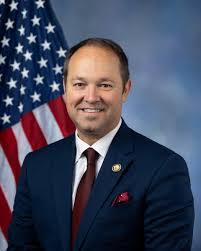
This was followed by Congressman Marlin Stutzman’s criticism of Sharia.
Stutzman called the laws “barbaric.” And he proposed a House companion bill to defend religious freedom.
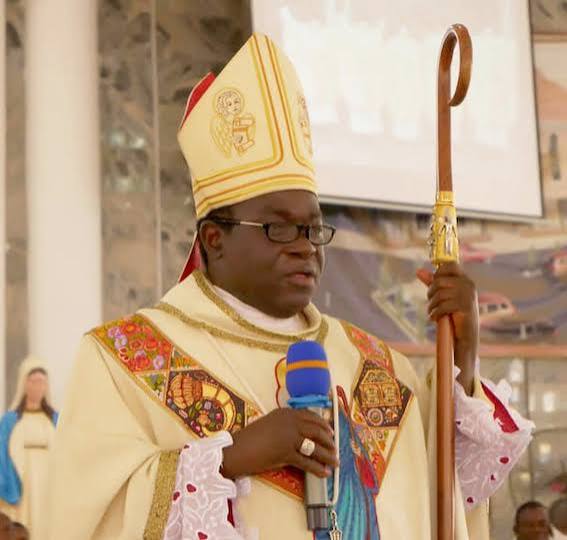
In October, Rev. Matthew Kukah, Bishop of Sokoto, denounced Sharia as unconstitutional, citing the lynching of Deborah Samuel and other victims, and urged President Tinubu to challenge its legality.
Together, these voices highlight growing international concern over religious persecution in northern Nigeria.
A Barber’s Ordeal in Kano
Elijah Odeh, a 19-year-old student from Benue State living in Kano, runs a small barbershop to support his widowed mother and sister. On January 20, 2021, his quiet life changed forever.
He told TruthNigeria how Sharia law upended his life: “As I opened my shop that morning, men from the Hisbah, the Islamic police, emerged, handcuffed me, and dragged me into a van.”
His “crime,” according to the Hisbah, was shaving the hair of Muslim customers in styles deemed offensive to Prophet Muhammad. Though Elijah is not a Muslim, he was arraigned before a Sharia court, denied bail, and held for more than a month until a senator from Benue intervened to secure his release.
Rights advocates say his case exposes how Sharia enforcement in parts of northern Nigeria increasingly ensnares non-Muslims, eroding the constitutional promise of religious freedom.
A Father’s Grief in Yobe
In Yobe State, 16-year-old Christiana Mathias never returned home from her tailoring apprenticeship in Fika County. Her father, Mr. Peter Mathias, searched frantically for days before receiving a letter that shattered his family.
He told TruthNigeria, “The letter came from the Emir of Fika and the Dawah Council. They said my daughter had converted to Islam and was forced to marry a 55-year-old man. My protests were ignored.”
Rights groups allege the Emir’s office and the Dawah Council have sanctioned similar forced conversions and marriages — part of what activists describe as a growing wave of religious coercion against underage Christian girls in northern Nigeria.
Abduction and Forced Marriages in Sharia States
Daniel Lawrence Abiki, who works with the Christian NGO Nigerians United for Freedom, based in Yola, Adamawa, says the abduction, grooming, and forced marriage of Christian girls in Sharia-controlled states has reached “epidemic proportions.”
“In the last year alone,” Abiki said, “we’ve documented over 50 confirmed cases of underage Christian girls deceived or forcibly married to Muslims. Including unreported cases, the number could exceed 500.”
He also told TruthNigeria that the pattern spans Yobe, Bauchi, Adamawa, Kaduna, and Zamfara, where parents of abducted girls are often threatened into silence.
“State agencies and clerics are complicit,” Abiki said. “The girls are coerced into conversion and quickly married off. Their families seldom receive justice.”
Amnesty International’s Grim Record
Between 2014 and 2024, Amnesty International reports that more than 2,000 women and girls were abducted by Boko Haram — many forced into marriage, subjected to sexual slavery, or trained for combat.
The report, Our Job Is to Shoot, Slaughter and Kill, based on 200 witness accounts, including 28 survivors, documents mass killings and abductions in towns such as Gwoza, Madagali, and Bama. At least 5,500 civilians were killed and nearly 6,000 structures destroyed in Bama alone. Victims, both Christians and Muslims, were coerced into converting to Islam or killed for refusing.
Abiki notes that many abductions occurred in predominantly Christian areas like Gwoza, Chibok, and Dapchi, showing that a majority of those taken were Christian girls.
For victims like Elijah and Christiana, this translates into lives upended, families broken, and a future clouded by the heavy shadow of religious law.
The Aim of Sharia Law in Nigeria
Analysts say the motive behind the abduction and forced marriage of Christian girls, by both extremist groups and state-backed authorities, is Islamization.
“The logic is cruelly simple,” Abiki explained. “If you abduct a Christian girl and marry her to a Muslim, you silence one Christian voice and gain one Muslim in return.”
Before 2001, such kidnappings and forced marriages were rare. Since the introduction of Sharia law, the governments of Kano and Katsina States have spent substantial funds on mass weddings, often involving individuals unwilling to marry.
“The aim is to propagate Islam and increase the Muslim population, so that they dominate Nigeria,” Abiki said. “Sharia laws in Nigeria are fundamentally about the Islamization of the country and, by extension, Africa.”
Blasphemy Under Sharia: Threat to Christians and Free Expression
In northern Nigeria, blasphemy laws under Sharia are used against both Christians and nonconformists, often with deadly consequences.
In 2022, Deborah Samuel, a 200-level student at Shehu Shagari College of Education, was brutally lynched by classmates over alleged blasphemy. Christian mother Rhoda Jatau was arrested merely for defending victims of religious violence.
Muslims, too, face persecution. Humanist leader Mubarak Bala was jailed for Facebook posts, while Yahaya Sharif-Aminu was sentenced to death for sharing a song deemed offensive.
Despite rare appeals, Sharia’s oppressive reach continues unchecked, threatening lives, faith, and freedom of expression across northern states.
A Call for Justice
U.S. lawmakers and Nigerian clerics are increasingly vocal in demanding accountability. Cruz, Stutzman, and Kukah’s interventions underscore the urgent need for Nigeria to respect constitutional freedoms and protect all citizens from religious coercion and persecution.
For families like the Odehs and the Mathiases, these reforms cannot come soon enough. The international spotlight may be one of the few tools capable of pressuring the government to address systemic abuses perpetuated under the guise of religious law.
Mike Odeh James is a Conflict Reporter. He writes for TruthNigeria.