
Security Analyst: ‘Troop strength is radically below what a country of 200 million needs to fight multi-front insurgencies. Units are regularly redeployed with no rest, leaving the military exhausted and reactive.’
Overstretched Military Sparks Senate Call for 100,000 New Soldiers.
By Onibiyo Segun,
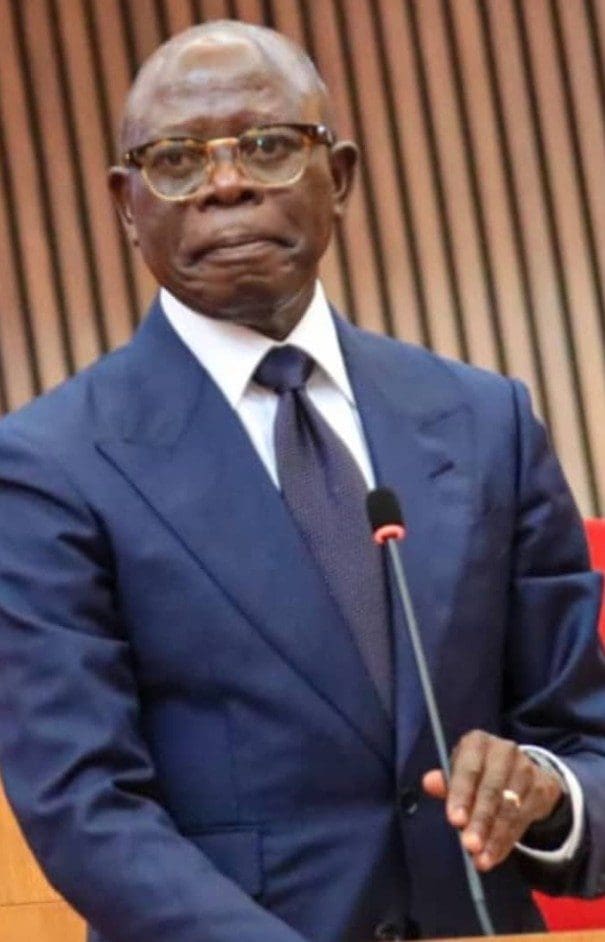
Abuja, Nigeria—Nigeria’s deepening terror wave has pushed one of its most outspoken lawmakers to demand an unprecedented military expansion, as Fulani Ethnic Militia attacks tear through the Middle Belt and beyond. On Tuesday November 18, Senator Adams Oshiomhole urged President Bola Tinubu to immediately recruit 100,000 new soldiers to confront what he calls a nationwide insurgent onslaught that is overwhelming the country’s defenses.
In a report captured on national media, Senator Adams Oshiomole said, “We don’t have enough men and women in uniform to cover this country,” Oshiomhole warned, describing the crisis as “a threat to the republic itself.”
Nigeria’s Senate has now issued one of its strongest security directives in years, formally backing Oshiomhole’s proposal amid a surge of coordinated terrorist attacks across nearly every geopolitical zone. The motion, introduced on the Senate floor, signals mounting alarm that Nigeria’s security architecture is dangerously underpowered.
Senator Adams Oshiomole said, “We cannot protect this country with the current numbers we have.
“I urge the President and the armed forces to recruit an additional 100,000 military personnel so we can have enough men and women in our troops. It is also another way to create employment for our youthful population,” he concluded.
The Senate’s call was triggered in part by a horrifying attack in Kebbi State, where gunmen stormed Government Girls’ Comprehensive Secondary School in Maga, abducted 25 students, and killed the vice principal.
Lawmakers also demanded a forensic audit of the US$30 million Safe School Programme valued at roughly ₦46 billion, questioning why such massive spending has failed to prevent repeated mass abductions.
A U.S. Angle: Testing Washington’s Patience
The Senate’s call comes as Nigeria faces growing scrutiny from Washington. Under U.S. President Donald Trump, Nigeria was designated a “Country of Particular Concern” due to systemic religious persecution and escalating killings of Christian communities.
Since then, attacks have worsened, a development some analysts believe is testing whether the U.S. is willing to act on its own designation.
Nigeria’s sudden push for a 100,000-troop expansion may signal to Washington that Abuja is finally acknowledging the scale of the threat.
Wave of Terror Attacks: The Middle Belt in Flames
TruthNigeria has documented a dramatic rise in Fulani Ethnic Militia attacks across the Middle Belt, where Christian farming towns, minority tribes, and rural communities have become frontline targets.
Recent attacks include:
Gunmen stormed Christ Apostolic Church in Eruku during an evening service, killing worshippers and abducting the pastor.
Benue State – Aye-Twar Massacre. Thirty-three civilians were killed and villages burned in a coordinated night assault.
Kwara State – Igbonla Raid. Fulani Ethnic Militia terrorists struck at midnight, abducting residents and forcing mass displacement.
Plateau State – Renewed Village Takeovers. Hundreds of Fulani Ethnic militia fighters seized farming settlements using sniper rifles and automatic weapons.
Southwest Nigeria – Forest-Based Insurgent Camps. Amotekun security units have confirmed organized militia cells operating from remote forests.
500 Christians Abducted Near Cameroon Border. More than 500 Christian farmers were kidnapped in one of the largest abductions ever recorded by TruthNigeria.
Defense Experts Warn: ‘The Military Is Too Thin, Tired, and Ill-Equipped’
Dr. David Onyilokwu Idah, Security Analyst while speaking to TruthNigeria said, “Troop strength is radically below what a country of 200 million needs to fight multi-front insurgencies. Units are regularly redeployed with no rest, leaving the military exhausted and reactive.”
Col (Ret.) Mary Ogbodo, former Military Intelligence Officer based in Abuja speaking to TruthNigeria describes the Fulani Ethnic militias as “well-coordinated insurgent organizations, with scouts, logistics lines, and forest command centers. And because the military is low in morale and numbers, they are struggling to keep up with the terrorists. If the government will seek foreign help to fight these terrorists, they are sure to win”. She warns the terrorists are now more agile, better armed, and more familiar with the terrain than government forces.
Dr. Abubakar Aldo, a Counterterrorism Scholar speaking to TruthNigeria blames the federal government’s refusal to formally designate Fulani militias as terrorists.
Dr. Aldo says, “it is systematic ethnic cleansing, not rural banditry. The military lacks the legal tools to dismantle the networks.”
A Nation Under Coordinated Assault – TruthNigeria Findings:
* Militias coordinate cross-border operations across Plateau, Niger, Kogi, Nasarawa, and Benue.
* Abandoned farmlands are being turned into kidnap staging camps.
* Fighters reportedly use drones, encrypted radios, night-vision gear, and precision rifles.
* Federal agencies routinely downplay casualty figures and deny militia strength.
* Rural Christians remain soft targets, with almost no state protection.
Experts warn that terrorists are establishing a continuous insurgency belt from the Lake Chad basin through Niger State down to Kogi, a corridor that mirrors the early phases of Sahel jihadist expansion.
Conclusion
Nigeria stands at a perilous crossroads. Senator Oshiomhole’s call for a 100,000-soldier surge is more than a policy proposal, it is a last-ditch attempt to halt an insurgency that is accelerating faster than the military can respond. TruthNigeria’s reporting shows a nation whose rural Christian communities are vanishing under relentless assault, whose security forces are overstretched, and whose leaders are struggling to project control.
For the United States, the question is no longer academic: Can Nigeria still stabilize itself or is West Africa’s anchor nation sliding toward a wider, more dangerous path?
Onibiyo Segun reports on terrorism and conflicts for TruthNigeria.