17 of 23 Counties Occupied by Militia Aiming at State Takeover
By Mike Odeh James
(Makurdi) The once-bustling Catholic farming town of Aye-Twar in Katsina-Ala County, Benue State, now lies deserted — a wasteland of ashes and sorrow.
Once known for its lush farmlands and strong Tiv Catholic community, the town has been reduced to ruins after months of sustained assaults by Fulani armed militias.
Aye Twar lies southeast of Makurdi in Benue State’s Middle Belt region. The agrarian community, about 65 miles (105 km) from Makurdi, sits on rolling plains near the southern banks of the River Benue.
Speaking to TruthNigeria, Kwazan Samuel, a 45-year-old farmer and father of three from Kwaghzan Village (St. Paul’s Catholic Church, Agu Center), said the nightmare began in March 2025, when gunmen invaded their farms.
“They came to destroy our farms and take our land,” he said. “They didn’t just kill people; they destroyed everything that gave us life — our crops, our homes, our hope.”
At least 33 villagers have been confirmed dead, with several others still missing. The attacks, Samuel explained, were deliberate and sustained, targeting farmers during planting and harvest seasons.
“They set fire to our barns, carried away our yams and corn, and shot anyone who tried to stop them,” he said, recalling the horror.
More than 1,000 Militants Poised to Attack
In Mbaikyer, an outlying village of Aye-Twar, another resident, Simon Ayankegh, told TruthNigeria that the attackers are not random bandits but an organized army.
“Over 1,500 heavily armed Fulani militias from Taraba and even from Cameroon are involved,” he said. “They have taken over these areas — Agu Center, Mbaikyer, Agbamin, Kwaghzan, Ayali, Shagogo, Branch Kungu, Kenvanger, and Anyom. Some of these villages are now fully occupied.”
Security analyst Adeyi Ejeh, based in Makurdi, confirmed that thousands of Fulani ethnic militias are active across Benue, Nasarawa, and Taraba States.
“They number between 2,000 and 3,000 and can easily redeploy to Katsina-Ala,” Ejeh told TruthNigeria. “What we are seeing is a coordinated expansion — not isolated attacks.”
According, him, the aim of the Fulani Jihadist is to grab and occupy all the counties in Benue State and then turn the state into a Fulani dominated state and grazing land.
Fulani Herdsmen Occupy Vast Swathes of Benue
The Benue State Government says armed Fulani herdsmen have taken over more than 17 counties, displacing hundreds of thousands of residents and crippling food production. Only a few counties — Ogbadibo, Ohimini, Konshisha, Gboko, Ushongo, and one other — remain relatively safe.
The occupation has turned large parts of central and eastern Benue into conflict zones. Humanitarian agencies warn of an approaching famine as once-thriving farming communities vanish under siege.
Residents Flee to Taraba State
The violence has emptied Aye-Twar. Most survivors, including Samuel’s family, have fled to Wukari in neighboring Taraba State, joining hundreds of other displaced villagers.
“This was our home. Now we have nothing,” he said quietly. “We live in borrowed spaces, with no food or medicine. The children cry every night.”
Community leaders told TruthNigeria that despite repeated calls for help, security response has been minimal or too late. The attackers, they said, cross from Taraba forests into Benue with ease and strike unchallenged.
“We call the soldiers, but by the time they arrive, the damage is done,” Samuel lamented. “We bury our dead by ourselves.”
Angela Chiahemban, 26, a farmer, petty trader, and mother of two, described how the attacks escalated over time.
“Life was already hard, but the Fulani militia made it unbearable,” she said. “At first, they came to smaller villages, ate our produce, and left. Later, they began staying longer — burning farms and warning us not to return.”
According to her, the militias advanced systematically.
“They occupied smaller settlements first, drove away the farmers, and took our yams, cassava, and maize. When we stopped going to farm, they moved closer until they surrounded Aye-Twar.”
Residents said the attackers rode powerful Bajaj motorcycles and carried AK-49 rifles. With no local vigilantes or security posts, the people were completely defenseless.
“We complained to the elders,” Angela said, “but they had no power. We begged for help, but nothing came. Many ran away with only the clothes they wore.”
When the attackers blocked access roads and markets, hunger and sickness spread rapidly.
“Some people started dying of sickness and starvation,” Angela said. “There’s no doctor, no food, not even medicine. When they die, we can’t even bury them properly.”
Displaced Families Shelter in Schools
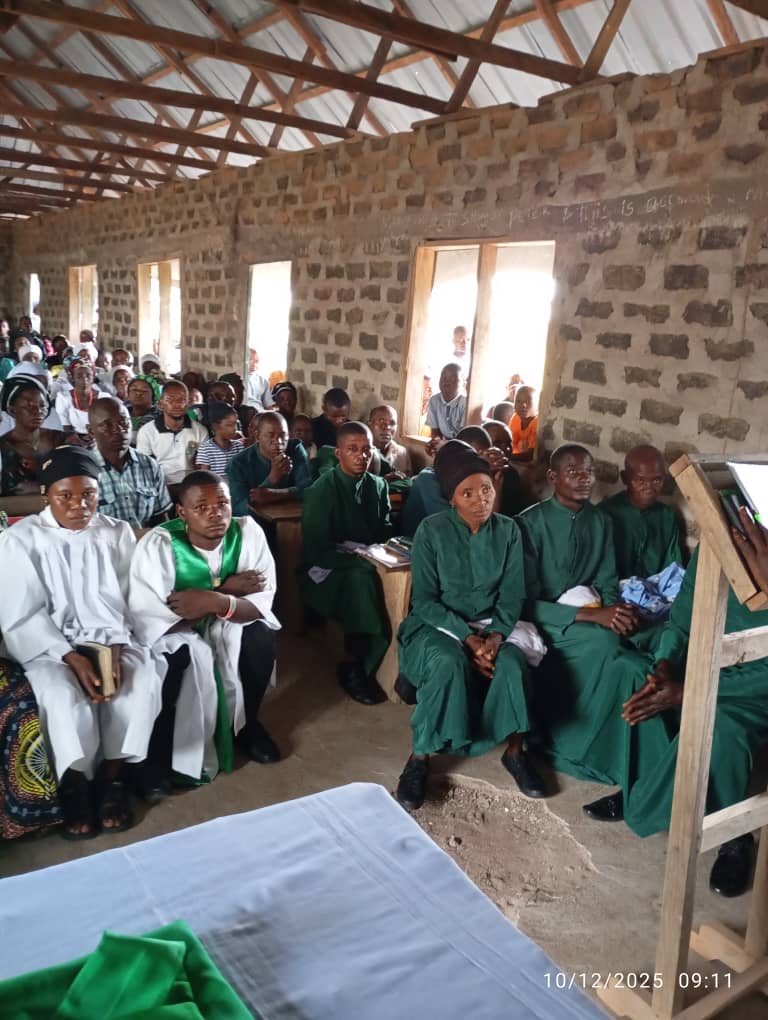
Hundreds of displaced Aye-Twar residents now sleep in schools and makeshift shelters in Katsina-Ala and Wukari. Most rely on charity from the Catholic Diocese of Katsina-Ala for food and medicine.
“The government tries, but it’s not enough,” Angela said. “It’s the Church that brings us little food and drugs, but we still go hungry.”
Eyewitnesses told TruthNigeria that women and children sleep on bare floors, surviving on small portions of garri or boiled leaves once a day.
“People are dying slowly,” Angela said. “Children cry from hunger. The old ones faint from weakness.”
Fear of Losing Ancestral Land
For displaced Tiv Christian families, the fear runs deeper than hunger — it is the fear of permanent loss of their ancestral land.
“If they persist, we may never return,” Angela whispered. “Our fathers farmed this land for generations. Now we are strangers in our own country.”
Samuel echoed that sentiment, saying the attacks appear aimed at erasing the community’s Christian identity.
“They want to wipe us out and take our land,” he said. “We are farmers, not fighters. Those who should protect us look away.”
Hunger, Death, and Silence
In Aye-Twar today, there is no market, no school, and no church service. The bells of St. Paul’s Catholic Church, which once called villagers to prayer, now lie silent among charred walls and broken pews.
“Even the graves of our ancestors are now in enemy hands,” said Samuel bitterly. “Only God knows if we will ever return.”
Priest Vows to Return and Rebuild Aye-Twar
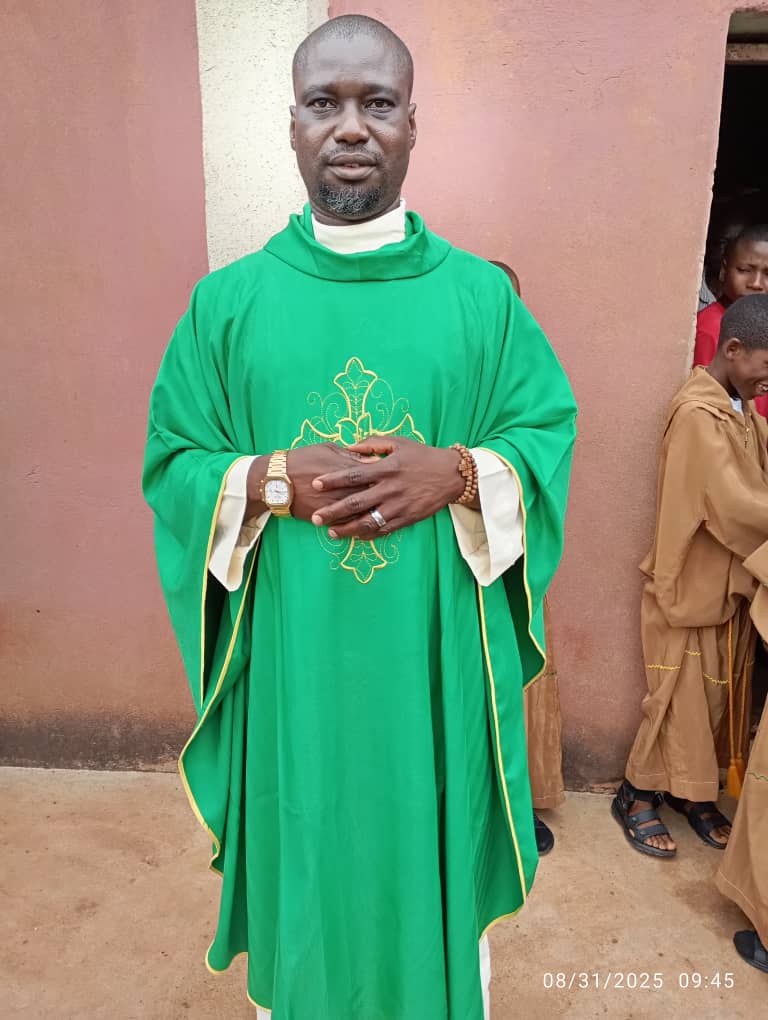
Rev. Father Titus Shamaniyan, the priest in charge of St. Paul’s Catholic Church, Agu Center, told TruthNigeria that he plans to return to Aye-Twar and resume mass.
“I am at Gbish right now, but tomorrow I will return to Aye-Twar and hold mass,” he said. “My people need to pray. We need to say the rosary and restart life in our town.”
Mike Odeh James is a conflict reporter for TruthNigeria.