By Ekani Olikita
(Makurdi) After a brief lull, the wave of deadly violence that has haunted Benue State for nearly a decade has resurfaced. Over the weekend, armed Fulani Ethnic Militia (FEM) launched coordinated attacks on two local government areas—Logo and Gwer West—killing four people and destroying farmlands in what residents describe as a renewed campaign of ethno-religious cleansing.
In Logo County, Fulani gunmen murdered four people, including a former councillor , while in Gwer West, another group razed a large rice farm belonging to a Christian farmer. The twin assaults have reignited fear and mourning in communities that have long been victims of Islamist-motivated violence.
Two Attacks, One Pattern
According to Hon Clement Kav, Logo County Chairman in an interview with TruthNigeria, the first attack occurred in Ayilamo community, Logo County.
“On Thursday, October 30, 2025, around 9 a.m, about ten armed Fulani Ethnic Militia, crossed the Akwana River from neighbouring Taraba State into Ayilamo village, opened fire on a group of farmers heading to their fields, killing three — identified as Dealam Igba, Bundepuun Ause and Aondosoo Abughzw,” Kav said.
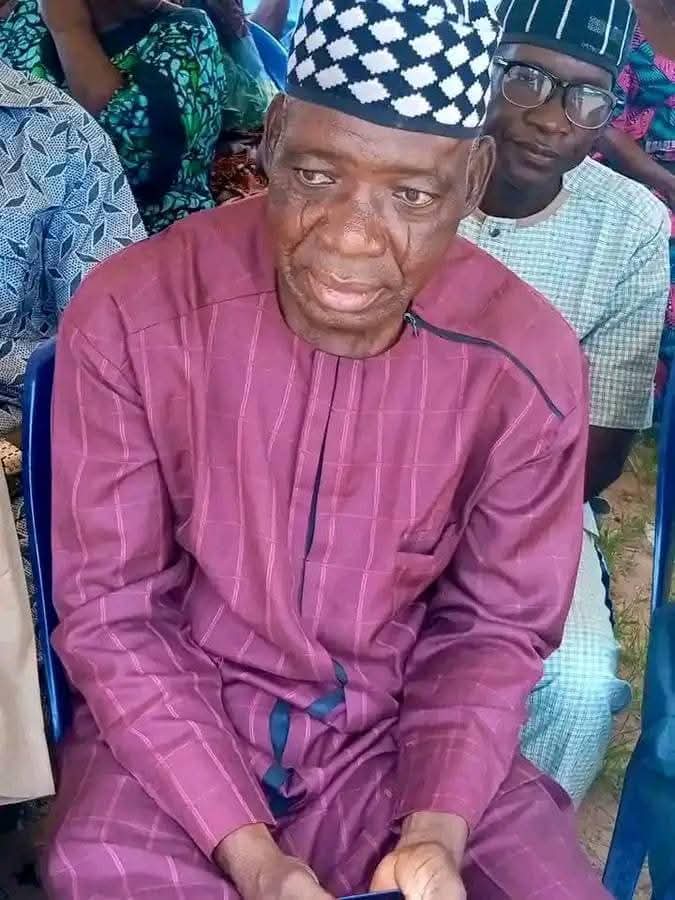
Kav continued, “Two days later, on Saturday, November 1, another band of about twenty Fulani terrorists, ambushed a convoy near Tsukwa village along the Ayilamo-Anyiin road. They fired indiscriminately while chanting ‘Allahu Akbar’, killing Mr. Atindiga Tsebee, a community leader and former councillor representing Tombo Ward. The convoy included State Assembly Member Hon. Samuel Shimapever Jiji, who was returning from a security meeting in Anyiin convened after the earlier killings”.
“The attackers appeared well-coordinated and deliberately targeted Christian farmers. It was a calculated assault on our people,” he said. “They struck twice in one week, leaving our communities in shock and mourning.”
Kav added that several others, including Chief Peter Terngu Iorhuna, Zaki Terkula Ankange, and Hon. Jiji’s media aide, Tiza Job, sustained severe gunshot wounds and were receiving treatment at the General Hospital, Anyiin.
Rice Farm Set Ablaze in Gwer West
While Logo was reeling from the killings, another assault was underway in Gwer West Local Government Area. On Sunday, November 2, around 2 p.m., Fulani gunmen stormed Tse-Orbiam community, setting ablaze a large rice farm owned by Mr. Stephen Ugbakyaa. The attackers, numbering about fifteen and chanting “Allahu Akbar,” fired sporadically to scare residents before torching the farm.
Dr. Damian Attah, a native of Gwer West who witnessed the incident, told TruthNigeria that the destruction was total.
“They burned all the heaps of rice already harvested,” he said. “The entire farm went up in flames within minutes.”
Attah accused the military detachment stationed at Tse-Orbiam of deliberate inaction.
“The farmer rushed to the soldiers, about ten of them stationed here, to plead for help. They refused to move until the whole farm was destroyed. The military here is protecting Fulani interests, not the people,” Attah alleged. “Of the fifteen wards in Gwer West, only Naka, the headquarters, is still safe.”
Another farmer, Mr. Ado Bartholomew, whose farm borders Ugbakyaa’s, lamented the attack’s economic impact. “That was the biggest rice farm in the area,” he said. “It’s deliberate—they want to destroy our livelihood and drive us from our ancestral lands. This will worsen food insecurity in the state.”
TruthNigeria’s Early Warning Ignored
The attacks came barely a week after TruthNigeria issued an early warning, cautioning that as the River Benue recedes, Fulani militants hiding in neighbouring Nasarawa would likely resume incursions into Christian farming villages. The alert, published on October 23, 2025, urged security agencies to act swiftly to prevent renewed genocide in the state. That warning went unheeded.
Logo and Gwer West have suffered persistent violence since 2013. Both are predominantly Christian farming areas—98% of residents identify as Christians, mostly Catholics—and have witnessed mass displacements and land seizures by armed Fulani groups over the years.
Police Confirm, But Casualties Unclear
Benue State Police spokesperson, SP Udeme Edet, confirmed the attacks, saying patrol teams had been deployed to the affected areas. However, she did not provide casualty figures, citing ongoing investigations. Local residents say no arrests have been made, and the attackers fled unchallenged.
Security analysts argue that the continued failure of state and federal authorities to designate the Fulani militia as terrorists has emboldened the group. Despite years of killings and mass displacements, prosecutions remain rare, while communities are left defenseless.
Humanitarian Crisis Deepens
The renewed violence has displaced hundreds of families in both counties. Many are sheltering in schools and churches, lacking food, water, and medical care. Humanitarian workers warn that the crisis could worsen as the dry season begins and displaced farmers lose their harvests.
“The humanitarian situation in Benue is deteriorating rapidly,” said Oche Adanu, a relief coordinator working with a local NGO. “Each attack pushes more people into poverty. Entire communities are now dependent on aid that is barely coming.”
Civil society groups and Christian organizations have renewed calls for the Federal Government to declare the Fulani militant networks as terrorist organizations. They argue that the continuous killings, displacement, and destruction of farmlands across Benue and the Middle Belt amount to ethnic and religious cleansing.
A Pattern of Silence and Impunity
The Benue government’s repeated appeals for federal intervention have met little success. Locals accuse security forces of bias and complicity, pointing to delayed or absent responses whenever Fulani militants strike.
“Our people are being slaughtered, yet the government pretends nothing is happening,” said John Ikwulono, a Security Analyst and Former Deputy Chairman of Agatu County. “If these killings targeted any other region, the response would be immediate.”
Independent observers note that these attacks mirror earlier patterns: the use of organized armed groups to displace Christian farming populations, seize farmlands, and establish Fulani settlements under the pretext of grazing. Many villages across Logo, Gwer West, Guma, and Agatu remain under occupation.
Global Appeal for Action
The Benue killings have again drawn international attention. Christian associations and diaspora groups have appealed to the United States and other Western powers to intervene. They urge global leaders, particularly former U.S. President Donald Trump—who has already threatened to “eliminate Islamic terrorists in Nigeria” if Christian killings persist—to act decisively.
Local clergy have echoed the call. “We need the international community to step in,” said Rev. Fr. Terhemba Iorliam of the Catholic Diocese of Makurdi in an interview with TruthNigeria. “Our people are being wiped out while the world looks away. This is genocide.”
A State on the Edge
As bodies are buried and farms reduced to ashes, the people of Benue once again face a familiar nightmare—terror, displacement, and uncertainty. For survivors like Mr. Ugbakyaa and the families of the slain farmers, rebuilding will take years, if ever.
The return of the Fulani Ethnic Militia to Benue marks not just a continuation of violence, but a reminder that peace in Nigeria’s Middle Belt remains fragile and elusive. Without decisive action by the Nigerian government and the international community, analysts warn that the state could slide further into chaos.
“We are tired of mourning,” said Hon. Clement Kav. “All we ask is protection and justice. Our people deserve to live.”
Ekani Olikita is a Conflict Reporter for TruthNigeria.