
Terrorist Hub in Southern Taraba Threatens to Cleanse Whole Christian Population
By Mike Odeh James
(Wukari, Taraba) In exclusive testimony to TruthNigeria, the leadership of the Catholic Diocese of Wukari has documented what it calls a “hidden genocide” — a systematic campaign of terror by armed Fulani militias aimed at uprooting Christian communities in Southern Taraba State.

Bishop Mark Maigida Nzukwein (“Un-zu-kween”) disclosed staggering figures from the Diocese’s internal records: more than 335 Catholic churches have been destroyed or burned, and more than 300,000 Catholic faithful and other Christians have been displaced since 2015.
Thousands, he said, have also lost their lives.
“We have painstakingly documented every burned church and displaced family through our parish network,” Bishop Nzukwein told TruthNigeria. “These are not estimates. They are the tragic totals from our own records.”
The Diocese’s figures, supported by detailed lists compiled by parish priests, paint a picture of a deepening humanitarian and spiritual catastrophe — one exacerbated by what local leaders describe as the government’s slow and inconsistent response to attacks on Christian communities.
Massive Displacement of Catholic Faithful
Fr. George Dogo, the priest in charge of Holy Family Catholic Parish, Takum, lamented the massive loss of territory to heavily armed Fulani terrorists.
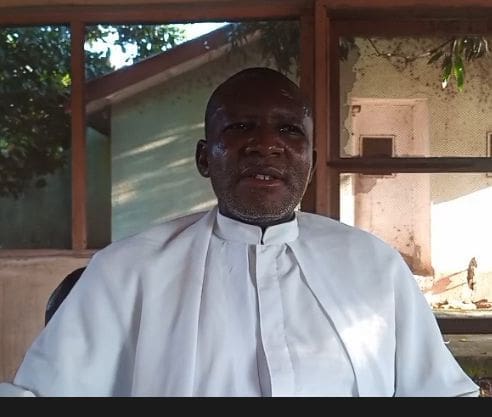
“Under my parish alone, about 201 villages have been completely taken over,” he said. “The indigenous people — 99 percent of them Christians — have been driven from their ancestral lands.”
He listed dozens of once-thriving farming settlements now destroyed: Tor Gbenger, Imbor, Chakera, Asuku, Mbaaga, Ikyor, Mbaya Utser, Genda, and many others.
“These were once peaceful villages,” he added softly. “Today, they are silent. Only ashes remain.”
Looming Famine and Crisis of Survival
With farmlands abandoned, a major humanitarian disaster looms, according to Bishop Nzukwein. He warned that an entire generation of Christian children is now at risk.
“Thousands of Christian children have become orphans. Many have dropped out of school. Countless widows can no longer feed or care for their children,” he said.
He acknowledged that while Governor Kefas Agbu has expressed concern and sympathy, “the scale of the crisis is overwhelming.”
The Diocese has distributed relief materials to victims several times, but Bishop Nzukwein admits that such efforts only provide temporary relief.
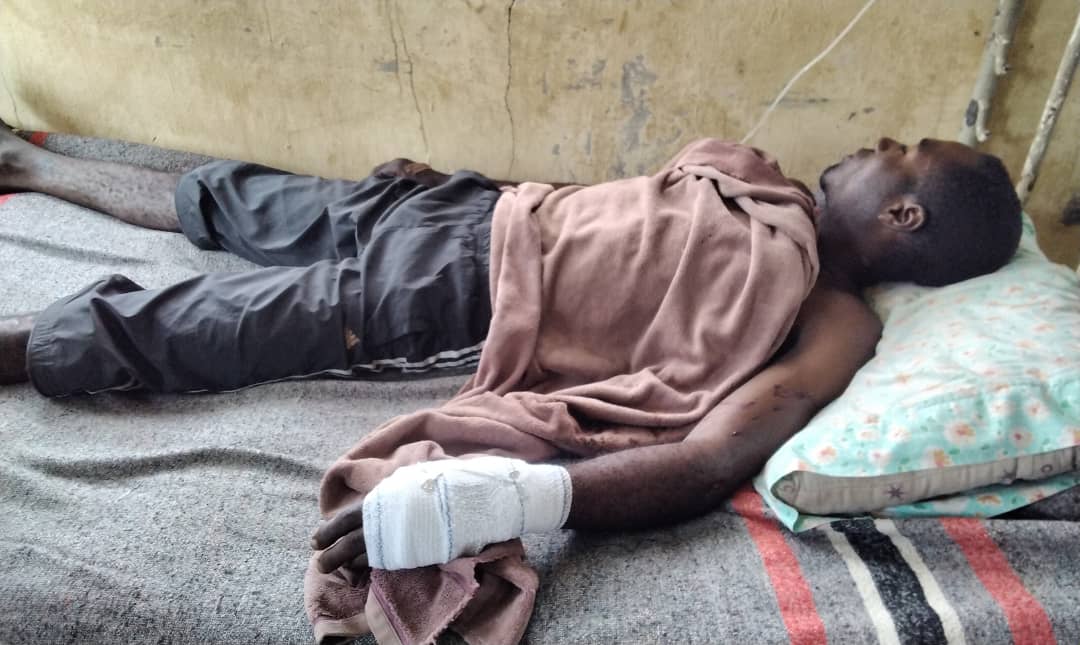
Medical sources confirm the dire situation. After a major attack in Karim Lamido County in May 2025, Dr. Sam Dugu, who treated several victims, described their injuries as evidence of “the human cost beyond displacement.”
Alleged Complicity of Nigerian Security Forces
Religious leaders and residents across Southern Taraba repeatedly have accused security forces of bias and inaction.
“When Fulani terrorists attack a village, and we alert the military, they often fail to respond,” said Fr. Dogo. “But when a Fulani herder complains that locals have violated his rights, the same soldiers arrive quickly — and arrest the indigenous people, usually Christians.”
This perception of complicity has deepened mistrust between local communities and security agencies.
Mr. Philip Adamu, a 70-year-old farmer from Wukari, expressed his frustration:
“If you try to defend your farm, they call you the aggressor. But when Fulani destroy your crops, nobody is punished.”
Across Southern Taraba, despair is spreading. From village to village, churches lie in ruins. Entire congregations now live in Internally Displaced Persons (IDP) camps scattered across Taraba and neighboring Benue State.
Farmers who once fed their communities now depend on food donations from the same Church under siege.
Local clerics warn that unless urgent intervention comes, Christianity could vanish from parts of Taraba — not only physically, but from collective memory and culture.
“It’s not only our homes that are being erased,” Bishop Nzukwein said. “It’s our history, our faith, and our future as a people.”
Southern Taraba, particularly Wukari, the main town in the area — lies about 220 to 250 miles (350–400 kilometers) from Abuja, in Nigeria’s North-East geopolitical zone. The area is predominantly Christian, home to ethnic groups such as the Kutebe, Tiv, and Kaka. Over 90 percent of residents identify as Christians, with Catholicism as the dominant denomination. Other major churches include Methodist, Baptist, and ECWA.
From Wukari to Cameroon is roughly 70 miles, while Gembu, another major settlement in Southern Taraba, sits only 4 to 6 miles from the Cameroonian border. The Mambila and Adamawa Plateaus — Nigeria’s highest mountain ranges — stretch into Cameroon.
These border mountains, Church sources say, are now exploited by Fulani militants for cross-border movement and sanctuary.
Fulani terrorists have established two major camps near the Kashimbilla Dam and Danjuma Farms, from which they launch attacks and kidnappings targeting Christian communities.
Mike Odeh James is a conflict reporter for TruthNigeria.