
Bishop Anagbe: ‘We cannot wait any longer. Every delay means more graves.’
Abuja continues to deny a crisis Washington now calls ‘overwhelming‘
By M. Kiara
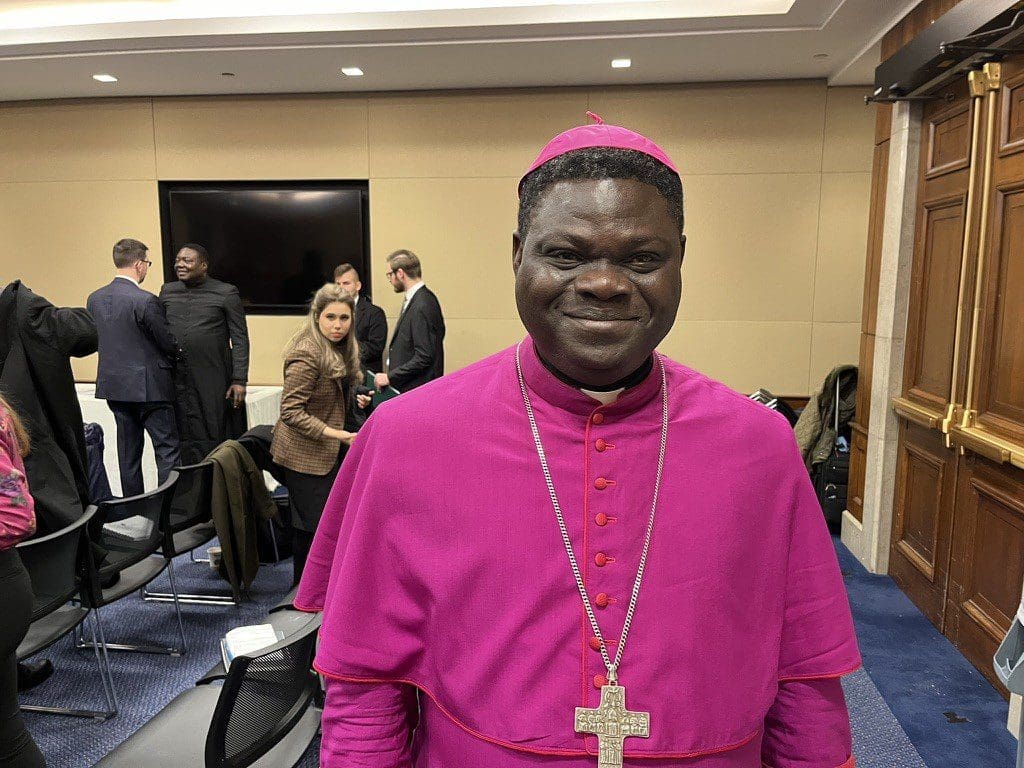
Eight months after first briefing U.S. lawmakers with graphic testimonies of massacred priests, burned churches, and villages wiped out, Bishop Wilfred Anagbe of Makurdi returned to Congress this week with a stark update: Christian Communities, he said, are facing “a silent but escalating campaign of extermination.”
Speaking before the U.S. House Subcommittee on Africa, the Catholic Bishop who oversees one of the hardest-hit regions in Benue State, a farming area in north-central Nigeria long targeted by armed militias warned Congress that the federal government continues to deny what communities in the Middle Belt live with every day.
“I am not speaking from reports,” he told lawmakers. “I am speaking from what I have seen, what I continue to witness. Nigeria is bleeding. Our people are being targeted because of their faith.”
A Witness to Violence: ‘The killings have intensified‘
Since his last appearance in March 2025, Anagbe said the attacks have grown more coordinated and more lethal. He cited several recent incidents in Benue State, a largely Christian region in north-central Nigeria:
- May 22: Armed men raided the Bishop’s ancestral community, killing members of his extended family.
- Late May: A convoy of Catholic sisters came under fire while fleeing a parish attack.
- May 24: A priest, Brother Solomon Atongo, was shot and left for dead. He survived with permanent injuries.
- Palm Sunday: Multiple villages across Benue were attacked during early-morning services.
- June 18: The Yelewata massacre; at least 200 people were killed, a figure he says federal officials have underreported.
“The blood of Nigerian Christians cries out,” Anagbe said. “This is genocide, no matter what name the government prefers.”
U.S. Officials Dispute Nigeria’s Narrative
The Nigerian government maintains that the violence is not religiously motivated, attributing the killings to criminal gangs, land disputes, or “misleading narratives.”
Kimiebi Imomotimi Ebienfa, a spokesman for Nigeria’s Ministry of Foreign Affairs had said in a statement, “We are not proud of the security situation that we are passing through, but to go with the narrative” that only Christians are targeted, “no, it is not true. There is no Christian genocide in Nigeria”, he said.
U.S. officials, however, offered a sharply different assessment.
Jacob McGee, Deputy Assistant Secretary at the U.S. Department of State, told lawmakers that evidence of faith-targeted violence is “overwhelming, long-standing, and unmistakable.”
He described patterns in survivor testimony: attackers shouting religious slogans, separating Christians from Muslims during raids, and using kidnapping, rape, and arson to terrorize communities.
“People are being attacked and killed because of their faith,” McGee said. “Nigeria has a legal obligation to protect all its citizens.”
Washington to Abuja: ‘We Are Prepared to Act‘
The hearing comes after President Donald Trump returned Nigeria to the U.S. list of Countries of Particular Concern (CPC), the most serious designation for violators of religious freedom.
The designation opens doors to:
- Targeted U.S. sanctions
- Restrictions on security assistance
- Additional diplomatic or military measures, if conditions worsen
A senior State Department official told the panel that Washington is preparing to use “all tools at our disposal” should attacks continue.
The Nigerian government has since dispatched senior security officials to Washington for emergency consultations.
Internal Pressure and Public Frustration
In Abuja, officials have tried to project confidence. But Nigerian media report signs of unease, including a controversial move by the Ministry of Finance to enroll dozens of lawmakers in a short course titled “How to Negotiate with America Under the Trump Administration.”
According to Sahara reporters, the training is scheduled for November 21–22.
The training has now drawn criticism from activists who see it as a symbol of political drift.
“How does a senator not know how to negotiate? People are being slaughtered, and our lawmakers are in class learning how to talk to Washington?” said Nigerian rights advocate Aloy Atta, speaking to TruthNigeria.
The timing is particularly jarring. While lawmakers prepare for diplomatic tutorials, attacks on churches, villages, and schools continue across the country.
What the Bishop Wants From the U.S.
Despite the political back-and-forth, Bishop Anagbe’s message to the U.S. Congress was simple:
- Christians are being slaughtered
- Survivors are abandoned
- The Nigerian government is failing
- America must help stop the bloodshed
He called for:
- Targeted sanctions under the Magnitsky Act against individuals and officials implicated in rights abuses
- Stronger humanitarian support for displaced Christian communities
- Accountability mechanisms requiring transparent investigations
- Sustained international pressure to compel Nigeria to protect vulnerable population
“We cannot wait any longer,” he said. “Every delay means more graves.”
A Crisis That Refuses to Be Ignored
For years, Abuja has attempted to downplay the religious dimension of the violence. But with new testimonies, rising casualty figures, and escalating kidnappings from Benue to Kaduna to Kwara, the narrative is collapsing under its own weight.
And for the first time in years, the world is watching closely.
As Bishop Anagbe rounded off his speech, his final message was direct:
“For years, our pleas were ignored,” he said. “Now the world is watching. Let it not say, years from now, that it did not know.”