
Militant Groups, Pushed from the Northwest, Probing into Nigeria’s center.
By Onibiyo Segun
(Adanla, Kwara State) – Gunmen struck a rural Kwara state corridor just after midnight December 26, abducting seven people and injuring others in a Christmas-season attack that shattered local security.
Kwara State sits in Nigeria’s Middle Belt, a largely agrarian region long seen as a buffer between the violent northwest and the more stable south, raising fears of terrorist expansion into the country’s interior.
The assault occurred along a poorly secured rural road near the village of Adanla, in Ifelodun county, close to the boundary with southwestern Nigeria. The attackers targeted travelers and villagers returning from Christmas visits, striking swiftly before melting back into surrounding forests.
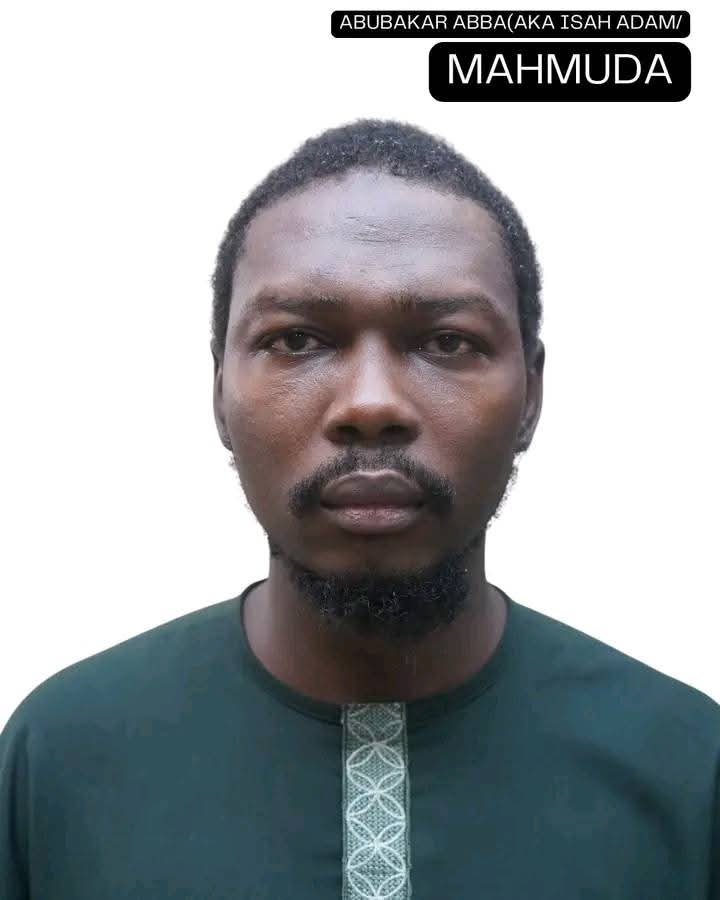
Local accounts indicate that the gunmen believed to be linked to the Mahmuda terror network emerged suddenly from bush paths, firing sporadically and forcing motorists to abandon their vehicles and flee into the darkness.
“They fired at vehicles and people scattered into the bushes,” said Aisha Bello, a trader who narrowly escaped.
“We ran and prayed, not knowing who would be taken.” she told TruthNigeria.
A Vulnerable Corridor
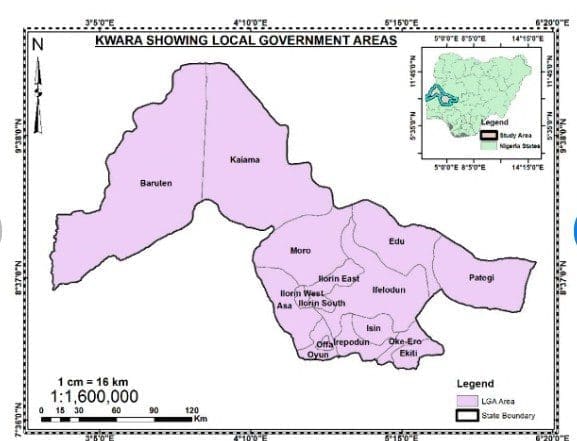
Security analysts say the road linking Adanla county to nearby communities lies along a forested transit corridor that has increasingly been used by armed groups moving between northwestern Nigeria, Niger State, and the Middle Belt. The isolation of the area, combined with thin security coverage, has made it a recurring target.
Residents told TruthNigeria that community vigilantes were already patrolling when the attackers struck, suggesting careful reconnaissance by the assailants.
“We were on patrol when they appeared from the northern route,” said Alhaji Saliu Adanla, leader of the local community guard.
“They struck somewhere else first. Before we could respond, they had taken people and injured others,” Adanla said.
Saliu added, “the attackers escaped using motorcycles and narrow bush paths familiar only to those who know the terrain well.
“The military arrived later, and we are still tracking their routes through the forest,” he concluded.
The traditional ruler of Adanla county, Chief Samuel Adeyemi, confirmed that dense vegetation and multiple escape routes some leading across state lines worked in the attackers’ favor.
“Once they enter these forests, it becomes extremely difficult to track them without sustained military presence,” he said.
The attack in Kwara is not just a local crime story, it signals a strategic shift in Nigeria’s security crisis with broader regional and international implications.
For years, Nigeria’s terrorist violence was largely concentrated in the far northeast and northwest.
Kwara, by contrast, is located closer to Nigeria’s economic heartland and key transit routes linking the north and south.
Violence here suggests that armed groups are probing deeper into the country, testing whether they can operate beyond traditional conflict zones with little resistance.
For Western governments, particularly the United States, this southward creep matters because Nigeria anchors security in West Africa. Instability spreading into central corridors risks disrupting trade routes, fueling cross-border crime, accelerating displacement, and creating new sanctuaries for transnational jihadist groups linked to Islamic State networks.
Security analysts warn that once such groups embed themselves in forest belts like those crossing Kwara, they become harder and more expensive to uproot, often requiring international intelligence cooperation and sustained military pressure.
Seasonal Warning Signs
Security observers note that Christmas and New Year periods increasingly have become flashpoints for attacks in rural Nigeria. Travel surges, reduced patrols, and festive gatherings often create what analysts describe as “soft civilian targets.”
Ahead of the holidays, Judd Saul, founder of Equipping The Persecuted, warned that extremist groups were likely to exploit festive movements nationwide.
The Kwara State government condemned the raid, calling it “barbaric and unacceptable.” Commissioner for Information Bolanle Olukoju said security forces had been deployed to affected communities and that the state was working with federal authorities to rescue abducted victims and reinforce vulnerable corridors.
A Broader Pattern
Security experts say the Adanla attack reflects a wider and troubling shift: militant groups, under pressure in Nigeria’s far northwest, are probing deeper into the country’s center.
“This shows terrorists adapting quickly, exploiting porous rural corridors, and striking where state presence is weakest,” said Dr. Helen Okoye of the West Africa Peace Institute.
Analysts believe sustained military pressure in Sokoto, and surrounding states has pushed some factions southward, where forests and lightly policed communities offer new operating space.
U.S. Strikes – What Actually Happened
In the days after the Kwara attack, the United States confirmed it had carried out precision military strikes against Islamic State–linked militants in northwestern Nigeria, including Sokoto State.
According to Reuters, the operation involved cruise missile strikes, conducted in coordination with Nigerian authorities.
The Guardian reported that U.S. officials warned additional strikes could follow as part of ongoing cooperation with Abuja.
Defense analysts say the strikes disrupted command structures and logistics hubs but warned that militants already embedded further south remain a serious threat.
“Pressure must be sustained, not symbolic,” said retired Colonel Musa Ibrahim, a defense analyst in Abuja.
“If these groups are not flushed out across Sokoto and the Middle Belt, they will continue to exploit rural routes like those in Kwara.”
A State at the Crossroads
TruthNigeria’s long-term reporting shows that Kwara has increasingly become a strategic transit zone for armed groups fleeing pressure elsewhere, with repeated kidnappings and attacks recorded over the past decade.
For residents of Adanla county and neighboring villages, the Christmas-night attack has stripped away any illusion that their communities lie outside Nigeria’s expanding conflict zones.
“What happened here is a warning,” Colonel Ibrahim said.
“Without sustained air-ground operations, intelligence sharing, and local protection, these groups will keep spreading one rural road at a time.”
Onibiyo Segun reports on terrorism and conflict for TruthNigeria.