
By Onibiyo Segun
(Mopamuro County, Yagba East, Kogi)— On Sunday, December 14, 2025, at about 6:10 a.m., terrorists attacked the First ECWA Church in Ayetoro Kiri, Kabba-Bunu county, killing a worshipper identified as “Jayjay” and abducting several others during a church service.
The Church attack fits into a pattern of coordinated pre-dawn terrorist attacks on the agrarian communities of West Kogi State near Mopamuro since Dec. 9, leaving several residents killed and others kidnapped, heightening fears of targeted violence against Christian communities just days before Christmas.
The Mopamuro attacks are part of a growing pattern of assaults on Christian communities in Kogi State during the approach of Christmas.
Earlier incidents reinforce this trend. In Ejiba, Kogi State, gunmen stormed a Cherubim and Seraphim Church during a night vigil on Nov. 29, abducting the pastor, his wife, and several congregants.
Early Morning Attacks
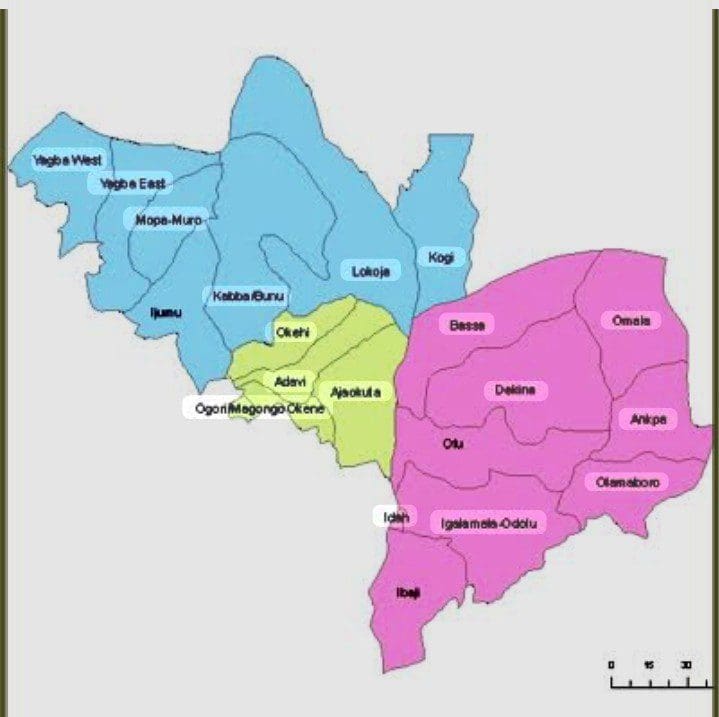
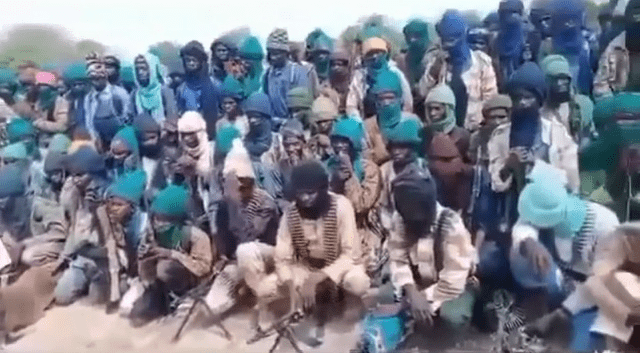
According to eyewitnesses, the series of attacks continued with one at approximately 4:18 a.m. on Tuesday, December 9, 2025, when gunmen emerged from surrounding forest paths towards Kwara State and opened fire near farm settlements on the outskirts of Oke-Agi. Residents said the attackers operated uninterrupted for over an hour, withdrawing at about 5:35 a.m.
The assailants targeted Tiv and Bassa settlements – farming communities made up of indigenes of Tiv (Benue State) and Bassa ethnics in Kwara State who were invited to provide agricultural labor and allocated designated living areas near churches and primary schools.
“The shooting started around 4:18 a.m. We thought it was hunters at first, but within minutes they were in our compound. They broke doors and dragged people away,” said Tiv farmer Terna Aondona.
“By 4:45 a.m., they had already taken at least seven people from our area. They moved calmly while at it, like people who knew they had enough time,” said Bassa farm supervisor Moses Kpande.
“From 4:30 a.m. to after 5:00 a.m., we kept calling. I was in hiding while my husband moved towards them to save me and my two sons. We kept calling, nobody came. The gunmen left on their own with my husband,” said resident Eunice Terdoo.
Several residents said the attackers were not strangers to the terrain and had been sighted weeks earlier moving through forest corridors linking Kogi, Kwara, and Ekiti States.
“Community guards had repeatedly tracked suspicious movements in nearby forests but lacked the firepower to confront the terrorists decisively,” said vigilante leader Obayemi Akinola.
“We see them in the forests almost weekly. They camp deep inside, sometimes moving cattle as cover. We have tried to flush them out, but our hunting guns and locally made rifles are no match for their AK 47s,” said Akinola.
“We cannot die for nothing. We need backup, drones, and proper weapons. Otherwise, they will continue to come out, attack, and disappear,” said community guard Adebayo Sani.
Traditional and community leaders confirmed fatalities and kidnappings but accused security agencies of failing to respond in time.
“The first security patrol arrived well after the attackers had disappeared,” said community spokesperson Samuel Ajayi.
“Security agents arrived after 6:40 a.m. By then, the terrorists were long gone. Then they began to ask questions while the forest is there where they can at least pursue the terrorists. It’s annoying,” said Ajayi.
Warning of Christmas Attacks from Founder of Equipping the Persecuted
One day after the Mopamuro attack, U.S.-based award-winning documentary filmmaker and missionary Judd Saul warned that terrorists were planning coordinated attacks on churches and Christian communities during the Christmas season to maximize fear and sectarian tension.
Additional intelligence-related reports in Nigerian media also cited heightened militant movements ahead of Christmas, particularly across Kogi and neighboring states.
Despite these warnings, residents said no preventive security deployment was visible in Mopamuro. Earlier alerts by Nigeria’s Department of State Services warned of potential attacks in Kogi and Ondo States, raising questions about intelligence coordination.
“Nigeria’s military must urgently operationalize existing intelligence-sharing agreements with the United States to avoid fighting blind,” said retired military officer and defense analyst Musa Abdullahi.
Abdullahi continued, “There are standing understandings with U.S. partners on forest surveillance using drones and signal intelligence. These tools are meant to identify camps and movements before attacks occur. To stop terrorists from operating freely, that intelligence option must be fully exploited.”
Security Analyst Timilehin Ojo warned that Nigeria’s military is overextended.
“The armed forces are stretched thin, yes, but reacting after attacks only reinforces insurgent confidence. Proactive forest domination, night surveillance, and pre-emptive strikes are the only way to reverse this pattern,” said security analyst Timilehin Ojo.
Another security analyst explained that kidnapping exploits ethnic divisions.
“Groups such as the Lakurawas [an Al Qaeda-allied insurgent group recently noticed in Nigeria] and the Mahmuda network are heavily involved in kidnap-for-ransom operations while exploiting religious and ethnic fault lines. Security agencies and local communities must be extra vigilant because these groups thrive where surveillance is weak. Words won’t win this war. Action would,” said defense and terrorism researcher Habeeb Olasehinde.
“Insecurity in Kogi poses a direct threat to neighboring states,” said Ondo State Amotekun Corps Commander Adetunji Adeleye. “All efforts must be properly coordinated for us to win this war.”
The Mopamuro attacks fit a broader pattern of synchronized assaults on rural, agrarian, predominantly Christian communities across Nigeria’s North-Central corridor linking Kogi, Kwara, Ekiti, and Niger States.
Kogi State authorities have since ordered early closures of public activities as a precautionary measure.
As Christmas approaches, residents of Oke-Agi and Ilai say they are unsure whether to attend church services, a grim indicator of how deeply fear has replaced festivity.
Onibiyo Segun reports on terrorism and conflicts for TruthNigeria.