False: Killers Openly Invoke Faith, Experts Say
By M. Kiara
(Lagos) — Nigeria’s government insists religion is not driving its bloodshed, even as global rankings, survivor accounts, and U.S. lawmakers point to systematic attacks on Christian communities.
Nigeria was recently ranked the fifth-most violent country in the world by a conflict index compiled by the Armed Conflict Location & Event Data Project ACLED. The ranking places Africa’s most populous nation ahead of many active war zones and reflects a sharp collapse in public security.
The violence is concentrated in northern and central Nigeria, especially in Plateau, Benue, and Southern Kaduna — all majority Christian. Other killing zones are in Zamfara, and Borno states —home to large Christian minorities. These regions sit hundreds of miles from Lagos but lie at the heart of Nigeria’s food supply and internal stability.
Attacks in the Middle Belt routinely target rural villages, churches, schools, and farming communities.
Recent incidents underscore the scale. In November, armed attackers stormed a Christ Apostolic Church during worship, killing three congregants and abducting over 30 worshippers.
Over 300 students were abducted from St. Mary’s Private Catholic School.
Internal records from the Evangelical Church Winning All (ECWA) in Nigeria shows that 19,100 churches have been burnt or destroyed in the last 16 years, averaging about 1200 churches annually, while more than 600 clerics, including pastors and Catholic priests, have been abducted, with many never returning.
Across the Middle Belt, repeated raids have emptied entire counties, forcing families into overcrowded displacement camps with little protection.
Abuja Denies Genocide amid Growing Evidence
Despite this pattern, President Bola Tinubu has publicly rejected claims of Christian genocide.
Speaking at a religious conference in Abuja, Tinubu said Nigeria’s crisis is driven by “criminality and extremism, not religion,” calling genocide allegations “false” and “harmful.”
“The allegations are not only false, but harmful, and capable of inflaming passions and disrupting the sustenance of the peaceful coexistence which we continue to build as a nation.”
That denial now directly collides with growing international alarm.
U.S. Lawmakers and Human-Rights Experts Challenge Narrative
A senior U.S. lawmaker, Rep. Riley Moore (R-WV), says what he witnessed in central Nigeria fits the definition of a genocidal campaign. Moore traveled to Benue State with other House Appropriations Committee members, meeting displaced families and church leaders during what aides described as a high-risk visit.
“These camps aren’t safe,” Moore said after returning to Washington. “People are terrified. They are being hunted, not protected. Over 600,000 Christians in Benue now living in Internally Displaced Persons IDP Camps”
Moore told Fox News that he will brief President Donald Trump on a forthcoming report assessing U.S. responses to the violence. The Middle Belt, where many of the attacks occur, spans the country from Kwara on far west to southern Borno State in far East and is predominantly Christian.
Breaking from Abuja’s official narrative, Moore rejected claims that the killings are merely disputes over land or climate pressure.
“If this is climate change, why burn a church?” he asked. “Why attack displaced families while shouting religious slogans?”
His remarks mark one of the strongest statements yet by a U.S. official on Nigeria’s crisis. Moore said survivors described night raids, burned farms, and repeated displacement because of their faith.
“These are attacks on people for who they are; Christians in their own homeland,” he said.
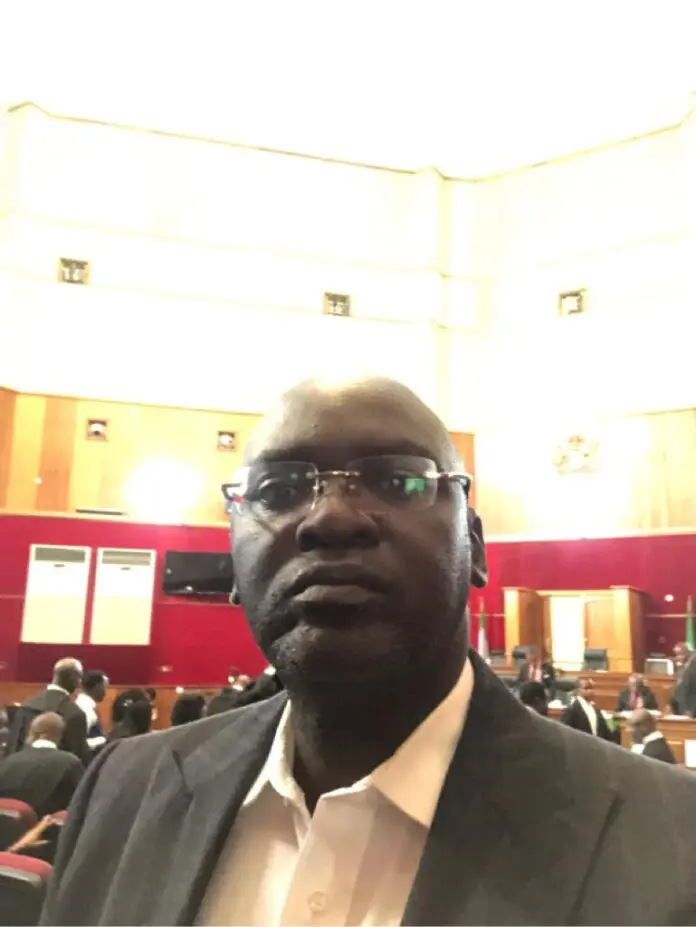
Human-rights experts say the evidence supports that assessment.
Emmanuel Ogebe, International human-rights lawyer argues that religion cannot be separated from attacks where killers openly invoke faith.
Speaking to TruthNigeria, Ogebe said assaults accompanied by cries of “God is great” in Arabic mirror patterns seen in other religiously motivated violence.
“You cannot look at these attacks and say religion was not a factor,” Ogebe said. He described the violence as systematic, targeting communities identified by faith rather than random criminal activity.
Ogebe cited the scale of recent massacres to illustrate the point. In one June attack in Benue State; he said 278 people were killed in a single night. The same evening, dozens more were murdered in Plateau State. “That is what genocide looks like,” he said.
Survivors, Sanctions, and International Stakes
A displaced Christian from Plateau State, Lois Sanni, told TruthNigeria earlier this year that international attention changes behavior in Abuja. “When foreign media tell the truth, our government pays attention,” she said. “When Nigerian media whispers, no one listens.”
In Benue, parents told U.S. lawmakers they have lost homes multiple times and now live with constant fear. One father said his children rarely sleep through the night. “They’re afraid it will happen again,” he said.
The stakes extend far beyond Nigeria.
Nigeria’s violence ranking adds pressure to an already strained relationship with Washington. On October 31, the United States redesignated Nigeria as a Country of Particular Concern for religious-freedom violations, a move that can trigger sanctions and policy restrictions.
Analysts say findings from Moore’s report could affect U.S. foreign aid, security cooperation, and humanitarian funding, as well as shape European responses to religious-freedom abuses.
“If U.S. officials formally adopt a genocide framework, it will reshape partnerships and raise expectations for accountability,” said Obinna Okeke, a U.S.-based foreign-policy analyst.
For now, Abuja continues to emphasize unity and moderation, urging Nigerians and foreign partners to reject what it calls divisive narratives. But the gap between official statements and documented violence is widening.
Nigeria’s global violence ranking is not a projection or a rumor. It is a measurement based on recorded attacks, deaths, and displacement.
U.S. lawmakers, human-rights lawyers, and survivors are now telling a consistent story that directly contradicts government denial.
M. Kiara reports on conflict for TruthNigeria from Lagos.