
Rights group say mobilizing thousands of ex-Hisbah operatives a ‘call for anarchy‘
By M.Kiara
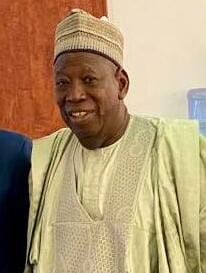
KANO – Kano erupted after reports that ex-governor Abdullahi Ganduje proposed mobilizing thousands of former Hisbah officers into a private force, a move officials call dangerous.
Kano state, about 216 miles (350 km) north of Abuja, is locked in a political and security row after reports that Ganduje – a former chairman of the ruling All Progressives Congress (APC) floated plans to reorganize roughly 12,000 former Hisbah and local enforcement operatives into a semi-private security outfit.
State officials say even the suggestion risks creating a partisan armed network outside constitutional control; a dangerous precedent in a region already battered by terror acts, kidnappings and extremist infiltration.
Why This Matters Now
Kano is Nigeria’s most populous northern state and a key swing bloc for the 2027 elections. Any armed group tied to a powerful political patron could be used to intimidate rivals, disrupt voting or shield economic interests and could also deepen risks for minority communities who already feel exposed.
A State Already on Edge
Civil society sources say the plan would retask former Hisbah officers – a sharia moral-policing corps that exists in 12 northern states into a new security body under private or party oversight.
Governor Abba Kabir Yusuf’s administration rejected the plan immediately. The state information commissioner described Ganduje’s comments as “reckless” and asked federal security agencies to investigate alleged plans to form an unlicensed force.
The government linked the proposal to rising militia groups in border communities and warned of potential clashes with policing units already stretched thin along the Kano-Kaduna corridor.
“Once politicians create their own security, it never stays neutral,” said Dave Oladapo, a security analyst. “That is the real danger, weaponizing an ostensibly ‘community’ force for partisan ends,” he said.
Ganduje’s camp denies the charges. His spokesperson told national outlets the allegations were “baseless,” politically motivated, and intended to distract from the state government’s failure to tackle growing insecurity.
The Hisbah Angle
Hisbah units are locally funded enforcement bodies that police moral codes under Sharia Law in many northern states. Rights groups have repeatedly warned that some Hisbah units have exceeded their mandates and been used at times for intimidation.
Retasking or remobilizing trained former operatives under private control would blur legal lines between public policing (a federal responsibility) and partisan enforcers.
Human Cost and Minority Fears
Christian communities – a small minority in Kano but large among displaced populations in the wider Middle Belt say the controversy deepens a longstanding fear.
“Anytime you hear about private security in the North, Christians remember what we have suffered,” said Loveth Emmanuel, who fled Southern Kaduna after a village attack and now lives in Kano. “People like me cannot survive another crisis,” Loveth told TruthNigeria.
Regional data underscores why fears are acute. The Observatory for Religious Freedom in Africa (ORFA) reports thousands of Christian deaths and abductions across northern states in recent years, a pattern that makes any erosion of state control particularly dangerous for minorities.
Residents Speak: “This Is a Call for Anarchy”
Traders, teachers and civil-society figures told TruthNigeria they worry private forces would intimidate voters and provoke clashes with police. “We don’t want a militia here. Kano has enough tension already,” a trader said, asking not to be named.
Another resident said, “If politicians start raising security groups, people will assume force is coming.”
Yahaya Yusuf, director-general of the International Peace and Secure Society (IPSS), called the reported plan “a call for anarchy.”
“A parallel Hisbah-style enforcement group outside the authority of the state government is not only unlawful but dangerously shortsighted,” he said.
Security Experts’ Warning
“Kano holds one of the largest voting blocs in Nigeria,” Dave said. “Any armed group connected to a former governor could intimidate rivals and worsen an already fragile security landscape.”
Analysts say the region faces overlapping threats:
• Terrorist attacks spreading from the northwest
• Radical preacher networks
• Illegal weapons flowing through Kano’s trade routes
• Political thugs hired during election cycles
Federal Response – a Delicate Balance
Abuja now faces a delicate choice.
Ignoring the allegations risks appearing tolerant of private armed groups. Aggressive intervention risks flaming political tensions just as campaigns heat up. Federal security agencies say they are monitoring the situation and have opened preliminary inquiries.
Broader Implications for Nigeria
Analysts say Kano’s stability matters beyond state borders. A politicized security environment in Nigeria’s north would amplify refugee flows, expand smuggling corridors for weapons and fuel regional instability, outcomes that affect trade, migration and counter-extremism efforts across West Africa.
For vulnerable communities, especially displaced Christians, a politicized security environment would likely mean fewer safe havens and more targeted violence.
What Comes Next
Rights groups and analysts say three things will determine whether this stays a rumor or becomes a crisis: whether federal agencies enforce limits on private forces; whether political actors back away from plans that blur state authority; and whether civil society and churches mobilise to block militia formation.
For displaced families, the stakes are simple, “If security becomes political, everyone suffers.” said Loveth.