By Mike Odeh James
Abuja—A covert financial network and internal government corruption have quietly fueled Nigeria’s terror war, enabling insurgent groups to grow stronger as state institutions weakened from within, according to an investigation and a key whistleblower’s memo.
A newly exposed network of terror financiers allegedly moved billions through hidden accounts while a top military whistleblower alleges deep corruption that crippled Nigeria’s war effort from the inside.
Together, these forces have prolonged a conflict that continues to devastate Nigeria’s northern region.
The Financial Backbone: How 23 Suspects Moved Billions of Naira

A Sahara Reporters investigation detailed an alleged network of 20 Nigerians and three foreign nationals suspected of funding Boko Haram and other extremist groups. The scale of the transactions was staggering: hundreds of billions of naira reportedly flowed through their accounts over several years.
The suspected financiers used business fronts and webs of personal and corporate bank accounts. Some were linked to individuals already convicted of terrorism financing in the United Arab Emirates, suggesting an international support system for extremist networks.
Alhaji Saidu Ahmed, a Zaria businessman, whose accounts allegedly recorded ₦4.8 billion in inflows. Investigators say he had ties to convicted terrorists.
Usaini Adamu, a Kano businessman with 111 bank accounts. His accounts reportedly recorded ₦43 billion in inflows and ₦50 billion in outflows. He also allegedly served as a guarantor for known financiers.
Muhammad Sani Adam, a dealer in forex and precious stones, described as Ahmed’s right-hand man. His 41 accounts reportedly moved more than ₦54 billion.
Yusuf Ghazali, a forex trader with 385 bank accounts. UAE court documents identified him as a facilitator of cross-border terrorist financing.
Ladan Ibrahim, Chairman of the Sokoto Pilgrims Welfare Agency, allegedly diverted public funds to other financiers.
Foreign actors were involved as well. The late Rwandan tobacco magnate Tribert Ayabatwa was flagged for ₦67 billion in inflows, while Aboubacar Hima, a Nigerien arms dealer based in Abuja, was investigated for moving more than $1.19 million.
Several Nigerian suspects were arrested in 2021 but were later released under unclear circumstances, raising suspicions of political interference and weak prosecutorial follow-through.
A Whistleblower Speaks: Allegations of Corruption Inside Nigeria’s Security System
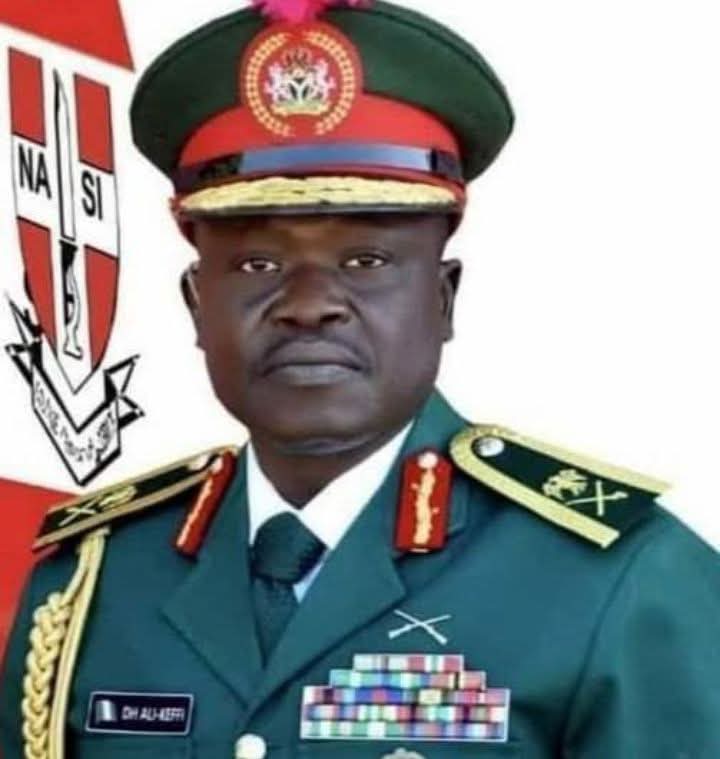
As financiers operated outside the state, another threat grew within it. Major General Mohammed Ali Keffi issued a leaked memo accusing senior officials of systematic corruption that, he says, undermined Nigeria’s fight against terrorism.
Keffi alleges that billions budgeted for arms procurement vanished under former Chief of Army Staff Lt. Gen. Tukur Buratai. Contracts for weapons were reportedly awarded, but many of the weapons never materialized, leaving frontline troops poorly equipped.
He also claims that commanders falsified battlefield reports. Civilian deaths—such as those from the 2018 Shi’ite clashes—were allegedly labeled as terrorists to inflate body counts. These inflated reports justified larger military budgets while masking operational failures.
Former Attorney General Abubakar Malami was also implicated. According to Keffi, Malami blocked investigations into suspicious financial activity and ignored foreign intelligence warnings about terror funding. These alleged actions, he says, protected powerful officers from accountability.
Keffi’s claims echo earlier warnings. In 2018, retired General T.Y. Danjuma accused the military of colluding with armed groups. And in 2023, a successful strike on a terrorist leader in Zamfara was reportedly carried out without military involvement because planners feared information leaks from what they called “bad eggs” inside security units.
Speaking on Channels TV’s Politics Today in October 2025, Yusuf Datti Baba-Ahmed directly accused former Governor of Kaduna, Nasir El-Rufai of been a terror financier and deep complicity in the insecurity that preceded the 2015 election.
He said El-Rufai was a key architect who helped fuel political desperation that destabilised the North. According to him, El-Rufai cannot now absolve himself or shift blame, because “he was part and parcel of everything that happened.”
Where the Two Tracks Meet
External financing and internal corruption reinforce each other in ways that strengthen insurgent organizations and weaken Nigeria’s response.
The financiers’ billions allow extremist groups to buy weapons, pay fighters, and maintain logistics networks. Nigeria’s Financial Intelligence Unit (NFIU) notes that Boko Haram and ISWAP rely on ransom payments, extortion, smuggling, and informal money transfers. These funds are laundered through Bureau-de-Change operators, cash couriers, and mobile money agents.
Internal corruption, meanwhile, blocks meaningful countermeasures. Missing weapons budgets leave soldiers exposed. Inflated battlefield reports obscure failures. Political cover ensures that senior officials avoid consequences. The result is a cycle that erodes troop morale and reduces public confidence in the state.
The human cost remains severe.
Despite government claims of progress, kidnappings and deadly ambushes continue across the northeast and northwest. Some communities, frustrated by ineffective protection, have turned to the Civilian Joint Task Force—local militias that have gradually replaced weakened military presence in remote areas.
Following the Money: Nigeria’s Best Chance for Disruption
Security experts widely agree that tracking financial flows is one of the most effective ways to disrupt terrorist networks. The NFIU uses platforms like GoAML to identify suspicious transactions, which have flagged numerous POS agents, mobile money shops, and informal traders used by terror financiers.
One foreign intelligence alert identified a POS operator who repeatedly received transfers linked to a terror commander.
But a major challenge remains: much of Nigeria’s economy is informal. Terror groups exploit hawala networks and barter systems involving livestock and grains, leaving little or no digital trail. Monitoring these channels is critical for future counterterrorism operations.
A Growing Demand for Accountability
Security analysts argue that without serious investigations and prosecutions, Nigeria’s security crisis will deepen.
Dr. Friday Agbo, Managing Director of AlterConsult, a Kaduna-based think tank, told TruthNigeria that unless the revelations about financing and internal corruption are fully investigated, “terrorism will continue to flourish.” He emphasizes that extremist groups depend on financial lifelines and that ignoring funders allows networks to regenerate.
Another expert, Jonathan Asake, a security analyst and former President of the Southern Kaduna Peoples Union (SOKAPU), warns that failing to prosecute suspects “creates a climate of impunity.” He also urges the government to publish the full Dubai list of Nigerian terror financiers to restore public trust and weaken extremist networks.
Mike Odeh James is Conflict Reporters and he reports for TruthNigeria.